
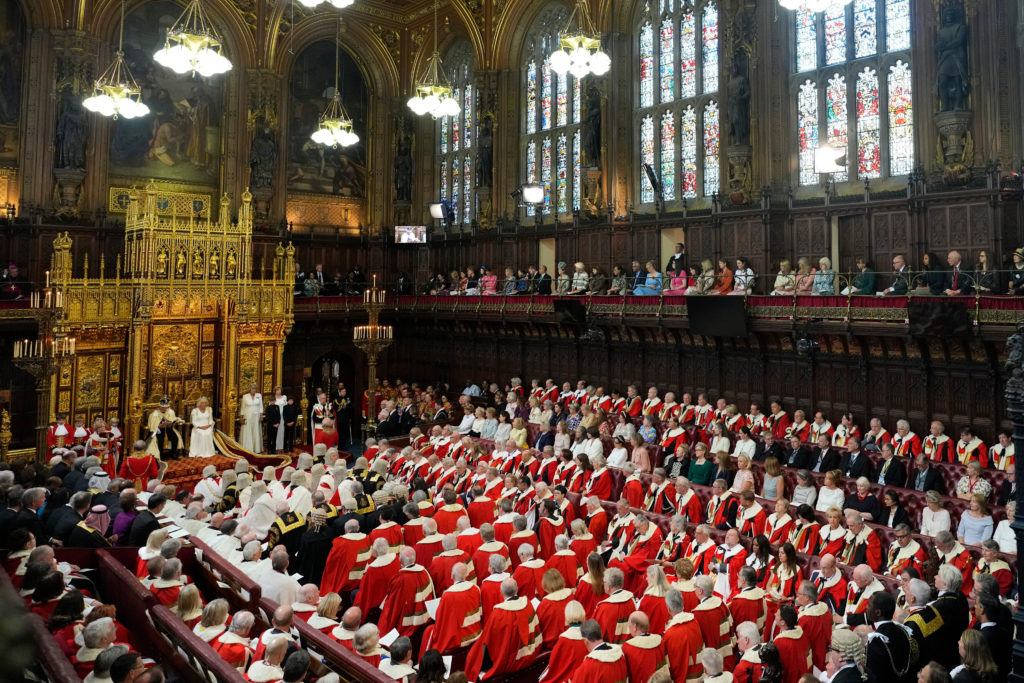
Britain is ejecting hereditary nobles from Parliament after 700 years
#Britain #hereditary nobles #Parliament #House of Lords #constitutional change #reform #legislative body
📌 Key Takeaways
- Britain is removing hereditary nobles from Parliament after 700 years.
- The House of Lords will no longer include members by hereditary right.
- This marks a significant constitutional change in the UK's governance.
- The reform aims to modernize the legislative body's composition.
📖 Full Retelling
🏷️ Themes
Constitutional Reform, Political Modernization
📚 Related People & Topics

Parliament
Legislative body of government
A parliament is a type of legislature, or law-making body, of a state. Generally, a parliament has three functions: representing the electorate, making laws, and overseeing the executive government via hearings and inquiries. Its role is similar to that of a senate, synod or congress; a parliament i...
Britain
Topics referred to by the same term
Britain most often refers to: Great Britain, a large island comprising the countries of England, Scotland and Wales The United Kingdom of Great Britain and Northern Ireland, a sovereign state in Europe comprising Great Britain and the north-eastern part of the island of Ireland. The realm of the Mo...

House of Lords
Upper house of the UK Parliament
The House of Lords is the upper house of the Parliament of the United Kingdom. Like the lower house, the House of Commons, it meets in the Palace of Westminster in London, England. One of the oldest extant institutions in the world, its origins lie in the early 11th century and the emergence of bica...
Entity Intersection Graph
Connections for Parliament:
Mentioned Entities
Deep Analysis
Why It Matters
This represents a fundamental constitutional change in one of the world's oldest parliamentary systems, ending a 700-year tradition of hereditary legislative power. It affects Britain's political structure by removing automatic legislative seats based on birthright rather than election or appointment. The change impacts the House of Lords composition, potentially making it more democratic and representative. This matters to British citizens as it modernizes governance and to hereditary peers who lose their automatic parliamentary positions.
Context & Background
- The House of Lords has included hereditary peers since medieval times, with the earliest formal Parliament established in 1295
- The 1999 House of Lords Act removed most hereditary peers, leaving only 92 who could remain until further reform
- Hereditary peers currently constitute about 12% of the House of Lords membership, with the rest being life peers appointed for their expertise
- Previous reform attempts have faced political obstacles, with debates about whether the Lords should be elected or appointed
- The current move follows years of criticism about undemocratic elements in Britain's parliamentary system
What Happens Next
The remaining hereditary peers will be phased out through legislation expected to pass in the coming parliamentary session. New appointments to replace their expertise will likely follow, potentially changing the Lords' demographic and professional composition. Constitutional experts predict further reforms to the House of Lords may follow, including possible moves toward partial or full election of members.
Frequently Asked Questions
There are currently 92 hereditary peers in the House of Lords, down from over 700 before the 1999 reforms. They inherit their titles and previously had automatic right to sit in Parliament.
Their positions will likely be filled by appointed life peers selected for their expertise and public service. Some proposals suggest eventually moving toward elected members, but immediate replacements will be appointed.
Growing public and political pressure for democratic modernization has increased, with critics arguing hereditary legislative power contradicts democratic principles. Recent political shifts have created momentum for this long-discussed reform.
The legislative process will remain similar, but the House of Lords' composition will become more merit-based. This could potentially change the dynamics of reviewing and amending legislation passed by the elected House of Commons.
They will keep their aristocratic titles and social status, but will lose the automatic right to sit in Parliament. Their titles become purely ceremonial without legislative power attached.