
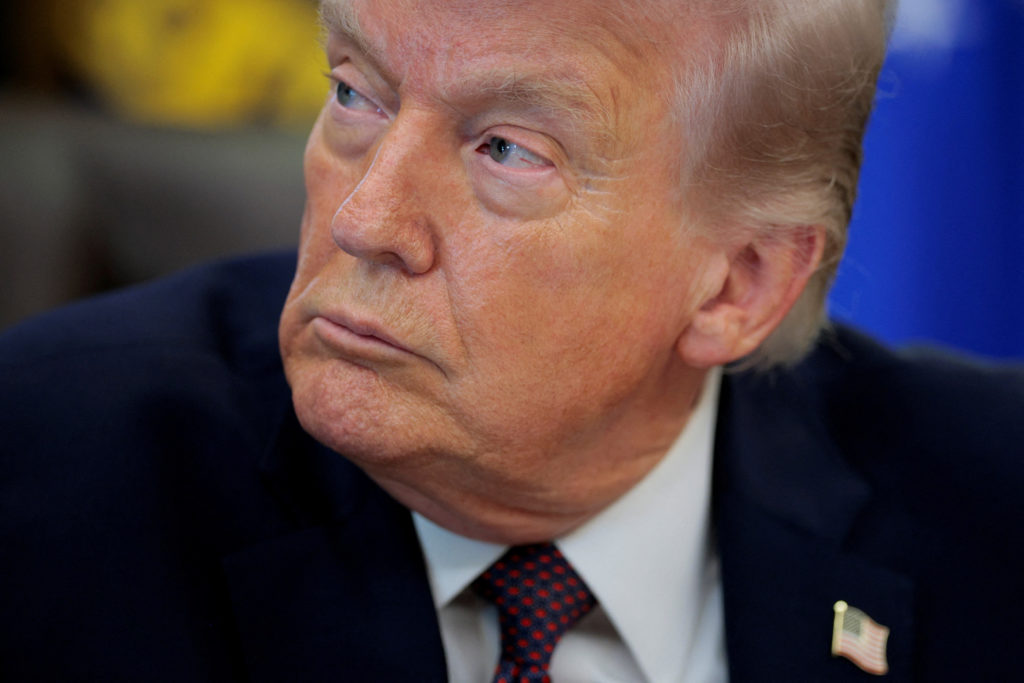
Bypassing Congress, Trump says he'll sign order to resume pay for Homeland Security
📖 Full Retelling
📚 Related People & Topics

United States Department of Homeland Security
United States federal executive department
The United States Department of Homeland Security (DHS) is the U.S. federal executive department responsible for public security, roughly comparable to the interior, home, or public security ministries in other countries. Its missions involve anti-terrorism, civil defense, immigration and customs, b...
Government shutdown
Cessation of government functions due to failure to fund
A government shutdown occurs when the legislative branch does not pass key bills which fund or authorize the operations of the executive branch, resulting in the cessation of some or all operations of a government. Government shutdowns can reduce public trust in politics. In presidential systems, th...

Executive order
Federal administrative instruction issued by a head of state or government
An executive order is a directive issued by the head of state or government that manages the operations of a nation's federal administration. While the structure and authority of executive orders vary by country, they generally allow leaders to direct government agencies, implement policies, or resp...

Donald Trump
President of the United States (2017–2021; since 2025)
Donald John Trump (born June 14, 1946) is an American politician, media personality, and businessman who is the 47th president of the United States. A member of the Republican Party, he served as the 45th president from 2017 to 2021. Born into a wealthy New York City family, Trump graduated from the...
Entity Intersection Graph
Connections for United States Department of Homeland Security:
Mentioned Entities
Deep Analysis
Why It Matters
This move highlights the tension between executive power and legislative authority in government funding. It directly impacts the financial stability and morale of thousands of federal employees working for the Department of Homeland Security. Furthermore, it sets a precedent for how future administrations might handle budgetary standoffs without immediate congressional action.
Context & Background
- The 2019-2020 government shutdown was the longest in U.S. history, leaving hundreds of thousands of federal workers unpaid.
- The Department of Homeland Security was specifically targeted for partial funding, leading to furloughs for many of its employees.
- The administration argued that specific appropriations for DHS were not passed by Congress, justifying the furloughs.
- This situation echoes the 2013 shutdown where the President used executive orders to pay federal contractors.
- The Constitution requires Congress to appropriate funds for federal salaries, though the President has discretion to allocate existing funds.
What Happens Next
Legal challenges are expected from congressional leaders or advocacy groups questioning the constitutionality of bypassing the appropriations process. The administration will likely face scrutiny regarding the specific statutory authority used to fund the pay. If successful, this strategy could be replicated in future government shutdowns to protect federal employees.
Frequently Asked Questions
Congress failed to pass specific funding bills for the Department of Homeland Security, leaving employees without pay.
The President can use existing authority to pay federal employees if funds are available from other sources or if Congress has previously authorized the position, though the legality is debated.
It restores pay to DHS employees who were furloughed or working without pay, alleviating immediate financial stress.
Congress has the power of the purse and could theoretically defund the order, but doing so would likely trigger another shutdown.
No, similar executive orders were used during the 2013 government shutdown to pay federal contractors.