
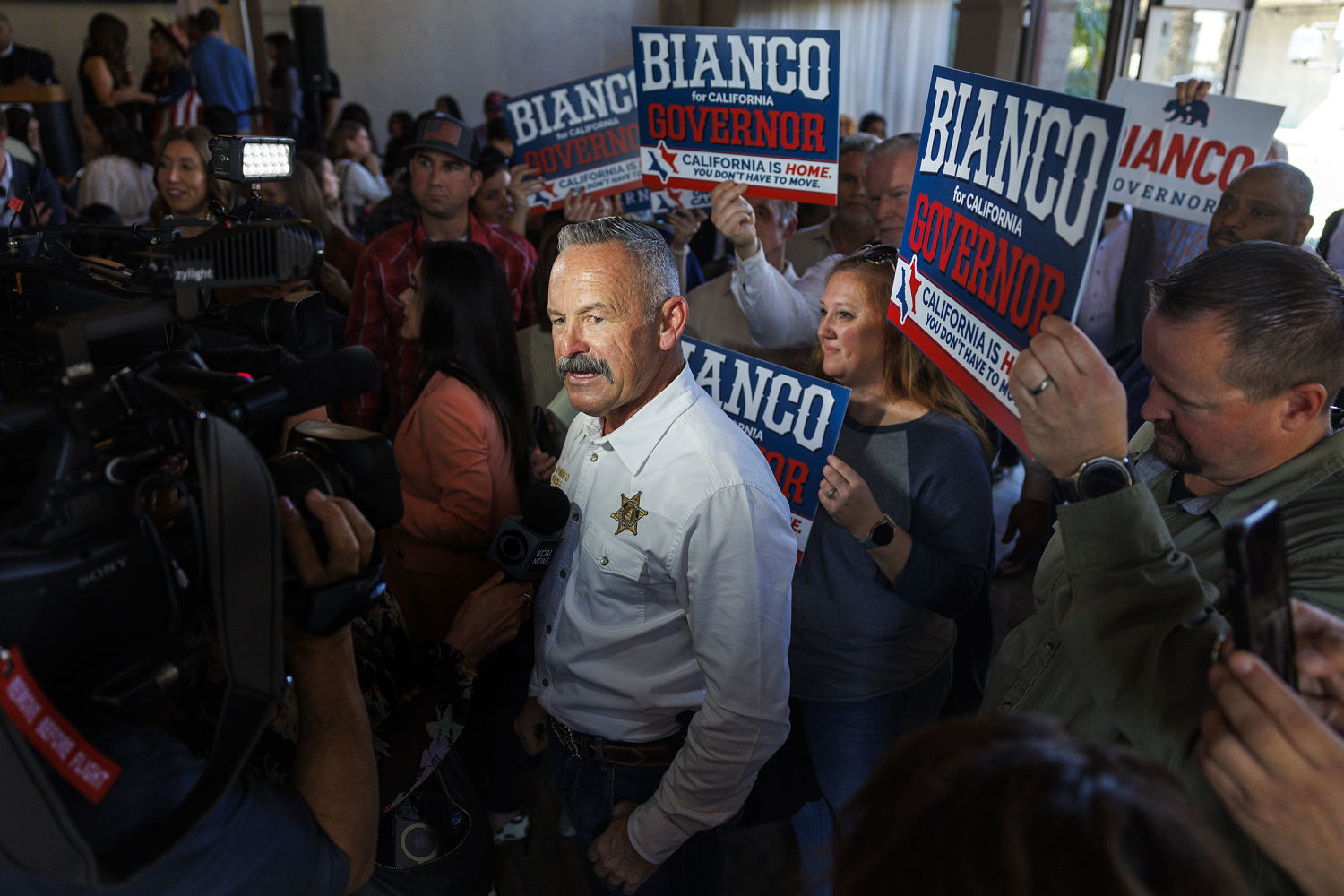
California GOP sheriff who's running for governor seizes ballots from 2025 election
#California #sheriff #governor #ballots #2025 election #GOP #seizure #investigation
📌 Key Takeaways
- A California Republican sheriff running for governor seized ballots from a 2025 election.
- The incident raises concerns about election integrity and political interference.
- The sheriff's actions may be linked to his gubernatorial campaign strategy.
- Authorities are investigating the legality and motives behind the ballot seizure.
📖 Full Retelling
🏷️ Themes
Election Integrity, Political Campaigns
📚 Related People & Topics

California
U.S. state
California () is a state in the Western United States that lies on the Pacific Coast. It borders Oregon to the north, Nevada and Arizona to the east, and shares an international border with the Mexican state of Baja California to the south. With almost 40 million residents across an area of 163,696 ...
Republican Party (United States)
American political party
The Republican Party, commonly known as the Grand Old Party (GOP), is the major conservative and right-wing political party in the United States. It emerged as the main rival of the Democratic Party in the 1850s, and the two parties have dominated American politics since then. The Republican Party w...
Entity Intersection Graph
Connections for California:
Mentioned Entities
Deep Analysis
Why It Matters
This news matters because it involves a law enforcement official interfering with election materials while campaigning for higher office, creating a potential conflict of interest and raising concerns about election integrity. It affects California voters by potentially undermining confidence in the electoral process and could influence the upcoming gubernatorial race. The incident also highlights ongoing tensions between election officials and some law enforcement agencies regarding election security protocols.
Context & Background
- California has experienced multiple election-related controversies in recent years, including debates over mail-in voting and ballot security measures
- The 2025 election mentioned would be for local offices, not the gubernatorial race the sheriff is running for, which creates questions about jurisdiction and timing
- Several states have seen increased law enforcement involvement in election administration since 2020, often driven by concerns about voter fraud allegations
- California's gubernatorial election cycle typically follows a different schedule than local elections, with the next governor's race occurring in 2026
What Happens Next
The county elections office will likely file legal challenges to recover the seized ballots, potentially leading to court hearings within weeks. State election officials may intervene to clarify proper procedures for handling election materials. The incident could trigger investigations by state authorities into whether election laws were violated, with findings expected within 1-2 months. The sheriff's gubernatorial campaign may face increased scrutiny regarding election integrity positions.
Frequently Asked Questions
Sheriffs might claim authority to investigate potential election law violations, though election materials are typically under the jurisdiction of county clerks and registrars. Such actions often stem from allegations of irregularities or fraud, though proper procedures usually require court oversight.
No, the 2025 election would be for local offices like city councils and school boards, not the gubernatorial election. The sheriff is running for governor in a future election cycle, making this seizure potentially politically motivated rather than directly related to their campaign.
Their votes may not be counted until the legal dispute is resolved, potentially disenfranchising those voters if the ballots aren't recovered in time. Election officials would need to determine if alternative voting methods or extensions are warranted to protect voting rights.
Typically, election materials are protected under state election codes with specific chain-of-custody requirements. Law enforcement usually needs a warrant or court order to seize ballots, unless there's immediate evidence of criminal activity that would justify emergency action.
This action could energize supporters who want stronger election security measures but alienate moderate voters concerned about election interference. The incident will likely become a central issue in both the primary and general election campaigns.