
SP
BravenNow
China’s leverage rises before high-stakes summit as Supreme Court curbs Trump tariffs
| USA | general | ✓ Verified - cnbc.com

China’s leverage rises before high-stakes summit as Supreme Court curbs Trump tariffs

#Supreme Court #Trump tariffs #China leverage #Taiwan #US-China summit #Trade war #International Emergency Economic Powers Act #Section 301

📌 Key Takeaways

  • Supreme Court ruling invalidates Trump's tariffs, strengthening China's position
  • Trump's tariff authority diminished before critical April summit with Xi Jinping
  • China expected to push for reduced U.S. support for Taiwan during talks
  • Trump may deploy non-tariff measures as alternative trade tools
  • Ongoing Section 301 investigation adds complexity to U.S.-China trade relations

📖 Full Retelling

The U.S. Supreme Court's decision to strike down President Donald Trump's sweeping tariffs has strengthened China's hand ahead of a summit with his counterpart Xi Jinping, where Beijing is expected to push for reduced U.S. support for Taiwan, analysts said. In a ruling Friday, the court determined Trump wrongfully invoked the International Emergency Economic Powers Act to implement broad tariffs, significantly weakening his negotiating leverage as he prepares for a trip to Beijing in April. Trump will visit China from March 31 to April 2, 2025, the first trip by an American president since his last visit in 2017, with Xi also expected to make a state visit to Washington later this year. The ruling has complicated Trump's efforts to extend a trade truce and push Beijing to purchase large quantities of U.S. agricultural products and aircraft. China's position has been bolstered as analysts predict Beijing will use this opportunity to press Washington on technology export controls, sanctions removal, and arms sales to Taiwan. While Trump's tariff authority has been diminished, experts note he could still deploy non-tariff measures such as technology controls and sanctions against Chinese entities as negotiating tools. The U.S. stance on Taiwan and security ties with regional partners remains largely unaffected by the court decision. China's commerce ministry has stated it is assessing the ruling's impacts while urging the U.S. to remove all unilateral tariffs, emphasizing that both countries stand to gain from cooperation. Despite the Supreme Court decision, China faces an ongoing Section 301 investigation over its compliance with the Phase One trade deal, which Beijing is monitoring closely while vowing to 'firmly safeguard' its interests.

🏷️ Themes

Trade Policy, US-China Relations, Geopolitics, Diplomacy

📚 Related People & Topics
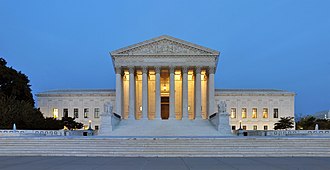
Supreme court

Supreme court

Highest court in a jurisdiction

In most legal jurisdictions, a supreme court, also known as a court of last resort, apex court, high (or final) court of appeal, and court of final appeal, is the highest court within the hierarchy of courts. Broadly speaking, the decisions of a supreme court are binding on all other courts in a nat...
View Profile → Wikipedia ↗
Trade war

Trade war

Economic conflict using tariffs or other trade barriers

# Trade War A **trade war** is an economic conflict typically resulting from extreme protectionism. It occurs when sovereign states implement or escalate tariffs and other trade barriers against one another as a component of their commercial policies. These actions are generally retaliatory, functi...

View Profile → Wikipedia ↗
Taiwan

Taiwan

Country in East Asia

Taiwan, officially the Republic of China (ROC), is a country in East Asia. The main island of Taiwan, also known as Formosa, lies between the East and South China Seas in the northwestern Pacific Ocean, with the People's Republic of China (PRC) to the northwest, Japan to the northeast, and the Phili...

View Profile → Wikipedia ↗

Tariffs in the Trump administration

Topics referred to by the same term

Tariffs in the Trump administration could refer to:

View Profile → Wikipedia ↗

Entity Intersection Graph

Connections for Supreme court:

👤 Donald Trump 19 shared
🌐 Tariff 15 shared
🌐 Tariffs in the Trump administration 12 shared
🌐 International Emergency Economic Powers Act 7 shared
🌐 Commercial policy 5 shared
View full profile

Deep Analysis

Why It Matters

The Supreme Court's ruling limiting Trump's tariff authority strengthens China's negotiating position ahead of high-level summits. This shift reduces U.S. leverage on trade issues and gives Beijing more room to push for concessions on Taiwan and technology controls. The decision could impact the extension of the trade truce and China's commitments to purchase U.S. goods.

Context & Background

  • Supreme Court struck down Trump's use of IEEPA for broad tariffs
  • Trump responded with new tariffs under Section 122 of Trade Act
  • China assessing impacts and urging removal of all unilateral tariffs

What Happens Next

The April summit may yield limited results like extending the trade ceasefire and some U.S. product sales. Thornier issues like export controls or economic rebalancing are unlikely to see progress. Upcoming talks may focus more on political matters, especially Taiwan, rather than purely economic deals.

Frequently Asked Questions

What was the Supreme Court's ruling on tariffs?

The Court ruled Trump wrongfully invoked the International Emergency Economic Powers Act to implement broad tariffs.

How does the ruling affect U.S.-China relations?

It weakens Trump's negotiating leverage and strengthens China's position ahead of summits.

What non-tariff tools can Trump still use?

He can deploy technology controls, sanctions against Chinese entities, and export restrictions on advanced chips.

Original Source
The U.S. Supreme Court's decision to strike down President Donald Trump's sweeping tariffs has strengthened China's hand ahead of a summit with his counterpart Xi Jinping, where Beijing is expected to push for reduced U.S. support for Taiwan, analysts said. In a ruling Friday, the court said Trump wrongfully invoked the International Emergency Economic Powers Act to implement broad tariffs. That decision has weakened Trump's negotiating leverage as he prepared for a trip to Beijing in April, said Wendy Cutler, senior vice president at the Asia Society Policy Institute. "He has effectively had his wings clipped on his signature economic policy," said Cutler, who was also a former U.S. trade representative. Trump will visit China from March 31 to April 2, the first trip by an American president since his last visit in 2017. Xi is also expected to make a state visit to Washington later this year. Analysts said the ruling could change the dynamics around efforts to extend a trade truce negotiated last year and complicate Trump's push for Beijing to buy large quantities of U.S. soybeans, Boeing aircraft and energy exports. "It limits Trump's ability to deploy tariffs at will, reduces pressure on Beijing to expand soybean purchases or ease rare earth access, and gives China leverage to push for the removal of the remaining 10% tariffs linked to fentanyl," said Dan Wang, China director of Eurasia Group. For Beijing's part, it could use the opportunity to press Washington to ease technology export controls, remove certain Chinese entities from U.S. sanctions lists, and cut back arms sales to Taiwan, said Xinbo Wu, director at Fudan University's Center for American Studies. "[The ruling] certainly helps strengthen China's position in its negotiation with the U.S," Wu said. Non-tariff tools While Trump's tariff authority may be somewhat diminished, he could deploy non-tariff measures, such as technology controls and sanctions against Chinese entities, as negotiating tools, ex...
Read full article at source

Source

cnbc.com

More from USA

News from Other Countries

🇬🇧 United Kingdom

🇺🇦 Ukraine