
SP
BravenNow
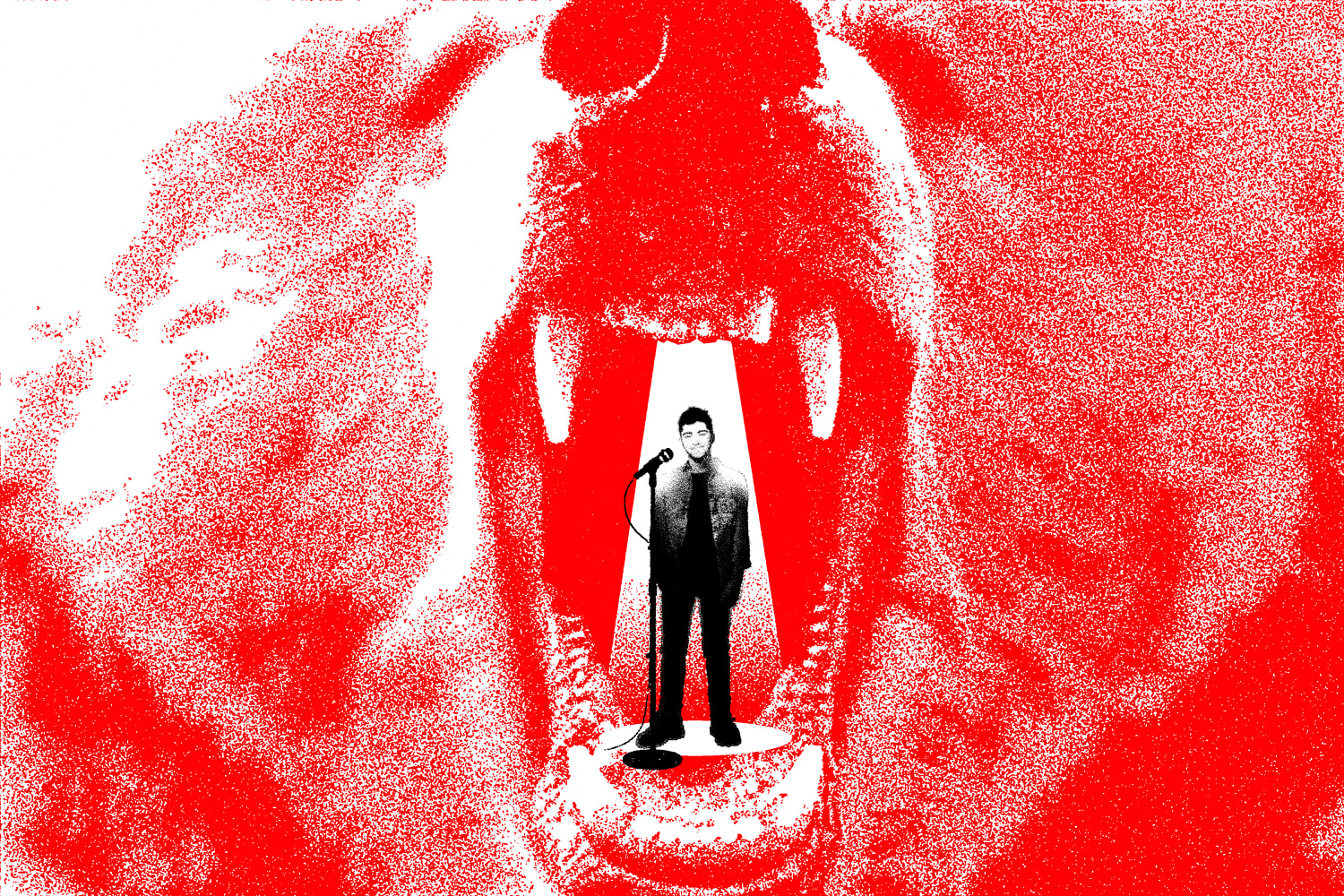
Comedy in Russia is booming. But stand-ups live in fear of being jailed for jokes.
| USA | general | ✓ Verified - nbcnews.com

Comedy in Russia is booming. But stand-ups live in fear of being jailed for jokes.

#Russia #Stand-up Comedy #Vladimir Putin #Freedom of Speech #Censorship #Imprisonment #Self-censorship #Political Humor

📌 Key Takeaways

  • Stand-up comedy is booming in Russia despite strict speech laws
  • Comedian Artemy Ostanin was sentenced to nearly 6 years in prison for jokes
  • New laws can punish 'discrediting' the military with up to 15 years imprisonment
  • Many comedians self-censor or have left the country to avoid persecution

📖 Full Retelling

Russian stand-up comedians are thriving in President Vladimir Putin's Russia despite facing potential imprisonment for their jokes, with the art form experiencing a boom in popularity since its introduction on television a decade ago, while authorities have increasingly enforced strict speech laws that can result in severe penalties including up to 15 years in prison for those found guilty of 'discrediting' the military or offending religious sensibilities, a situation that has led to self-censorship among performers and the exodus of some comedians to safer countries. The flourishing comedy scene exists under a cloud of fear, exemplified by the case of 29-year-old Artemy Ostanin, who was recently sentenced to five years and nine months in prison by a Moscow court for jokes that authorities claimed mocked disabled war veterans and religious figures. Ostanin fled to Belarus after being targeted by pro-government activists from the group Zov Naroda, only to be arrested and deported back to Russia, where he alleged he was severely beaten by Belarusian security services. Many comedians now employ disclaimers before performances, with one popular comedy group posting videos that explicitly state their jokes 'do not carry any religious, philosophical, or ideological assertion' to avoid potential legal repercussions. The climate has changed dramatically since Russia's invasion of Ukraine in February 2022, when authorities made it clear that joking about the military was off-limits, with TV producers allegedly warning comedians, 'We're making a comedy show, not a revolution,' and threatening offenders with dismissal or criminal charges. Some performers have resorted to performing for small, trusted audiences of around 20 people whom they know personally, avoiding any public platforms where their jokes might be misinterpreted or reported.

🏷️ Themes

Free Speech, Political Repression, Art Under Authoritarianism

📚 Related People & Topics

Russia

Russia

Country in Eastern Europe and North Asia

Russia, or the Russian Federation, is a country in Eastern Europe and North Asia. It is the largest country in the world, spanning eleven time zones and sharing land borders with fourteen countries. With a population of over 140 million, Russia is the most populous country in Europe and the ninth-mo...

View Profile → Wikipedia ↗
Vladimir Putin

Vladimir Putin

President of Russia (2000–2008; since 2012)

Vladimir Vladimirovich Putin (born 7 October 1952) is a Russian politician and former intelligence officer who has served as President of Russia since 2012, having previously served from 2000 to 2008. Putin also served as Prime Minister of Russia from 1999 to 2000 and again from 2008 to 2012. He has...

View Profile → Wikipedia ↗
Censorship

Censorship

Suppression of speech and information

Censorship is the suppression of speech, public communication, or other information. This may be done on the basis that such material is considered objectionable, harmful, sensitive, or "inconvenient". Censorship can be conducted by governments and private institutions.

View Profile → Wikipedia ↗
Imprisonment

Imprisonment

Restraint of a person's liberty by judicial or other detention

Imprisonment or incarceration is the restraint of a person's liberty for any cause whatsoever, whether by authority of the government, or by a person acting without such authority. In the latter case it is considered "false imprisonment". Imprisonment does not necessarily imply a place of confinemen...

View Profile → Wikipedia ↗
Freedom of speech

Freedom of speech

Right to communicate one's opinions and ideas

Freedom of speech is a principle that supports the freedom of an individual or a community to articulate their opinions and ideas without fear of retaliation, censorship, or legal sanction. The right to freedom of expression has been recognised as a human right in the Universal Declaration of Human ...

View Profile → Wikipedia ↗

Entity Intersection Graph

Connections for Russia:

🌐 Ukraine 10 shared
🌐 Hungary 3 shared
🌐 CBS News 2 shared
🌐 Sanction 2 shared
🌐 European Union 2 shared
View full profile

Deep Analysis

Why It Matters

This article highlights how Russia's crackdown on free speech is directly impacting comedy and artistic expression, creating a climate of fear. The imprisonment of comedians for jokes demonstrates the severe consequences of dissent under laws criminalizing criticism of the government and military. This reflects broader suppression of civil liberties and the weaponization of legal systems to silence opposition.

Context & Background

  • Russia introduced draconian laws criminalizing 'discrediting' the military after invading Ukraine
  • Comedians face prison sentences for jokes deemed critical of the government or war effort
  • Pro-government activist groups monitor and report comedians to authorities

What Happens Next

More comedians will likely self-censor or leave Russia to avoid persecution, leading to diminished artistic freedom. Political comedy will continue underground in small, trusted circles but disappear from mainstream platforms. The legal precedent set by these cases will further chill free expression across Russian society.

Frequently Asked Questions

What laws are being used to prosecute comedians in Russia?

Laws against 'discrediting' the Russian army and inciting hatred, with penalties up to 15 years in prison.

Why are comedians specifically targeted by authorities?

Comedy reaches wide audiences and can subtly critique power structures, making it threatening to authorities who take jokes literally as political statements.

How have comedians responded to the crackdown?

Many have removed controversial material, fled the country, or now perform only for small trusted audiences to avoid prosecution.

Original Source
Comedy in Russia is booming. But stand-ups live in fear of being jailed for jokes. Comparing stand-up in Russia to an electric fence, one comedian told NBC News it was “easy to get through, but God forbid you brush the side — you’re dead.” Daniel Zender for NBC News Share Add NBC News to Google Feb. 22, 2026, 5:00 AM EST By Henry Austin Listen to this article with a free account 00:00 00:00 Watched more than 1.3 million times since it was posted by Russian comedy group “Plyushki” to YouTube last month, the video comes with a disclaimer. “Some of the jokes are based on wordplay and do not carry any religious, philosophical, or ideological assertion,” it says, acknowledging that comedy can be a risky business in Russia , where some have been jailed for jokes, particularly if they are thought to be critical of the war in Ukraine . “Maybe there’s problems in the country,” one of the comedians said, a nod to the fact that addressing the country’s issues head-on could be dangerous. “There’s a lot of cameras here,” another replied, to laughter from the crowd, because the words for camera and jail cell are the same in Russian. While there have been no repercussions for the group, others including Artemy Ostanin are not so lucky. The 29-year-old was sentenced to five years and nine months in prison by a Moscow court earlier this month after he was found guilty of inciting hatred for a joke about being tripped up by a disabled person. A second joke about Jesus Christ led to a conviction for offending religious believers. They were brought to the attention of authorities in March by pro-government activists from a group called Zov Naroda, or Call of the People, which accused him of mocking a fighter who lost his legs in the war in Ukraine — a claim he denied, insisting the joke had been misinterpreted. Aware that he could be in trouble, Ostanin fled to Belarus , only to be arrested and deported back to Russia. He told the Moscow courtroom that he was severely beaten in a fores...
Read full article at source

Source

nbcnews.com

More from USA

News from Other Countries

🇬🇧 United Kingdom

🇺🇦 Ukraine