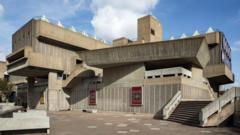
'Concrete masterpiece': London's brutalist Southbank Centre granted Grade II listed status
#Southbank Centre #Brutalism #London #Grade II listed #Historic England #Hayward Gallery #Architecture
📌 Key Takeaways
- London's Southbank Centre has been granted Grade II listed status to protect its architectural heritage.
- The complex was once voted 'Britain's ugliest building' when it first opened in October 1967.
- The listing includes major venues such as the Hayward Gallery, Queen Elizabeth Hall, and the Purcell Room.
- The decision reflects a shift in appreciation for Brutalist architecture and its role in post-war British history.
📖 Full Retelling
🏷️ Themes
Architecture, Culture, Heritage
📚 Related People & Topics

Listed building
Protected historic structure in the United Kingdom
In the United Kingdom, a listed building is a structure of particular architectural or historic interest deserving of special protection. Such buildings are placed on one of the four statutory lists maintained by Historic England in England, Historic Environment Scotland in Scotland, Cadw in Wales, ...
Brutalist architecture
Architectural style
Brutalist architecture is an architectural style that emerged during the 1950s in the United Kingdom, among the reconstruction projects of the post-war era. Brutalist buildings are known for minimalist construction showcasing the bare building materials and structural elements over decorative design...

Southbank Centre
Arts centre in London, England
Southbank Centre is an arts centre in London, England. It is adjacent to the separately owned National Theatre and BFI Southbank. It comprises the three main performance spaces – the Royal Festival Hall, Queen Elizabeth Hall, and Purcell Room – as well as the Hayward Gallery and National Poetry Lib...
Historic England
Public body to protect the historical environment of England
Historic England (officially the Historic Buildings and Monuments Commission for England) is an executive non-departmental public body of the British Government sponsored by the Department for Culture, Media and Sport. It is tasked with protecting the historic environment of England by preserving an...
London
Capital of England and the United Kingdom
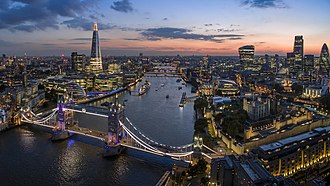
London is the capital and largest city of both England and the United Kingdom, with a population of 9.1 million people in 2024. Its wider metropolitan area is the largest in Western Europe, with a population of 15.1 million. London stands on the River Thames in southeast England, at the head of a 50...
🔗 Entity Intersection Graph
Connections for Listed building:
- 👤 Hayward Gallery (2 shared articles)
- 🌐 Brutalist architecture (2 shared articles)
- 🏢 Southbank Centre (2 shared articles)
- 👤 Historic England (1 shared articles)
- 🌐 Architecture of London (1 shared articles)