
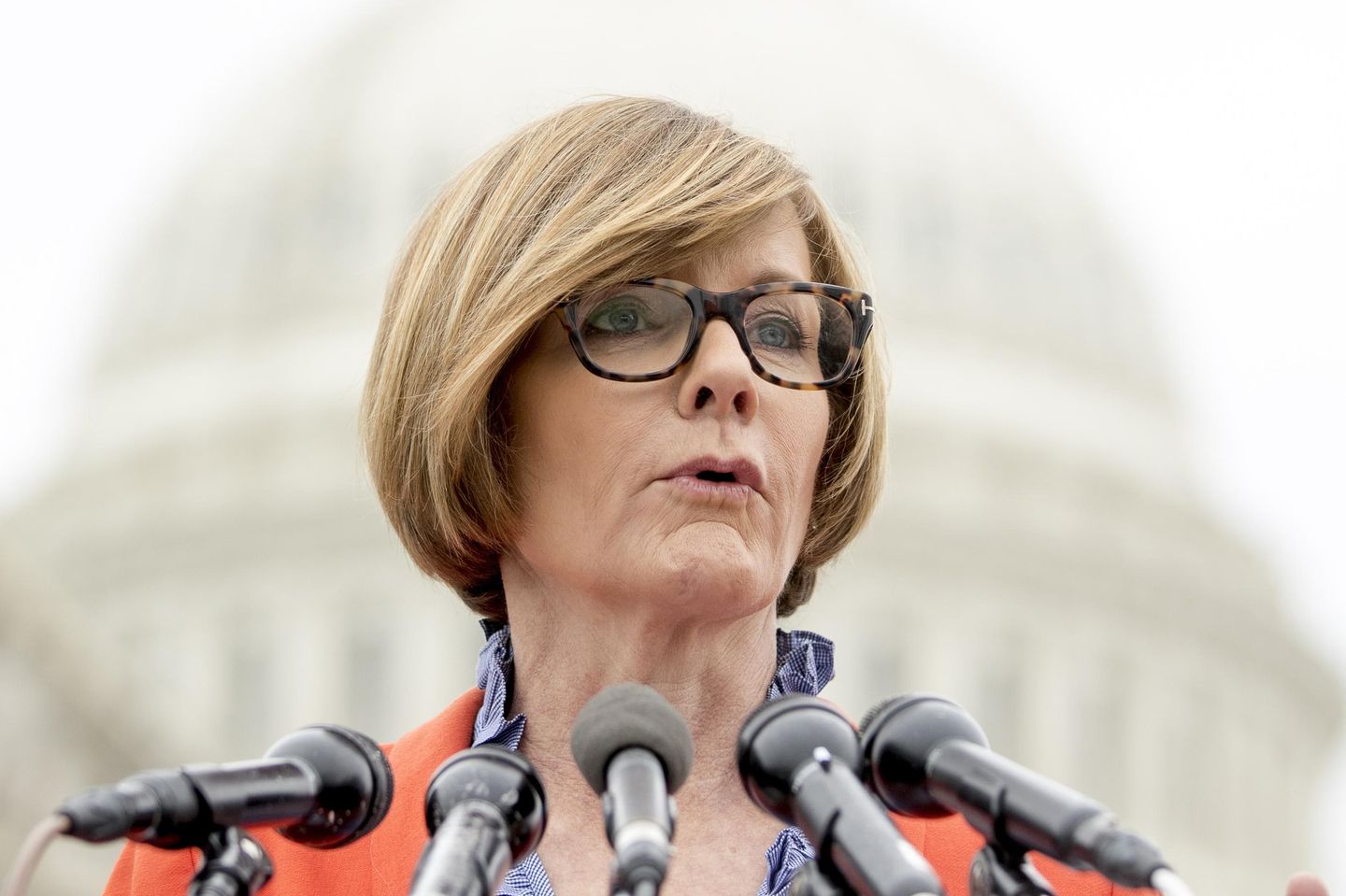
Congresswoman curses Trump for attending SCOTUS hearing on birthright citizenship
📖 Full Retelling
📚 Related People & Topics
Member of congress
Essential office of an elected members called congress
A member of congress (MOC), also known as a congressman, congresswoman or congressperson is a person who has been appointed or elected and inducted into an official body called a congress, typically to represent a particular constituency in a legislature. The term member of parliament (MP) is an equ...

Supreme Court of the United States
Highest court of jurisdiction in the US
The Supreme Court of the United States (SCOTUS) is the highest court in the federal judiciary of the United States. It has ultimate appellate jurisdiction over all U.S. federal court cases, and over state court cases that turn on questions of U.S. constitutional or federal law. It also has original ...

Donald Trump
President of the United States (2017–2021; since 2025)
Donald John Trump (born June 14, 1946) is an American politician, media personality, and businessman who is the 47th president of the United States. A member of the Republican Party, he served as the 45th president from 2017 to 2021. Born into a wealthy New York City family, Trump graduated from the...
Entity Intersection Graph
Connections for Member of congress:
View full profileMentioned Entities
Deep Analysis
Why It Matters
This news matters because it highlights the ongoing political and legal battle over birthright citizenship, a fundamental principle of U.S. law under the 14th Amendment. It affects millions of immigrants and their children, as well as legal scholars, policymakers, and advocacy groups on both sides of the immigration debate. The controversy reflects deeper divisions over immigration policy, constitutional interpretation, and the role of the Supreme Court in shaping national identity.
Context & Background
- Birthright citizenship is established by the 14th Amendment, ratified in 1868, which states that 'all persons born or naturalized in the United States... are citizens of the United States.'
- Former President Donald Trump has repeatedly challenged birthright citizenship, arguing it encourages 'anchor babies' and should be ended via executive order or legislation.
- The Supreme Court has never directly ruled on whether the 14th Amendment guarantees citizenship to children of undocumented immigrants, though lower courts have generally upheld it.
What Happens Next
The Supreme Court may eventually hear a case on birthright citizenship, potentially leading to a landmark ruling. In the meantime, political debates will continue, with Republicans likely pushing for restrictive legislation and Democrats defending the current interpretation. Advocacy groups will mobilize around the issue, especially as the 2024 election approaches.
Frequently Asked Questions
Birthright citizenship is the legal principle that anyone born on U.S. soil automatically becomes a U.S. citizen, regardless of their parents' immigration status. It is derived from the 14th Amendment to the Constitution.
Trump argues that birthright citizenship encourages illegal immigration by creating 'anchor babies'—children born in the U.S. to undocumented parents who may later help their families gain legal status. He believes it undermines immigration enforcement.
Most legal scholars say no—changing birthright citizenship would require a constitutional amendment, which is extremely difficult. However, some conservatives argue Congress or the president could reinterpret the 14th Amendment via legislation or executive action.
If birthright citizenship were overturned, children born to undocumented parents could be denied citizenship, leaving them vulnerable to deportation and limiting their access to benefits. It would create a permanent underclass of non-citizen residents.