
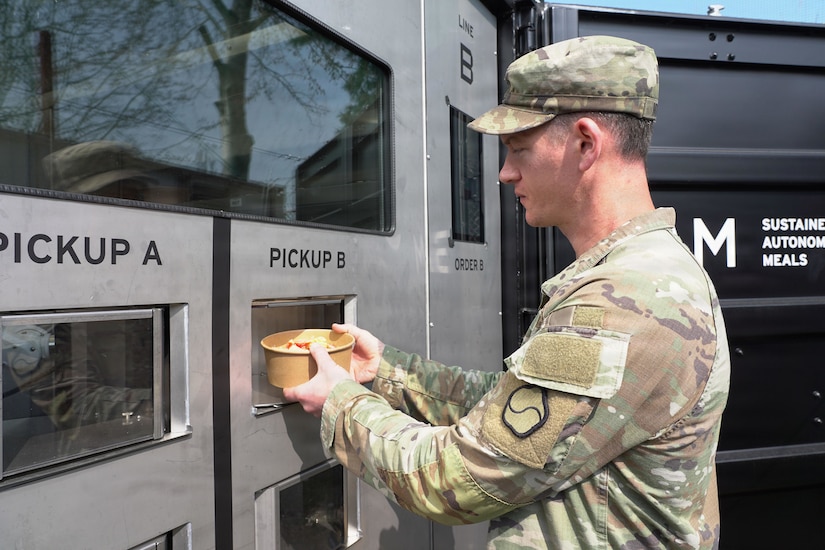
Containerized Autonomous Kitchen Expands Army Food Modernization to the Field
#Army #autonomous kitchen #containerized #field deployment #food modernization #logistics #military technology #soldier nutrition
📌 Key Takeaways
- The U.S. Army is deploying a containerized autonomous kitchen to modernize field food service.
- This system enhances operational efficiency by automating meal preparation in remote locations.
- It supports the Army's broader initiative to update and improve food logistics and soldier nutrition.
- The kitchen is designed for rapid deployment and use in challenging field environments.
📖 Full Retelling
🏷️ Themes
Military Technology, Food Modernization
📚 Related People & Topics

Army
Military branch for ground warfare
An army, ground force or land force is an armed force that fights primarily on land. In the broadest sense, it is the land-based military branch, service branch, or armed service of a nation or country. It may also include aviation assets by possessing an army aviation component.
Entity Intersection Graph
Connections for Army:
View full profileMentioned Entities
Deep Analysis
Why It Matters
This development matters because it directly impacts soldier welfare and operational effectiveness by improving field nutrition. It affects Army logistics personnel who manage food services, combat units that rely on consistent meals during deployments, and defense contractors involved in military modernization programs. The technology represents a significant advancement in military logistics that could reduce manpower requirements while increasing food safety and consistency in challenging environments.
Context & Background
- The U.S. Army has been modernizing its food service systems for decades, moving from traditional field kitchens to more efficient solutions
- Military field feeding has historically faced challenges including food safety, logistical complexity, and maintaining meal quality in austere environments
- Autonomous and containerized systems have become increasingly common in military applications for everything from medical facilities to command centers
What Happens Next
The Army will likely conduct field tests and evaluations of the containerized kitchens in various operational environments. Successful testing could lead to procurement contracts and deployment with forward units within 12-24 months. Further development may include integration with other autonomous logistics systems and potential adaptation for other military branches or disaster response applications.
Frequently Asked Questions
The kitchen likely uses automated cooking equipment, inventory management systems, and potentially robotic food preparation to operate with minimal human intervention. This reduces staffing requirements while maintaining consistent food quality and safety standards in field conditions.
Containerized autonomous kitchens offer greater mobility, faster setup times, and reduced manpower needs compared to traditional field kitchens. They provide more consistent meal quality with better food safety controls while being easier to transport and deploy to remote locations.
No, human oversight will still be required for maintenance, menu planning, and quality control. The system reduces but doesn't eliminate personnel needs, allowing trained cooks to focus on higher-value tasks rather than repetitive food preparation work.
Limitations may include high initial costs, maintenance requirements in harsh environments, and potential challenges with power supply in remote locations. The system's effectiveness may also depend on reliable supply chains for ingredients and replacement parts.