
Cox Communications not liable for pirated music, Supreme Court rules
#Supreme Court #Cox Communications #copyright infringement #music piracy #record labels #Sony Music #internet service provider #damages
📌 Key Takeaways
- Supreme Court unanimously ruled Cox Communications not liable for users' pirated music downloads
- Court found Cox did not induce infringement or provide services tailored to piracy
- Record labels led by Sony Music had sued Cox in 2018 over 60,000 subscribers downloading 10,000+ songs
- Jury in 2019 had previously found Cox liable and awarded $1 billion in damages to Sony
📖 Full Retelling
🏷️ Themes
Copyright Law, Internet Liability
📚 Related People & Topics
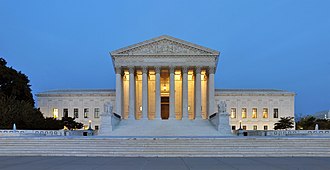
Supreme court
Highest court in a jurisdiction
In most legal jurisdictions, a supreme court, also known as a court of last resort, apex court, high (or final) court of appeal, and court of final appeal, is the highest court within the hierarchy of courts. Broadly speaking, the decisions of a supreme court are binding on all other courts in a nat...
Cox Communications
American cable provider
Cox Communications, Inc. (also known as Cox Cable and formerly Cox Broadcasting Corporation, Dimension Cable Services and Times-Mirror Cable), is an American digital cable television provider, telecommunications and home automation services company. It is the third-largest cable television provider ...

Sony Music
American multinational music recording company
Sony Music Entertainment (SME), commonly known as Sony Music, is an American multinational music company owned by Sony Group Corporation. It is the recording division of Sony Music Group, with the other half being the publishing division, Sony Music Publishing. Founded in 1929 as American Record Cor...
Entity Intersection Graph
Connections for Supreme court:
Mentioned Entities
Deep Analysis
Why It Matters
This ruling is important because it clarifies the legal responsibilities of internet service providers (ISPs) regarding user copyright infringement, potentially limiting their liability and reducing litigation risks. It affects ISPs like Cox by providing legal protection against massive damages claims, while impacting record labels and copyright holders by making it harder to hold ISPs accountable for piracy on their networks. The decision also influences future copyright enforcement strategies, as rights holders may need to focus more on direct legal action against individual infringers rather than targeting service providers.
Context & Background
- The Digital Millennium Copyright Act (DMCA) of 1998 established safe harbor provisions that protect ISPs from liability for user copyright infringement if they follow specific procedures, such as responding to takedown notices.
- Previous court cases, like MGM Studios v. Grokster (2005), established that companies can be liable for copyright infringement if they actively induce or encourage it, setting precedent for this type of litigation.
- Cox Communications had faced earlier legal challenges over copyright issues, including a 2015 case where it was accused of not adequately addressing repeat infringers among its subscribers.
- The $1 billion damages award in 2019 was one of the largest in copyright history, highlighting the high stakes for ISPs in these types of cases.
What Happens Next
Record labels may shift their anti-piracy strategies toward more direct legal action against individual infringers or explore legislative avenues to strengthen ISP accountability. Cox and other ISPs might face increased pressure to implement more robust copyright monitoring systems voluntarily. Future court cases will likely reference this ruling when determining ISP liability, potentially leading to further legal clarifications in lower courts.
Frequently Asked Questions
Internet users are unlikely to see immediate changes, but the ruling may reduce pressure on ISPs to aggressively monitor or restrict user activities over piracy concerns. However, copyright holders may increase direct legal action against individual infringers, potentially affecting users who engage in piracy.
Other ISPs benefit from reduced liability risks, as the ruling reinforces that they are not automatically responsible for user infringement unless they actively encourage it. This may lower legal costs and discourage similar lawsuits against providers like Comcast or Verizon.
Yes, but the Supreme Court's ruling sets a higher bar for proving liability, requiring evidence that the ISP induced infringement or tailored services for that purpose. Future lawsuits will need stronger proof of active involvement by the ISP.
The Court found that Cox did not induce infringement or provide services specifically designed for piracy, focusing on the lack of evidence that the company actively encouraged illegal downloads. This interpretation aligns with existing copyright law principles regarding secondary liability.
Not necessarily, as copyright holders can still pursue individual infringers and use other enforcement methods. The ruling does not legalize piracy but clarifies that ISPs are not automatically liable for it, which may shift enforcement strategies rather than increase infringement rates.