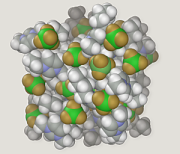
CryoNet.Refine is a new one-step diffusion model for rapid structural model refinement
The framework automates and accelerates molecular structure refinement using deep learning
It outperforms traditional methods like Phenix.real_space_refine in benchmarks
The tool is applicable to both protein complexes and DNA/RNA-protein complexes
Researchers have made the framework publicly available with web server and open-source code
📖 Full Retelling
Researchers Fuyao Huang, Xiaozhu Yu, Kui Xu, and Qiangfeng Cliff Zhang introduced CryoNet.Refine, a novel one-step diffusion model for rapid refinement of structural models with cryo-EM density map restraints, in a paper submitted to arXiv on February 25, 2026 and accepted for presentation at the International Conference on Learning Representations 2026. The development addresses significant limitations in traditional refinement pipelines such as Phenix.real_space_refine and Rosetta, which are computationally expensive, demand extensive manual tuning, and create substantial bottlenecks for researchers working with high-resolution structural determination by cryo-electron microscopy. CryoNet.Refine represents a breakthrough in structural biology by automating and accelerating molecular structure refinement through an end-to-end deep learning framework that integrates a density-aware loss function with robust stereochemical restraints, enabling rapid optimization of structures against experimental data. In benchmarks against traditional methods, the framework consistently demonstrates substantial improvements in both model-map correlation and overall geometric quality metrics while maintaining versatility for refining both protein complexes and DNA/RNA-protein complexes.
Discovering chemical properties by physical simulations
Molecular modelling encompasses all methods, theoretical and computational, used to model or mimic the behaviour of molecules. The methods are used in the fields of computational chemistry, drug design, computational biology and materials science to study molecular systems ranging from small chemica...
In machine learning, deep learning focuses on utilizing multilayered neural networks to perform tasks such as classification, regression, and representation learning. The field takes inspiration from biological neuroscience and revolves around stacking artificial neurons into layers and "training" t...
Computational biology refers to the use of techniques in computer science, data analysis, mathematical modeling and computational simulations to understand biological systems and relationships. An intersection of computer science, biology, and data science, the field also has foundations in applied ...
Technique for the generative modeling of a continuous probability distribution
In machine learning, diffusion models, also known as diffusion-based generative models or score-based generative models, are a class of latent variable generative models. A diffusion model consists of two major components: the forward diffusion process, and the reverse sampling process. The goal of ...
--> Quantitative Biology > Biomolecules arXiv:2602.22263 (q-bio) [Submitted on 25 Feb 2026] Title: CryoNet.Refine: A One-step Diffusion Model for Rapid Refinement of Structural Models with Cryo-EM Density Map Restraints Authors: Fuyao Huang , Xiaozhu Yu , Kui Xu , Qiangfeng Cliff Zhang View a PDF of the paper titled CryoNet.Refine: A One-step Diffusion Model for Rapid Refinement of Structural Models with Cryo-EM Density Map Restraints, by Fuyao Huang and 3 other authors View PDF HTML Abstract: High-resolution structure determination by cryo-electron microscopy (cryo-EM) requires the accurate fitting of an atomic model into an experimental density map. Traditional refinement pipelines such as Phenix.real_space_refine and Rosetta are computationally expensive, demand extensive manual tuning, and present a significant bottleneck for researchers. We present this http URL , an end-to-end deep learning framework that automates and accelerates molecular structure refinement. Our approach utilizes a one-step diffusion model that integrates a density-aware loss function with robust stereochemical restraints, enabling rapid optimization of a structure against experimental data. this http URL provides a unified and versatile solution capable of refining protein complexes as well as DNA/RNA-protein complexes. In benchmarks against Phenix.real_space_refine, this http URL consistently achieves substantial improvements in both model-map correlation and overall geometric quality metrics. By offering a scalable, automated, and powerful alternative, this http URL aims to serve as an essential tool for next-generation cryo-EM structure refinement. Web server: this https URL Source code: this https URL . Comments: Published as a conference paper at ICLR 2026 Subjects: Biomolecules (q-bio.BM) ; Artificial Intelligence (cs.AI); Image and Video Processing (eess.IV); Quantitative Methods (q-bio.QM) Cite as: arXiv:2602.22263 [q-bio.BM] (or arXiv:2602.22263v1 [q-bio.BM] for this version) htt...