
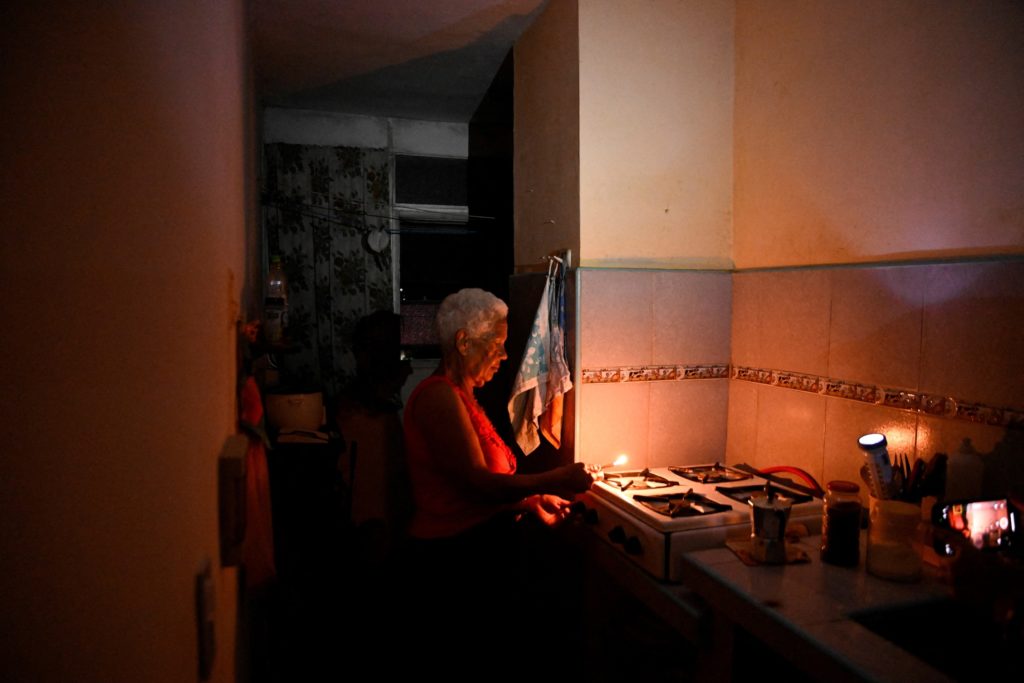
Cuba's economic and energy crisis worsens as Trump threatens action
#Cuba #economic crisis #energy crisis #Trump #sanctions #geopolitics #humanitarian
📌 Key Takeaways
- Cuba faces deepening economic and energy crises, exacerbating existing hardships.
- Former U.S. President Trump threatens new actions against Cuba, potentially tightening sanctions.
- The situation reflects ongoing geopolitical tensions affecting Cuba's stability and resources.
- The crises could lead to further humanitarian challenges and regional instability.
📖 Full Retelling
🏷️ Themes
Economic Crisis, Geopolitical Tensions
📚 Related People & Topics

Cuba
Country in the Caribbean
Cuba, officially the Republic of Cuba, is an island country in the Caribbean. It comprises the eponymous main island as well as 4,195 islands, islets, and cays. Situated at the convergence of the Caribbean Sea, Gulf of Mexico, and Atlantic Ocean, Cuba is located east of the Yucatán Peninsula, south ...

Donald Trump
President of the United States (2017–2021; since 2025)
Donald John Trump (born June 14, 1946) is an American politician, media personality, and businessman who is the 47th president of the United States. A member of the Republican Party, he served as the 45th president from 2017 to 2021. Born into a wealthy New York City family, Trump graduated from the...
Entity Intersection Graph
Connections for Cuba:
Mentioned Entities
Deep Analysis
Why It Matters
This news matters because Cuba's worsening economic and energy crisis directly impacts the daily lives of 11 million Cubans, potentially leading to increased migration pressures in the region. The situation affects U.S.-Cuba relations at a critical time when the Biden administration had been considering easing some Trump-era restrictions. The combination of domestic crisis and external threats creates instability in the Caribbean that could have broader geopolitical implications for Latin America and U.S. foreign policy.
Context & Background
- Cuba has faced a severe economic crisis since 2020, with GDP contracting approximately 11% in 2020-2021 due to COVID-19 impacts and U.S. sanctions
- The Trump administration reinstated and expanded numerous sanctions against Cuba in 2017-2020, reversing Obama-era normalization efforts
- Cuba's energy grid has suffered chronic failures and blackouts since 2022, with power outages sometimes lasting 12+ hours daily
- Cuba relies heavily on imported fuel, primarily from Venezuela, but shipments have declined due to Venezuela's own economic crisis
- The Biden administration had begun limited engagement with Cuba in 2022-2023, including restarting some visa processing and family reunification programs
What Happens Next
Cuba will likely implement further energy rationing and may seek emergency fuel shipments from allies like Russia or China. The U.S. State Department will probably issue a formal response within days, either clarifying or walking back Trump's threats. International organizations like the UN may call for humanitarian exceptions to sanctions if the energy crisis causes significant health impacts. Watch for potential migration spikes from Cuba to Florida in the coming months if conditions deteriorate further.
Frequently Asked Questions
While the article doesn't specify exact measures, Trump's previous actions included designating Cuba as a state sponsor of terrorism, restricting remittances, and limiting travel. His threats likely involve further sanctions on tourism, financial transactions, or Cuban government assets.
Cuba has been experiencing daily blackouts lasting 8-12 hours in many areas, forcing factories and businesses to close. The aging power grid has multiple failed generators, and the country lacks sufficient fuel imports to maintain basic electricity service nationwide.
The U.S. has maintained various sanctions since 1960, originally citing Cuba's communist government and alignment with Soviet/Russian interests. Current justifications include human rights concerns, political repression, and Cuba's support for Venezuela's government.
Cubans face severe shortages of food, medicine, and basic goods, with inflation exceeding 500% in recent years. Blackouts disrupt hospitals, water pumps, and refrigeration, while transportation has become extremely difficult due to fuel shortages.
Countries could provide humanitarian aid through UN channels, press for sanctions exemptions for essential goods, or offer technical assistance for energy infrastructure. However, U.S. sanctions complicate international financial transactions with Cuba.