
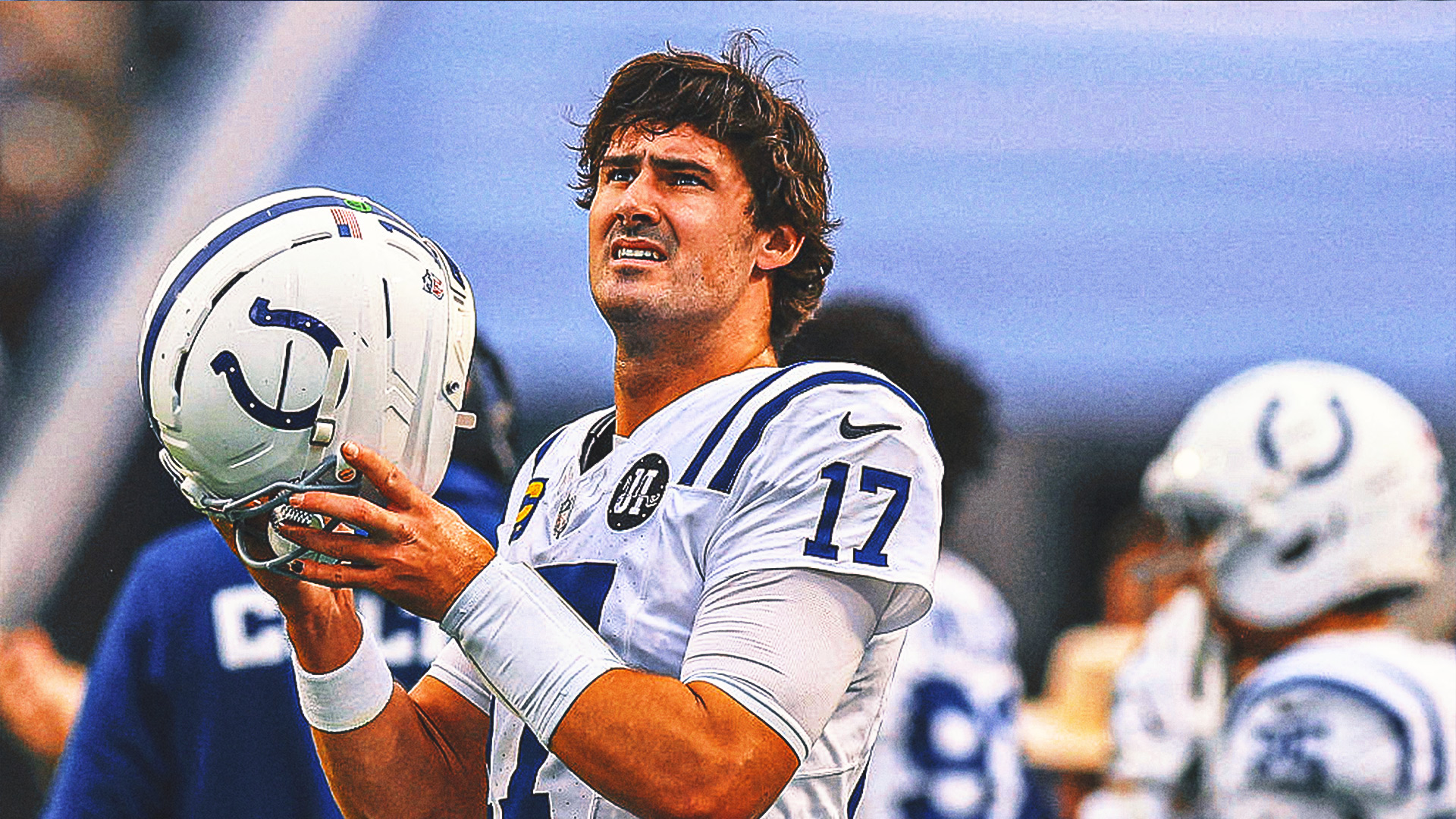
Daniel Jones Among 5 Riskiest Deals of NFL Free Agency
#Daniel Jones #Jaelan Phillips #NFL free agency #contract risk #Achilles injury #salary cap #pass-rusher
📌 Key Takeaways
- Daniel Jones signed a two-year, $88 million deal with the Colts despite a recent Achilles tear and injury history.
- Jaelan Phillips received a four-year, $120 million contract from the Panthers despite declining sack numbers and past injuries.
- Both deals are considered risky due to high financial commitments and uncertainty over player health and performance.
- The article highlights the broader trend of high-stakes, potentially unwise spending in NFL free agency.
📖 Full Retelling
🏷️ Themes
NFL Contracts, Injury Risk
📚 Related People & Topics

Jaelan Phillips
American football player (born 1999)
Jaelan Everett Phillips (born May 28, 1999) is an American professional football linebacker for the Philadelphia Eagles of the National Football League (NFL). He played college football for the UCLA Bruins and Miami Hurricanes for two seasons. Phillips went on to study musical production at the Los ...
Entity Intersection Graph
Connections for Daniel Jones:
Mentioned Entities
Deep Analysis
Why It Matters
This analysis matters because NFL free agency decisions have massive financial implications for teams and shape competitive balance for years. Poor contracts can cripple a team's salary cap, limiting their ability to sign other players and potentially costing executives their jobs. These risky deals affect team owners, general managers, coaches, and ultimately fans who invest emotionally and financially in their teams' success. The evaluation of these contracts provides insight into how NFL teams assess injury risk versus potential reward in a high-stakes marketplace.
Context & Background
- NFL free agency occurs annually in March, allowing players whose contracts have expired to sign with new teams
- The salary cap for the 2024 NFL season is approximately $255.4 million per team, making contract management crucial
- Daniel Jones was originally drafted 6th overall by the New York Giants in 2019 and played there for four seasons before joining Indianapolis
- Achilles tendon injuries are particularly concerning for quarterbacks as they affect mobility and pushing off to throw
- The NFL's guaranteed money system means teams must pay injured players even if they cannot perform, creating significant financial risk
What Happens Next
Daniel Jones will undergo extensive rehabilitation throughout the offseason with team medical staff monitoring his progress. The Colts will likely draft a quarterback or sign a veteran backup during training camp as insurance. Jones' performance in preseason practices will determine if he starts Week 1 or begins the season on injured reserve. By mid-October, the Colts will know if this investment was justified or if they need to pursue alternative quarterback options for 2025.
Frequently Asked Questions
The contract is risky primarily due to Jones' recent Achilles tear and history of serious injuries including a previous ACL tear and neck issues. His performance declined significantly after his last major injury with the Giants, creating concerns about his recovery trajectory. At age 29 with multiple injuries, there's uncertainty about whether he can return to his 2023 form.
If Jones cannot play, the Colts still owe him $50 million in guaranteed money regardless of his availability. This would severely impact their salary cap flexibility to sign replacement players. The team would need to rely on backup quarterbacks while still carrying Jones' significant cap hit, potentially derailing their season.
Teams employ medical staff who conduct thorough physical examinations and review medical histories before contracts are finalized. They assess recovery timelines, potential for re-injury, and long-term durability. Teams often include injury protection clauses, but guaranteed money remains a significant risk they must weigh against a player's potential contribution.
Phillips' contract is risky because he's receiving elite pass-rusher money despite declining sack production and significant injury history. At $30 million annually, he's being paid near the top of his position despite never recording double-digit sacks in a season. His Achilles and knee injuries create durability concerns for a position requiring explosive movement.
Teams generally evaluate free agent signings after one full season, though quarterback contracts often get 2-3 years for proper assessment. Major injuries can accelerate evaluation timelines, while developmental players might get longer leashes. The true impact of bad contracts often becomes apparent in years 2-3 when cap consequences limit roster flexibility.