
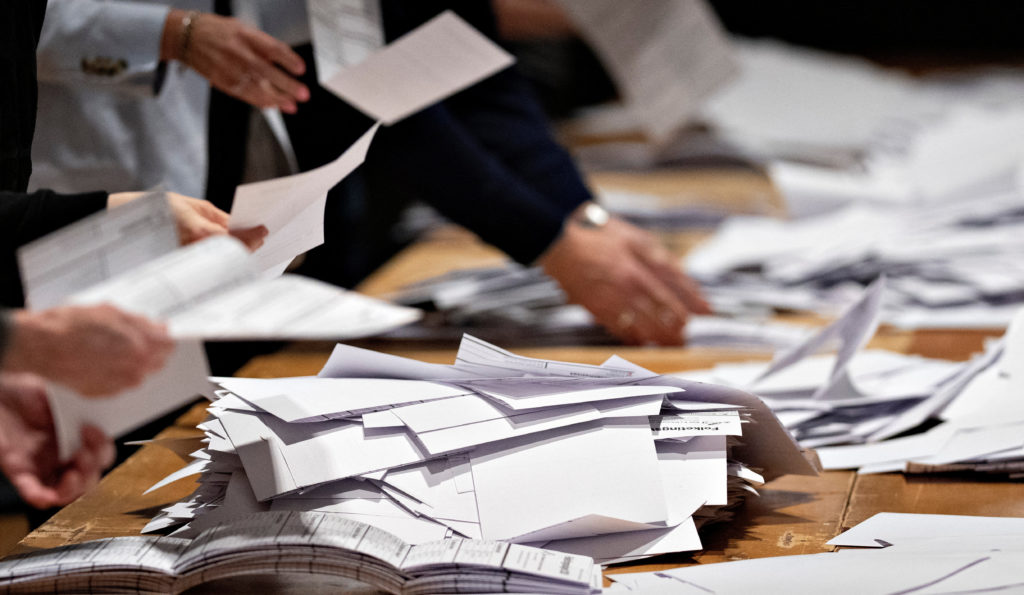
Danish prime minister's future unclear after election results show indecisive outcome
📖 Full Retelling
📚 Related People & Topics

Denmark
Country in Northern Europe
Denmark is a Nordic country in Northern Europe. It is the metropole and most populous constituent of the Kingdom of Denmark, also known as the Danish Realm, a constitutionally unitary state that includes the autonomous territories of the Faroe Islands and Greenland in the north Atlantic Ocean. Metro...
Entity Intersection Graph
Connections for Denmark:
Mentioned Entities
Deep Analysis
Why It Matters
This election outcome matters because Denmark faces political uncertainty during a period of economic challenges and security concerns in Europe. The indecisive result affects Danish citizens through potential policy paralysis on key issues like immigration, climate change, and welfare reforms. It also impacts European Union dynamics as Denmark has been a moderate voice within the bloc, and prolonged instability could weaken its influence.
Context & Background
- Denmark has a parliamentary system where governments typically require support from multiple parties to form a majority
- The previous government was led by Social Democrat Mette Frederiksen, who became prime minister in 2019
- Danish elections traditionally feature complex negotiations between multiple parties across the political spectrum
- Recent Danish politics have been marked by debates over immigration policy, climate action, and welfare state reforms
What Happens Next
Political parties will begin coalition negotiations that could take weeks to complete. Key dates include parliamentary opening procedures and constitutional deadlines for government formation. Possible outcomes include a minority government, a broad coalition, or potentially new elections if no stable government can be formed.
Frequently Asked Questions
No single party or pre-announced coalition won enough seats to form a majority government. The results show a fragmented parliament where multiple parties hold significant influence, requiring complex negotiations to establish a governing coalition.
Denmark uses a proportional representation system where parties must secure at least 2% of votes to enter parliament. Governments typically consist of minority coalitions that negotiate support from other parties on individual policies, making consensus-building essential.
Key issues include immigration policy, climate change measures, economic management during inflation, and maintaining Denmark's welfare system. Different parties have conflicting priorities on these matters, complicating coalition formation.
Danish government negotiations typically take 2-4 weeks but can extend longer in complex situations. The Queen formally appoints the prime minister after parties demonstrate they can command parliamentary support.
If negotiations fail completely, Denmark could hold another election. However, this is rare as parties usually reach compromises to avoid political instability and maintain public confidence in the democratic process.