
Democratic Party’s issues in governor’s race reveal the flaw in California’s primaries
#California primaries #top-two system #Democratic Party #governor race #vote splitting #general election #political competition
📌 Key Takeaways
- California's top-two primary system allows candidates from the same party to compete in general elections, potentially splitting the vote.
- The Democratic Party faces internal challenges in the governor's race due to multiple Democratic candidates advancing.
- This system can lead to outcomes where the general election features two candidates from the same party, limiting voter choice.
- Critics argue the primary system undermines partisan competition and may not reflect broader voter preferences.
📖 Full Retelling
🏷️ Themes
Election Reform, Political Strategy
📚 Related People & Topics
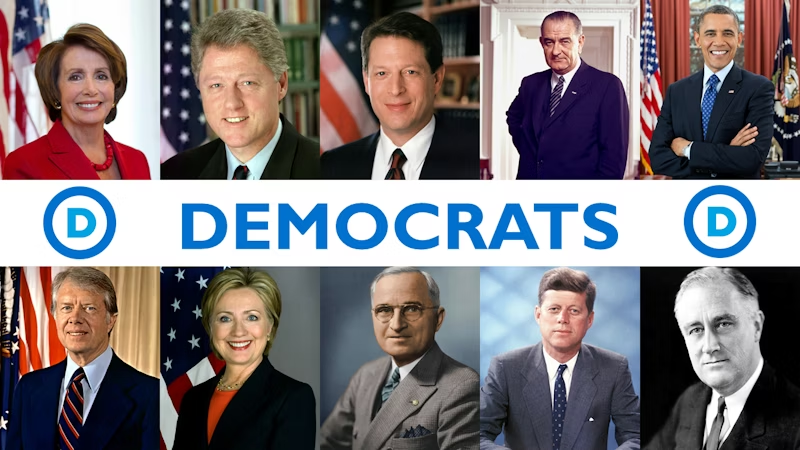
Democratic Party
Topics referred to by the same term
Democratic Party and similar terms may refer to:
Entity Intersection Graph
Connections for Democratic Party:
Mentioned Entities
Deep Analysis
Why It Matters
This news matters because it highlights how California's unique 'top-two' primary system can create political outcomes that don't reflect the preferences of the majority party's voters. It affects Democratic voters who may see their preferred candidates excluded from general elections despite being in the majority party, and it has implications for political representation across the state. The system's flaws could lead to uncompetitive general elections or candidates who don't align with their party's base, potentially affecting policy decisions and governance.
Context & Background
- California adopted the 'top-two' primary system (Proposition 14) in 2010, which replaced partisan primaries with a system where all candidates appear on the same ballot regardless of party
- In the top-two system, the two candidates receiving the most votes in the primary advance to the general election, even if they're from the same political party
- This system was intended to reduce partisanship and encourage more moderate candidates, but has sometimes resulted in same-party general elections in heavily Democratic or Republican districts
- Previous elections have seen instances where Democratic candidates split the vote among multiple contenders, allowing Republicans or other parties to secure one of the two general election spots despite being in the minority
What Happens Next
Political analysts will monitor whether the Democratic Party adjusts its strategy for future elections, potentially through better candidate coordination or voter education. There may be renewed calls for electoral reform, possibly through ballot initiatives to modify or replace the top-two system. The upcoming election will test whether the current system produces a general election that adequately represents Democratic voters' preferences.
Frequently Asked Questions
California's top-two primary system requires all candidates regardless of party to compete on a single primary ballot. The two candidates receiving the most votes advance to the general election, even if they belong to the same political party.
When multiple Democratic candidates split the vote in the primary, it can allow Republican or third-party candidates to secure one of the two general election spots despite representing a minority of voters. This forces Democratic voters to choose between candidates who may not represent their preferred policies.
Yes, similar situations occurred in the 2012 and 2018 elections where Democratic vote-splitting allowed Republicans to advance in heavily Democratic districts. The system has also produced same-party general elections in some districts, limiting voter choice.
Alternatives include ranked-choice voting, traditional partisan primaries, or proportional representation systems. Some states use different approaches like jungle primaries or closed primaries that might address the vote-splitting problem California experiences.
Yes, the system could be changed through another ballot initiative or legislative action. However, any change would require significant political support and would likely face debate about whether it would improve or worsen political representation.