

Democrats Josh Shapiro, Wes Moore face challenges on road to White House
#Josh Shapiro #Wes Moore #White House #Democratic Party #governors #presidential election #political challenges
📌 Key Takeaways
- Josh Shapiro and Wes Moore are considered rising stars in the Democratic Party.
- Both governors face significant political and strategic challenges in a potential White House bid.
- Their paths highlight internal party dynamics and the evolving Democratic landscape.
- Success depends on navigating national recognition, policy records, and electoral appeal.
📖 Full Retelling
🏷️ Themes
Political Ambition, Democratic Party
📚 Related People & Topics

Wes Moore
Governor of Maryland since 2023
Westley Watende Omari Moore (born October 15, 1978) is an American politician, businessman, author, and former U.S. Army officer, serving as the 63rd governor of Maryland since 2023. Moore was born in Maryland and raised primarily in New York. He graduated from Johns Hopkins University and received ...

White House
Residence and workplace of the US president
# The White House The **White House** is the official residence and principal workplace of the president of the United States. Located at **1600 Pennsylvania Avenue NW** in Washington, D.C., it stands as one of the most recognizable symbols of the American presidency and the United States governmen...
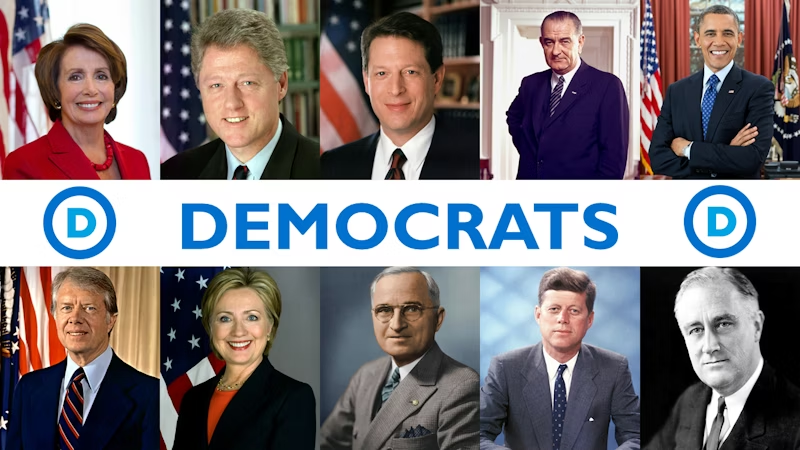
Democratic Party
Topics referred to by the same term
Democratic Party and similar terms may refer to:

Josh Shapiro
Governor of Pennsylvania since 2023
Joshua David Shapiro (born June 20, 1973) is an American politician and lawyer serving since 2023 as the 48th governor of Pennsylvania. A member of the Democratic Party, he was the attorney general of Pennsylvania from 2017 to 2023 and served on the Montgomery County Board of Commissioners from 2012...
Entity Intersection Graph
Connections for Wes Moore:
Mentioned Entities
Deep Analysis
Why It Matters
This news matters because it highlights the early positioning of potential Democratic presidential candidates for 2028 or beyond, signaling the party's future leadership direction. It affects Democratic voters, political strategists, and Republican opponents who must prepare for emerging challengers. The analysis of Shapiro and Moore's challenges reveals internal party dynamics and the evolving criteria for presidential viability in the post-Biden Democratic landscape.
Context & Background
- Josh Shapiro is the Governor of Pennsylvania, a critical swing state that often determines presidential elections
- Wes Moore is the Governor of Maryland and the state's first Black governor, representing a new generation of Democratic leadership
- Both governors were elected in 2022 and are considered rising stars within the Democratic Party
- The Democratic Party is currently grappling with leadership succession questions as President Biden approaches the end of his term
- Historically, governors have often been successful presidential candidates due to executive experience outside Washington
What Happens Next
Both governors will likely continue building national profiles through media appearances, policy initiatives, and fundraising networks over the next 2-3 years. They will face increased scrutiny of their state-level governance records and will need to navigate Democratic primary dynamics that may include established figures like Vice President Harris. Key milestones will include their 2026 re-election campaigns (if they run) and their visibility at the 2028 Democratic National Convention.
Frequently Asked Questions
Both are relatively young, successful governors from important states who have received national media attention for their policy achievements. Shapiro represents a crucial swing state, while Moore represents demographic diversity and new leadership styles that appeal to changing Democratic constituencies.
They must balance governing their states with national profile-building, avoid alienating party establishment figures, and develop foreign policy credentials despite limited international experience. Both also face the challenge of standing out in what could be a crowded Democratic field.
While neither is running in 2024, their positioning affects Democratic strategy by signaling potential future leadership and influencing how the party frames its post-Biden vision. Their support for Biden's re-election campaign will be closely watched as an indicator of party unity.
Governors typically have executive decision-making experience, can point to concrete policy accomplishments in their states, and are often perceived as less entangled in Washington politics. They also have established relationships with donors and political organizations across their states.
Republicans will likely begin opposition research earlier and may adjust their messaging to counter the specific strengths of each candidate. They might also focus on winning gubernatorial races in Pennsylvania and Maryland to undermine Shapiro and Moore's home-state advantages.