

Dhillon names names: which colleges are complying with affirmative action ruling -- and which aren't
#Harmeet Dhillon #affirmative action ruling #college admissions #Supreme Court #compliance #diversity #legal challenges
📌 Key Takeaways
- Attorney Harmeet Dhillon identifies colleges complying with the Supreme Court's affirmative action ruling.
- Dhillon also names institutions that are not adhering to the ruling, highlighting non-compliance.
- The article discusses ongoing legal and administrative responses to the affirmative action decision.
- It underscores the impact on college admissions policies and diversity initiatives.
🏷️ Themes
Affirmative Action, College Compliance
📚 Related People & Topics
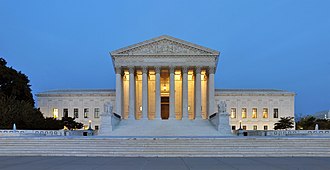
Supreme court
Highest court in a jurisdiction
In most legal jurisdictions, a supreme court, also known as a court of last resort, apex court, high (or final) court of appeal, and court of final appeal, is the highest court within the hierarchy of courts. Broadly speaking, the decisions of a supreme court are binding on all other courts in a nat...

Harmeet Dhillon
American lawyer and politician
Harmeet Kaur Dhillon (born 1969) is an American lawyer and Republican Party official serving as the U.S. assistant attorney general for the Civil Rights Division since 2025. She is the former vice chair of the California Republican Party and a former Republican National Committeewoman for Californ...
Entity Intersection Graph
Connections for Supreme court:
Mentioned Entities
Deep Analysis
Why It Matters
This news matters because it reveals which colleges are complying with the Supreme Court's affirmative action ruling and which are resisting, directly impacting admissions policies that affect millions of students. It highlights ongoing legal and cultural battles over race-conscious admissions that shape educational access and diversity. The findings affect prospective students, particularly those from underrepresented groups, and could influence future legal challenges and federal funding decisions for non-compliant institutions.
Context & Background
- The Supreme Court's 2023 Students for Fair Admissions v. Harvard decision declared race-based affirmative action in college admissions unconstitutional.
- Affirmative action policies had been used for decades to promote diversity and address historical discrimination in higher education.
- The ruling sparked immediate debate about alternative methods to maintain diversity, such as socioeconomic-based admissions or legacy admission reforms.
- Legal challenges have continued post-ruling, with some institutions accused of finding loopholes to maintain race-conscious practices.
- The Department of Education has issued guidance on compliance while some states had already banned affirmative action prior to the 2023 ruling.
What Happens Next
Non-compliant institutions will likely face increased scrutiny, potential lawsuits from conservative legal groups, and possible investigations by the Department of Education's Office for Civil Rights. Congressional hearings may be scheduled to examine compliance, particularly for federally-funded institutions. Additional guidance or regulations from the Department of Education could be issued in the coming months, and further court challenges may emerge as institutions test the boundaries of permissible diversity initiatives.
Frequently Asked Questions
In June 2023, the Supreme Court ruled in Students for Fair Admissions v. Harvard that race-based affirmative action in college admissions violates the Equal Protection Clause of the Fourteenth Amendment, effectively ending the practice at most colleges and universities.
Colleges can use race-neutral alternatives like socioeconomic-based admissions, targeted outreach to underserved communities, eliminating legacy preferences, and considering applicants' experiences with discrimination through essay prompts, though these methods face debate about their effectiveness.
Non-compliant institutions risk lawsuits from organizations like Students for Fair Admissions, potential loss of federal funding, investigations by the Department of Education, and damage to their reputations as they navigate legal challenges.
Highly selective private universities like Harvard and Yale and flagship public universities face the greatest impact, as they previously used race-conscious admissions most extensively to shape their diverse student bodies.
Prospective students from underrepresented racial groups may see reduced admission rates at selective colleges, while others may benefit from increased focus on socioeconomic factors, with all applicants now navigating admissions processes that cannot explicitly consider race.