

DOJ arming with Second Amendment lawyers to take on tranche of state gun control laws
📖 Full Retelling
📚 Related People & Topics
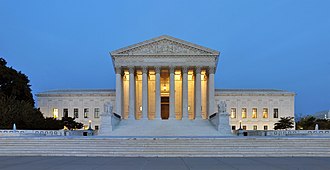
Supreme court
Highest court in a jurisdiction
In most legal jurisdictions, a supreme court, also known as a court of last resort, apex court, high (or final) court of appeal, and court of final appeal, is the highest court within the hierarchy of courts. Broadly speaking, the decisions of a supreme court are binding on all other courts in a nat...

Second Amendment to the United States Constitution
1791 amendment protecting the right to keep and bear arms
The Second Amendment (Amendment II) to the United States Constitution protects the right to keep and bear arms. It was ratified on December 15, 1791, along with nine other articles of the United States Bill of Rights. In District of Columbia v.
Entity Intersection Graph
Connections for Supreme court:
Mentioned Entities
Deep Analysis
Why It Matters
This development matters because it signals a major shift in federal enforcement of gun rights, potentially invalidating numerous state-level firearm restrictions. It affects gun owners seeking fewer restrictions, state governments defending their laws, and communities concerned about gun violence. The Justice Department's aggressive stance could reshape the legal landscape for firearms nationwide, creating uncertainty for law enforcement and potentially triggering constitutional challenges.
Context & Background
- The Supreme Court's 2022 Bruen decision established a new 'text, history, and tradition' test for evaluating gun laws, making it harder for states to defend restrictions
- Many states including California, New York, New Jersey, and Massachusetts have enacted strict gun control measures that may now face federal challenges
- The Justice Department under previous administrations typically defended federal gun laws but didn't actively challenge state regulations
What Happens Next
Expect the DOJ to file lawsuits against states with restrictive gun laws within the next 3-6 months, focusing on assault weapon bans, magazine capacity limits, and concealed carry restrictions. Multiple federal court battles will likely emerge simultaneously, with some cases potentially reaching the Supreme Court by 2025. State attorneys general will prepare defensive strategies while gun rights organizations may coordinate with the DOJ's efforts.
Frequently Asked Questions
The DOJ will likely target assault weapon bans (like California's), magazine capacity limits (like Colorado's 15-round limit), and 'may issue' concealed carry systems that give officials discretion to deny permits. Laws requiring extensive background checks beyond federal standards may also face challenges.
Historically, the Justice Department focused on enforcing existing federal gun laws rather than challenging state regulations. This represents an unprecedented proactive approach where the federal government is actively seeking to invalidate state laws using the Second Amendment as its primary legal weapon.
If the DOJ loses, state gun control laws would remain in effect, but the legal precedents could still influence future challenges. Losses might prompt congressional action or lead to refined legal strategies focusing on different aspects of the Second Amendment in subsequent cases.
No immediate changes will occur until courts issue rulings. However, the litigation may create uncertainty about which laws remain enforceable. Some states might voluntarily pause enforcement of challenged laws pending court decisions to avoid liability.
Organizations like Everytown and Giffords are preparing legal defenses and mobilizing resources to support states. They're also lobbying Congress to pass federal legislation that would preempt state-level challenges and establish uniform national standards.