
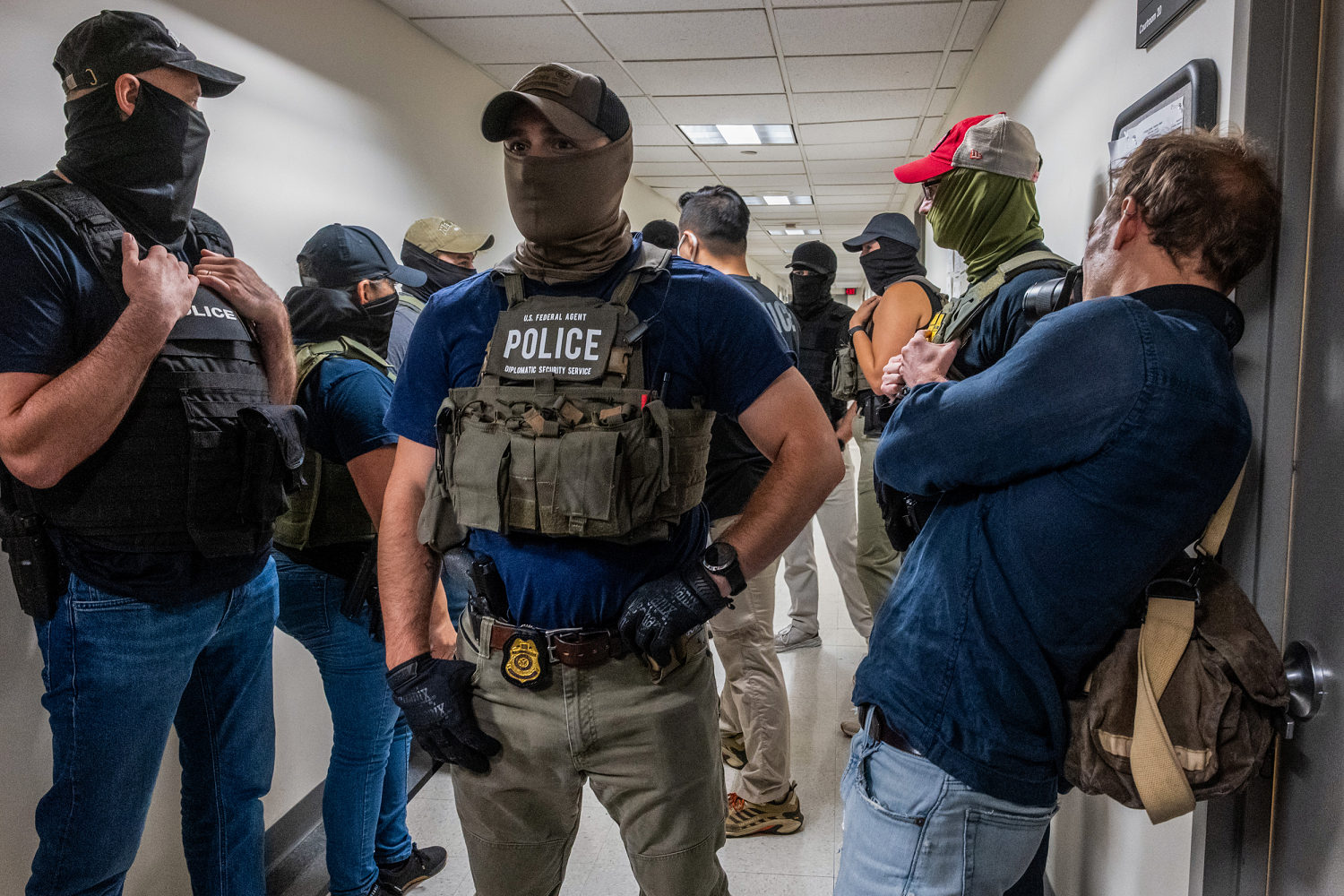
DOJ says it erroneously relied on ICE memo to justify immigration courthouse arrests
#DOJ #ICE #immigration #courthouse arrests #legal memo #enforcement policy #justice access
📌 Key Takeaways
- DOJ admits it mistakenly used an ICE memo to justify arrests at immigration courthouses
- The reliance on the memo was an error in legal justification
- This admission may impact ongoing and future immigration enforcement policies
- The statement addresses concerns about courthouse arrests affecting access to justice
📖 Full Retelling
🏷️ Themes
Immigration enforcement, Legal policy
📚 Related People & Topics

United States Immigration and Customs Enforcement
US federal law enforcement agency
The United States Immigration and Customs Enforcement (ICE) is a federal law enforcement agency under the United States Department of Homeland Security. Its stated mission is to conduct criminal investigations, enforce immigration laws, preserve national security, and protect public safety. ICE was ...
Entity Intersection Graph
Connections for DOJ:
Mentioned Entities
Deep Analysis
Why It Matters
This admission matters because it reveals a flawed legal justification for controversial immigration enforcement tactics that directly affect immigrants seeking justice, their families, and the integrity of the court system. It impacts vulnerable individuals who may now avoid attending court hearings due to fear of arrest, undermining access to legal proceedings. The DOJ's acknowledgment could lead to policy changes affecting thousands of immigration cases and may influence judicial decisions regarding the legality of such arrests.
Context & Background
- ICE (Immigration and Customs Enforcement) has conducted arrests at courthouses since at least 2017, targeting immigrants appearing for unrelated matters
- Courthouse arrests have been criticized by judges, prosecutors, and advocates who argue they deter immigrants from reporting crimes or attending court
- Previous administrations have defended the practice as necessary for enforcing immigration laws against individuals already in the legal system
- Several states and cities have passed laws or policies limiting cooperation between local courts and federal immigration authorities
What Happens Next
The DOJ will likely need to develop new legal justifications if it wishes to continue courthouse arrests, potentially facing legal challenges. Immigration courts may see changes in policies regarding enforcement presence. Advocacy groups may use this admission to push for broader restrictions on ICE's courthouse operations, possibly through legislation or court injunctions.
Frequently Asked Questions
The Department of Justice acknowledged it incorrectly used an ICE memorandum as legal justification for arresting immigrants at courthouses. This means their previous defense of the practice was based on flawed legal reasoning.
Courthouse arrests are controversial because they target people who are actively participating in the legal system, potentially deterring immigrants from reporting crimes, attending hearings, or seeking protective orders. Critics argue this undermines public safety and access to justice.
This admission could lead to challenges against arrests made under this justification, potentially affecting deportation proceedings. It may also influence judges' decisions regarding motions to suppress evidence or dismiss cases based on improper arrest procedures.
Not necessarily. While the DOJ admitted its legal justification was flawed, ICE could continue the practice under different legal reasoning or modified policies. The agency may adjust its targeting criteria or seek new authorization from different legal authorities.
Immigrants may feel slightly more secure attending court proceedings, though uncertainty remains until clear policies are established. Legal advocates will likely use this admission to challenge individual cases and push for stronger protections against courthouse enforcement.