

Dollar and stocks decline after US Supreme Court hits Trump’s tariffs
#Supreme Court #Trump tariffs #Market reaction #Trade policy #Dollar decline #Treasury yields #Gold prices #Uncertainty
📌 Key Takeaways
- US Supreme Court limited Trump's tariff powers
- Dollar and stocks declined while gold and Treasury yields rose
- Markets are pricing in uncertainty over trade policy
- The ruling impacts the balance of power between executive and judiciary on trade matters
📖 Full Retelling
🏷️ Themes
Trade Policy, Market Reaction, Presidential Power
📚 Related People & Topics
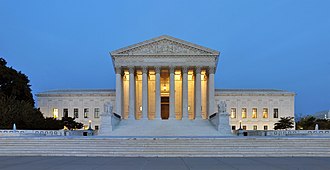
Supreme court
Highest court in a jurisdiction
In most legal jurisdictions, a supreme court, also known as a court of last resort, apex court, high (or final) court of appeal, and court of final appeal, is the highest court within the hierarchy of courts. Broadly speaking, the decisions of a supreme court are binding on all other courts in a nat...

Commercial policy
Government's policy governing international trade
A commercial policy (also referred to as a trade policy or international trade policy) is a government's policy governing international trade. Commercial policy is an all encompassing term that is used to cover topics which involve international trade. Trade policy is often described in terms of a ...
Tariffs in the Trump administration
Topics referred to by the same term
Tariffs in the Trump administration could refer to:
Entity Intersection Graph
Connections for Supreme court:
Mentioned Entities
Deep Analysis
Why It Matters
The Supreme Court's decision on Trump's tariffs creates market uncertainty, impacting global trade and investment flows. This affects businesses reliant on international supply chains and could influence future trade policy decisions.
Context & Background
- Trump implemented tariffs on various imports during his presidency
- The Supreme Court ruled on the legality of these tariff policies
- Markets are reacting to the increased uncertainty around trade
What Happens Next
Investors will monitor further legal challenges and potential policy adjustments from the administration. Market volatility may persist until there is clarity on the long-term trade direction.
Frequently Asked Questions
Trump imposed tariffs on goods from China, the EU, and other trading partners.
The Court addressed legal challenges to the president's authority to set tariffs.
Tariffs can disrupt trade, increase costs for businesses, and create economic uncertainty.