
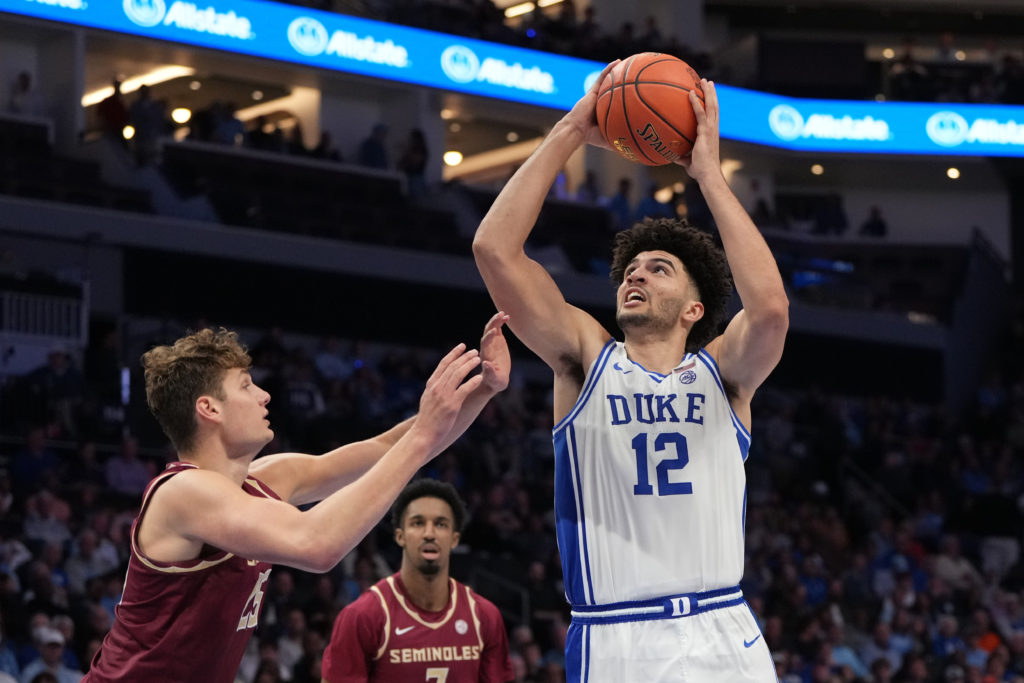
Duke, Arizona, Michigan and Florida get top seeding for March Madness
#Duke #Arizona #Michigan #Florida #March Madness #NCAA #top seeds #bracket
📌 Key Takeaways
- Duke, Arizona, Michigan, and Florida are the top seeds in the NCAA tournament.
- The seeding sets the stage for the March Madness basketball competition.
- These teams are positioned as favorites in their respective regions.
- The announcement marks the official start of the tournament bracket.
📖 Full Retelling
🏷️ Themes
College Basketball, Tournament Seeding
📚 Related People & Topics

NCAA Division I men's basketball tournament
American collegiate men's basketball tournament
# NCAA Division I Men’s Basketball Tournament The **NCAA Division I Men’s Basketball Tournament**, widely known by the monikers **March Madness** and **The Big Dance**, is a premier single-elimination tournament held annually in the United States. The competition determines the national champion of...
Entity Intersection Graph
Connections for NCAA Division I men's basketball tournament:
Mentioned Entities
Deep Analysis
Why It Matters
This seeding announcement determines the competitive landscape for the NCAA Division I men's basketball tournament, affecting the championship prospects of 68 college teams and their millions of fans. The top seeds receive favorable paths through the bracket, increasing their chances of reaching the Final Four and winning the national championship. This impacts university athletic programs financially through tournament revenue shares, while also influencing recruiting, coaching legacies, and school prestige. For sports bettors and bracket participants, these seedings form the foundation for predictions in one of America's most popular sporting events.
Context & Background
- The NCAA Division I men's basketball tournament, commonly called 'March Madness,' has been held annually since 1939, featuring 68 teams since 2011.
- Selection Sunday is when the tournament bracket is revealed, with teams chosen by the NCAA Division I Men's Basketball Committee based on regular season performance, conference tournaments, and various metrics.
- Top seeds (No. 1 seeds) have historically dominated the tournament, with all champions since 1985 coming from the top three seed lines, and No. 1 seeds winning approximately 80% of their first-round games.
- The tournament generates over $1 billion annually in television rights and sponsorship revenue, distributed among conferences and schools through the NCAA's basketball fund.
- Duke, Arizona, Michigan, and Florida have combined for 10 national championships, with Duke's 5 titles being the most recent among them (last in 2015).
What Happens Next
The tournament begins with First Four games on March 19-20, followed by first-round games starting March 21. The top seeds will play their first games on March 22-23 against the winners of First Four matchups or lowest-seeded opponents. Regional rounds progress through March 30-31, with the Final Four scheduled for April 6 and the national championship game on April 8. Immediate developments include team preparations, injury updates, and analysis of potential bracket upsets based on matchups.
Frequently Asked Questions
Top seeds face theoretically easier opponents in early rounds, typically playing geographically closer to home in the first weekend, and avoid other top seeds until later rounds. This favorable path increases their chances of advancing deep into the tournament while conserving player energy.
The NCAA selection committee evaluates teams based on win-loss records, strength of schedule, quality wins, conference tournament performance, and various analytical metrics. They assign seeds 1-16 in four regions, aiming for competitive balance while considering geographic factors for early-round games.
Early exits by top seeds create 'bracket busters' for prediction pools and open opportunities for lower-seeded teams to advance further. Historically, at least one No. 1 seed has failed to reach the Sweet Sixteen in most tournaments, with notable upsets occurring nearly every year.
Deep tournament runs boost recruiting, increase alumni donations, enhance conference revenue shares, and raise national visibility. Championship wins or Final Four appearances can transform programs, while early exits may lead to coaching changes or recruiting challenges.
The single-elimination format creates constant drama and potential for dramatic upsets, while the bracket prediction phenomenon engages millions who don't regularly follow college basketball. The three-week tournament structure provides concentrated excitement with games throughout the day during early rounds.