
Early details on Supreme Court arguments over late-arriving mail ballots
📖 Full Retelling
📚 Related People & Topics
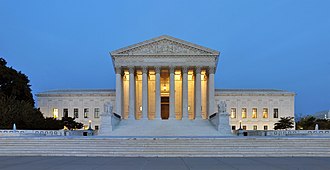
Supreme court
Highest court in a jurisdiction
In most legal jurisdictions, a supreme court, also known as a court of last resort, apex court, high (or final) court of appeal, and court of final appeal, is the highest court within the hierarchy of courts. Broadly speaking, the decisions of a supreme court are binding on all other courts in a nat...

Election day
Day when elections are held
Election Day or Polling Day is the day on which general elections are held. In many countries, general elections are always held on a Saturday or Sunday, to enable as many voters as possible to participate; while in other countries elections are always held on a weekday. However, some countries, or ...
Entity Intersection Graph
Connections for Supreme court:
Mentioned Entities
Deep Analysis
Why It Matters
This Supreme Court case could determine whether mail ballots received after Election Day are counted, potentially affecting millions of voters who rely on mail-in voting. The outcome will impact election administration procedures across all states during a critical election year, with significant implications for close races where late-arriving ballots could decide outcomes. This matters to election officials, political campaigns, and voters who use mail ballots due to disability, travel, or convenience, particularly as mail-in voting has expanded dramatically since 2020.
Context & Background
- The 2020 election saw unprecedented use of mail ballots due to the COVID-19 pandemic, with many states extending ballot receipt deadlines
- Previous Supreme Court cases have addressed election administration, including the 2020 'RNC v. DNC' case about Wisconsin's ballot deadline extension
- The current case likely involves conflicting lower court rulings about whether states can accept ballots postmarked by Election Day but received afterward
- Mail ballot deadlines vary by state, with some requiring receipt by Election Day and others allowing grace periods of several days
- The Supreme Court has become increasingly involved in election law cases following the Bush v. Gore decision in 2000
What Happens Next
The Supreme Court will hear oral arguments in the coming weeks, with a decision expected by late June or early July before the 2024 election. State election officials will need to adjust their procedures based on the ruling, potentially requiring changes to ballot instructions and voter education materials. The decision may also trigger additional litigation in states with conflicting laws or prompt congressional action regarding federal election standards.
Frequently Asked Questions
Mail ballots can arrive late due to postal service delays, voter procrastination in returning ballots, or incorrect mailing addresses. Some voters also request ballots close to the deadline while traveling or living abroad, making timely return challenging.
Approximately 20 states accept ballots after Election Day if postmarked by that date, with grace periods ranging from 1-10 days. Other states require ballots to be received by Election Day regardless of postmark date.
States allowing grace periods would need to stop counting ballots received after Election Day, potentially disenfranchising voters who followed existing rules. Election officials would need to implement new procedures and educate voters about earlier return deadlines.
Yes, particularly in swing states with close margins where late-arriving ballots could determine outcomes. The ruling could advantage campaigns with stronger early voting operations and disadvantage those relying on last-minute voter mobilization.
The case likely involves questions about states' authority to set election rules versus federal oversight, equal protection concerns if deadlines vary within states, and whether changing rules close to an election creates voter confusion.