
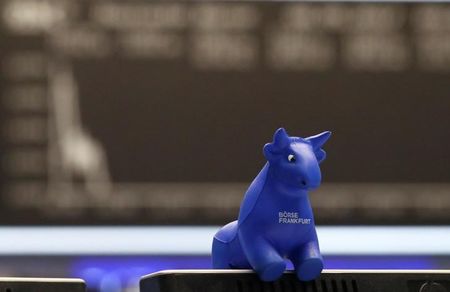
European stocks subdued after Trump extends deadline for Iran power plant attacks
#European stocks #Trump #Iran #deadline #power plants #market sentiment #geopolitical tension
📌 Key Takeaways
- European stock markets showed muted activity following geopolitical developments.
- President Trump extended a deadline related to potential attacks on Iranian power plants.
- The extension eased immediate concerns over military escalation in the region.
- Investors remained cautious amid ongoing US-Iran tensions affecting market sentiment.
🏷️ Themes
Geopolitics, Financial Markets
📚 Related People & Topics

Iran
Country in West Asia
# Iran **Iran**, officially the **Islamic Republic of Iran** and historically known as **Persia**, is a sovereign country situated in West Asia. It is a major regional power, ranking as the 17th-largest country in the world by both land area and population. Combining a rich historical legacy with a...

Donald Trump
President of the United States (2017–2021; since 2025)
Donald John Trump (born June 14, 1946) is an American politician, media personality, and businessman who is the 47th president of the United States. A member of the Republican Party, he served as the 45th president from 2017 to 2021. Born into a wealthy New York City family, Trump graduated from the...
Entity Intersection Graph
Connections for Iran:
Mentioned Entities
Deep Analysis
Why It Matters
This news matters because it highlights how geopolitical tensions between the U.S. and Iran directly impact global financial markets, particularly European stocks which are sensitive to Middle East instability. Investors are concerned about potential military conflict that could disrupt oil supplies and trade routes, affecting energy prices and corporate profits. The extension of deadlines creates uncertainty about whether tensions will escalate or de-escalate, making market participants cautious about risk exposure.
Context & Background
- The U.S. and Iran have been in conflict since the 1979 Iranian Revolution, with tensions escalating after the U.S. withdrew from the 2015 nuclear deal in 2018.
- Iran has been developing nuclear capabilities for decades, with international concerns about weaponization despite Iran's claims of peaceful energy purposes.
- Previous attacks on Iranian nuclear facilities include the Stuxnet cyberattack (2010) and assassinations of nuclear scientists, widely attributed to Israel with suspected U.S. involvement.
- European economies are particularly vulnerable to Middle East instability due to their dependence on imported energy and geographical proximity to conflict zones.
- Stock markets typically react negatively to geopolitical uncertainty as investors move to safer assets like bonds and gold during times of potential conflict.
What Happens Next
Markets will closely monitor whether Iran makes concessions before the new deadline or continues its nuclear activities. The U.S. may impose additional sanctions or pursue diplomatic channels through European allies. Military action remains possible if negotiations fail, which would likely cause oil price spikes and further market volatility. European leaders will likely intensify mediation efforts to prevent conflict that would destabilize their economies.
Frequently Asked Questions
European economies are heavily dependent on Middle Eastern oil imports and trade routes. Conflict could disrupt energy supplies and increase costs for European businesses, reducing corporate profits and investor confidence in European markets.
It provides more time for diplomatic negotiations and allows Iran opportunity to change its behavior without immediate military consequences. However, it also prolongs market uncertainty as investors wait to see if tensions will ultimately escalate or resolve peacefully.
If tensions escalate, consumers would likely face higher gasoline and energy prices due to potential oil supply disruptions. Extended uncertainty could also weaken economic growth, potentially affecting employment and investment returns.
Nuclear facilities are vulnerable to cyberattacks, airstrikes, and sabotage. Previous attacks have set back Iran's nuclear program by damaging centrifuges and eliminating key scientists, though Iran has consistently rebuilt and advanced its capabilities.
European governments generally advocate for diplomatic solutions and often serve as mediators between the U.S. and Iran. They frequently disagree with U.S. unilateral actions, preferring multilateral approaches through institutions like the UN and EU.