
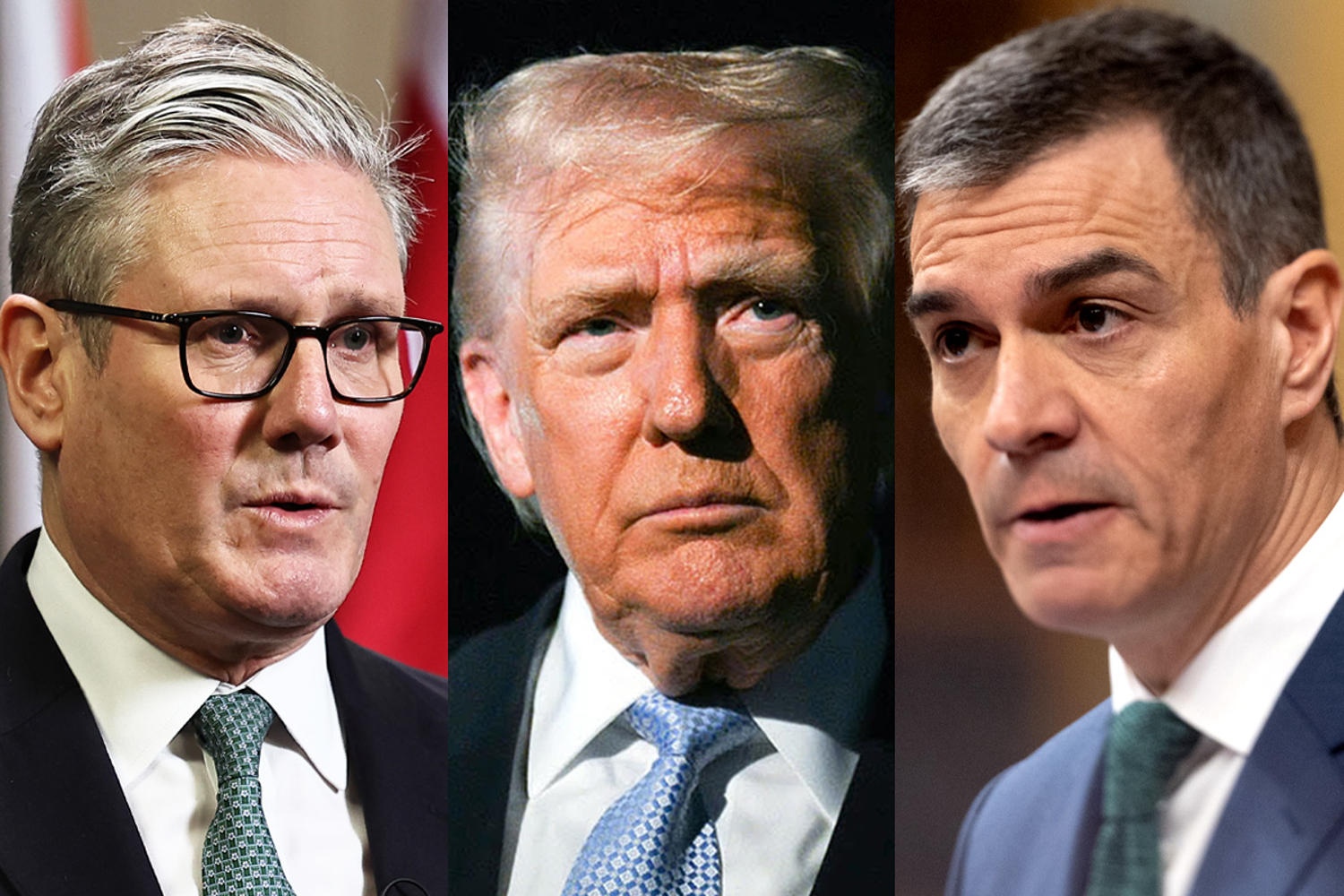
Europe's mixed response to Iran war draws Trump's fury toward U.S. allies
#Europe #Iran war #Trump #U.S. allies #foreign policy #diplomacy #transatlantic relations
📌 Key Takeaways
- Europe's response to the Iran war is inconsistent and divided.
- President Trump expresses anger towards U.S. allies over their stance.
- The situation highlights transatlantic tensions in foreign policy.
- The mixed reactions may impact international diplomatic efforts.
📖 Full Retelling
🏷️ Themes
International Relations, Diplomatic Tensions
📚 Related People & Topics
List of wars involving Iran
This is a list of wars involving the Islamic Republic of Iran and its predecessor states. It is an unfinished historical overview.

Europe
Continent
Europe is a continent located entirely in the Northern Hemisphere and mostly in the Eastern Hemisphere. It is bordered by the Arctic Ocean to the north, the Atlantic Ocean to the west, the Mediterranean Sea to the south, and Asia to the east. Europe shares the landmass of Eurasia with Asia, and of A...

Donald Trump
President of the United States (2017–2021; since 2025)
Donald John Trump (born June 14, 1946) is an American politician, media personality, and businessman who is the 47th president of the United States. A member of the Republican Party, he served as the 45th president from 2017 to 2021. Born into a wealthy New York City family, Trump graduated from the...
Entity Intersection Graph
Connections for List of wars involving Iran:
Mentioned Entities
Deep Analysis
Why It Matters
This news highlights the growing rift between the U.S. and its European allies over Middle East policy, which could weaken NATO cohesion and global security alliances. It affects international diplomacy, military coordination, and economic relations between Western nations. The disagreement creates uncertainty about unified Western responses to future crises and may embolden adversaries who perceive division among traditional allies.
Context & Background
- The U.S. and Europe have historically coordinated Middle East policy through NATO and bilateral agreements
- Tensions between the U.S. and Iran escalated significantly after the U.S. withdrew from the 2015 nuclear deal in 2018
- European nations have maintained diplomatic channels with Iran while attempting to salvage the nuclear agreement
- Previous transatlantic disagreements include the 2003 Iraq invasion and more recent trade disputes
What Happens Next
Expect increased diplomatic pressure from the U.S. on European nations to align with American positions. European foreign ministers will likely hold emergency meetings to coordinate their response. The situation may lead to separate European and American tracks in Middle East diplomacy, potentially undermining unified sanctions regimes against Iran.
Frequently Asked Questions
European nations have varying positions based on their economic interests, security concerns, and diplomatic relationships with Iran. Some countries prioritize maintaining the nuclear deal while others are more aligned with U.S. security concerns about Iranian regional influence.
Possible actions include economic sanctions on European companies doing business with Iran, reduced intelligence sharing, or public criticism aimed at dividing European consensus. The U.S. could also threaten to reduce military cooperation or support within NATO frameworks.
Citizens may face economic consequences through trade disruptions, potential security risks from reduced intelligence cooperation, and increased political instability in their regions. Travel and business between continents could become more complicated due to deteriorating diplomatic relations.
Continued disagreements over Middle East policy could weaken NATO's strategic unity and decision-making effectiveness. This might lead to reduced military coordination and potentially encourage member states to pursue independent security arrangements outside the alliance framework.