
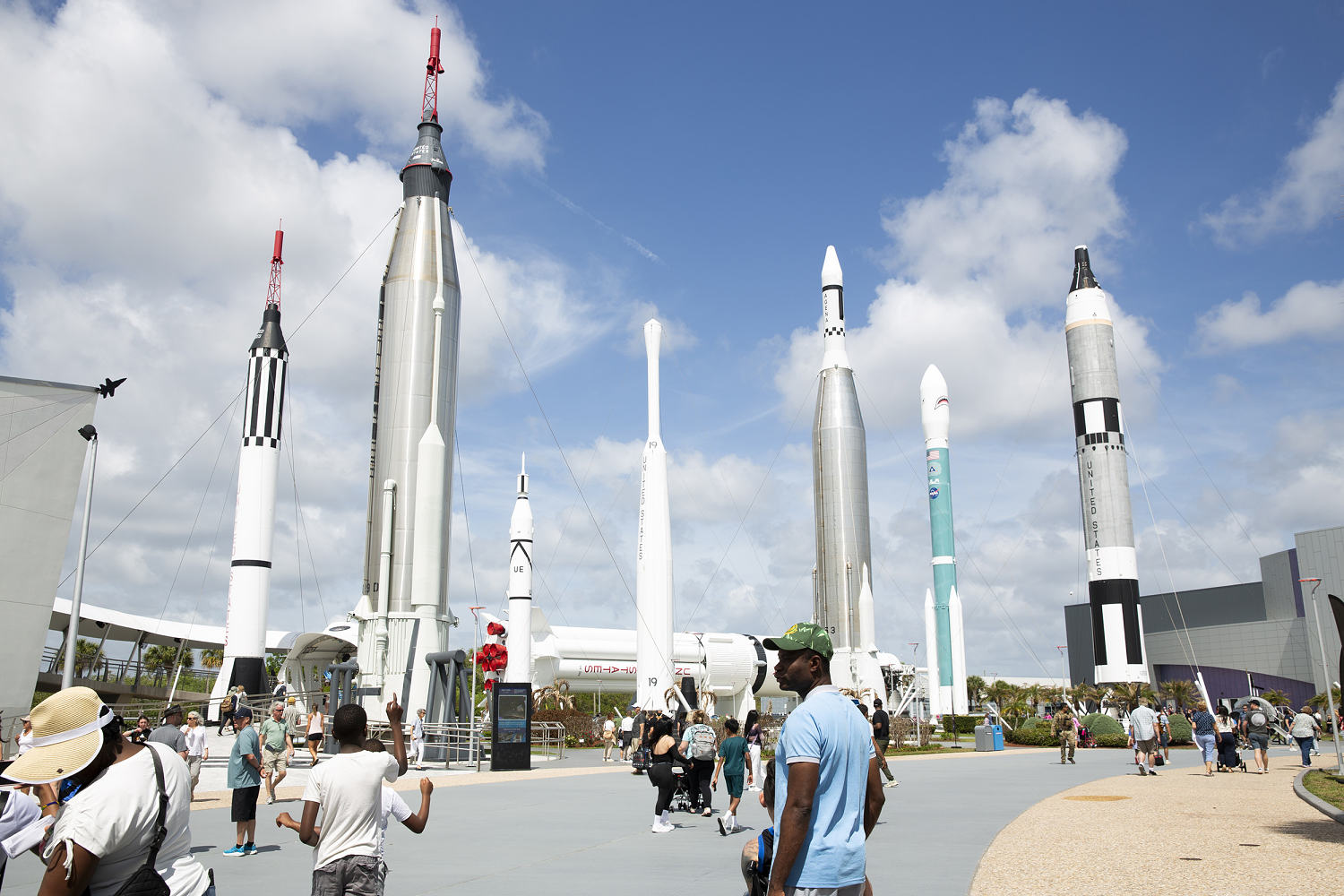
Excited visitors for NASA's moon launch jockey for prime views
📖 Full Retelling
📚 Related People & Topics

NASA
American space and aeronautics agency
The National Aeronautics and Space Administration (NASA ) is an independent agency of the U.S. federal government responsible for the United States' civil space program and for research in aeronautics and space exploration. Headquartered in Washington, D.C., NASA operates ten field centers across th...
Entity Intersection Graph
Connections for NASA:
Mentioned Entities
Deep Analysis
Why It Matters
This news matters because it highlights public enthusiasm for NASA's return to lunar exploration, which represents a major milestone in space exploration after decades. It affects space enthusiasts, local tourism businesses near launch sites, and educational institutions using the event for STEM inspiration. The public interest demonstrates continued support for government-funded space programs and their cultural significance.
Context & Background
- NASA's Artemis program aims to return humans to the Moon for the first time since Apollo 17 in 1972
- The Space Launch System (SLS) rocket and Orion spacecraft represent NASA's most powerful launch vehicle ever built
- Previous Moon missions attracted massive crowds, with Apollo 11 drawing an estimated 1 million spectators to Florida's Space Coast in 1969
- Space tourism viewing has become increasingly organized with designated viewing areas and paid packages
What Happens Next
Following the launch, NASA will monitor Orion's journey to lunar orbit and back over approximately 25 days. If successful, Artemis II will follow with a crewed lunar flyby around 2025, leading to Artemis III's lunar landing planned for 2026 or later. Local authorities will assess crowd management strategies for future launches based on this experience.
Frequently Asked Questions
This represents NASA's first crew-capable Moon mission in 50 years, signaling a new era of lunar exploration. The Artemis program aims to establish sustainable presence on the Moon as a stepping stone to Mars.
Prime viewing locations include Kennedy Space Center Visitor Complex, nearby beaches like Playalinda, and various causeways along Florida's Space Coast. Many locations require advance tickets or reservations.
Artemis uses new technology including the powerful SLS rocket and plans for sustainable lunar exploration with international partners. The program specifically aims to land the first woman and first person of color on the Moon.
High public engagement helps maintain political and financial support for NASA's missions. It also inspires future generations of scientists and engineers while boosting local economies through space tourism.