
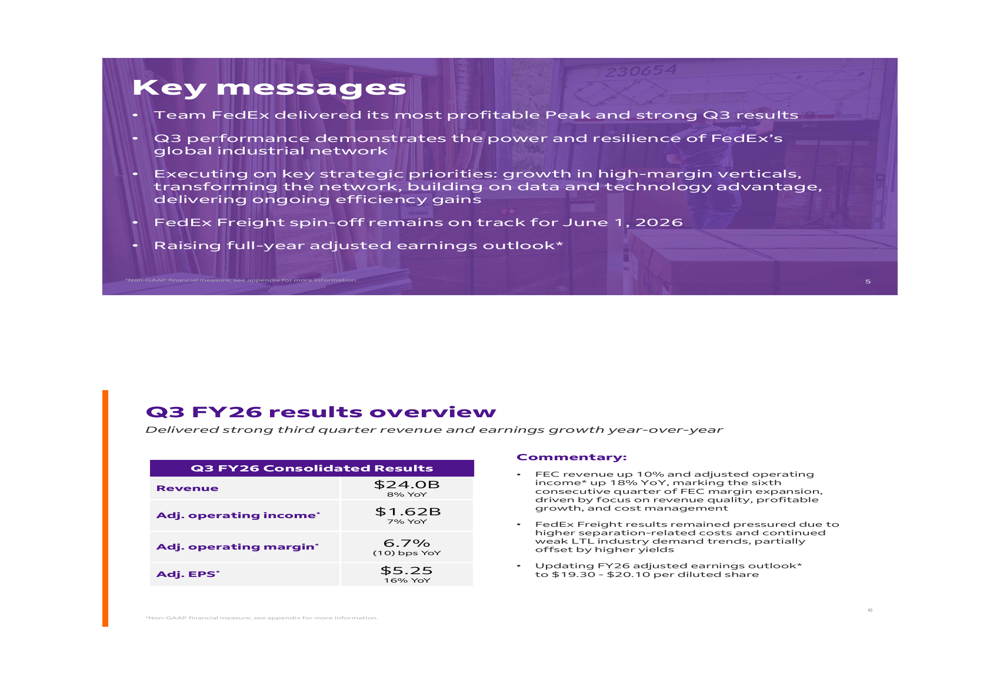
FedEx Q3 FY26 slides: earnings surge 16% as network transformation pays off
#FedEx #Q3 FY26 #earnings surge #network transformation #logistics #corporate performance #financial results
📌 Key Takeaways
- FedEx Q3 FY26 earnings increased by 16% year-over-year
- The earnings growth is attributed to the company's network transformation strategy
- The transformation efforts are showing positive financial results
- The company's strategic changes are effectively improving profitability
🏷️ Themes
Corporate Earnings, Logistics Transformation
📚 Related People & Topics

FedEx
American freight and package delivery company
FedEx Corporation, originally known as Federal Express Corporation, is an American multinational conglomerate holding company specializing in transportation, e-commerce, and business services. The company is headquartered in Memphis, Tennessee. The name "FedEx" is a syllabic abbreviation of its orig...
Entity Intersection Graph
Connections for FedEx:
View full profileMentioned Entities
Deep Analysis
Why It Matters
This news matters because FedEx's strong earnings performance signals the success of its multi-year network transformation strategy, which has significant implications for investors, competitors, and the broader logistics industry. The 16% earnings surge demonstrates improved operational efficiency and cost management during a period of economic uncertainty, potentially influencing stock valuations across the transportation sector. For consumers and businesses, this could indicate more reliable and potentially more profitable shipping services, though it may also lead to pricing adjustments as FedEx strengthens its market position.
Context & Background
- FedEx launched its 'DRIVE' transformation program in 2022 aimed at saving $4 billion by FY2025 through network optimization and efficiency improvements
- The logistics industry has faced significant challenges including pandemic-driven demand fluctuations, labor shortages, and rising fuel costs over the past several years
- FedEx has been consolidating its separate Express, Ground, and Freight networks into a more unified 'One FedEx' structure to reduce duplication and improve margins
- Third quarter FY2026 corresponds to December 2025-February 2026 period, showing long-term strategic planning results
- Major competitors include UPS, Amazon Logistics, and DHL in the global parcel delivery market valued at over $500 billion
What Happens Next
Analysts will likely upgrade FedEx stock targets and revise industry outlooks based on this performance. The company may accelerate additional transformation initiatives or consider strategic acquisitions. Investors should watch for Q4 guidance in the upcoming earnings call and monitor how sustainable these margin improvements prove to be through potential economic downturns. Regulatory scrutiny may increase if FedEx's strengthened position raises antitrust concerns in certain markets.
Frequently Asked Questions
FedEx's network transformation involves consolidating its separate delivery networks (Express, Ground, Freight) into a more integrated 'One FedEx' system. This reduces operational duplication, optimizes routes, and improves asset utilization to significantly cut costs while maintaining service quality across all delivery segments.
The 16% earnings surge typically leads to positive stock price movement as it exceeds market expectations. Investors gain confidence in management's transformation strategy, potentially leading to higher valuations and increased dividend prospects as the company demonstrates improved profitability and operational efficiency.
While immediate price changes aren't guaranteed, improved efficiency often allows for competitive pricing or better service reliability. However, if FedEx maintains these margins, they might resist discounting pressure, potentially stabilizing or increasing rates in certain segments where they have strong market position.
Economic recession reducing shipping volumes, renewed fuel price spikes, labor disputes, or competitive responses from UPS and Amazon could pressure margins. Also, integration challenges in the ongoing network consolidation might create service disruptions that could reverse recent gains.
FedEx's 16% earnings growth likely outperforms many logistics peers if sustained, potentially indicating successful differentiation from UPS's labor challenges and Amazon's capacity investments. This could signal a shift in competitive dynamics within the parcel delivery industry favoring FedEx's integrated network approach.