
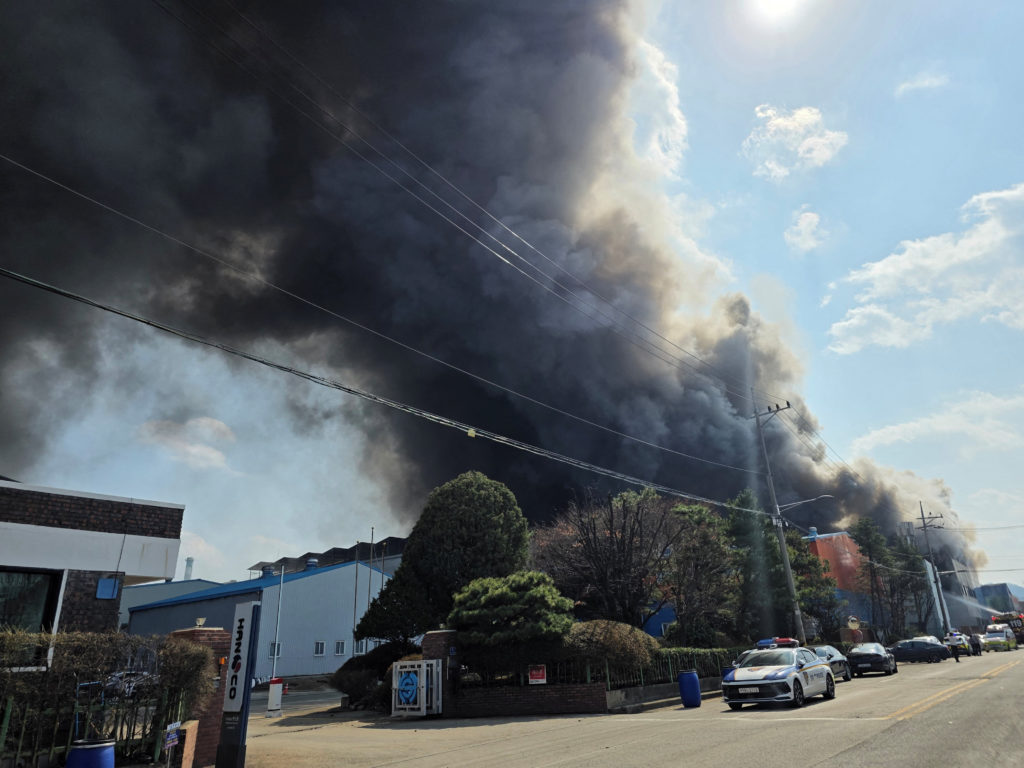
Fire at South Korean auto parts factory kills at least 14 people, officials say
#fire #South Korea #auto parts factory #fatalities #industrial safety #workplace accident #investigation
📌 Key Takeaways
- A fire at a South Korean auto parts factory resulted in at least 14 fatalities.
- The incident occurred at a manufacturing facility, highlighting industrial safety concerns.
- Emergency officials confirmed the death toll and are investigating the cause.
- The fire underscores risks in industrial workplaces and potential safety lapses.
📖 Full Retelling
🏷️ Themes
Industrial Accident, Workplace Safety
📚 Related People & Topics
South Korean
Topics referred to by the same term
South Korean may refer to: Something of, from, or related to South Korea, a country in East Asia, in the southern half of the Korean Peninsula.

South Korea
Country in East Asia
South Korea, officially the Republic of Korea (ROK), is a country in East Asia. It constitutes the southern half of the Korean Peninsula and borders North Korea along the Korean Demilitarized Zone, with the Yellow Sea to the west and the Sea of Japan to the east. South Korea claims to be the sole le...
Entity Intersection Graph
Connections for South Korean:
Mentioned Entities
Deep Analysis
Why It Matters
This tragic industrial accident highlights critical workplace safety failures in South Korea's manufacturing sector, which affects thousands of workers in similar facilities. The high death toll underscores systemic issues in industrial safety regulations and emergency response protocols. This incident will likely trigger government investigations, renewed scrutiny of workplace conditions, and potential reforms in industrial safety standards across South Korea's automotive supply chain.
Context & Background
- South Korea has experienced several major industrial accidents in recent years, including the 2018 fire at a hospital in Miryang that killed 46 people
- The country's manufacturing sector, particularly automotive and electronics, employs millions but has faced criticism for prioritizing production speed over worker safety
- South Korea's industrial accident fatality rate has been declining but remains higher than other developed nations like Japan and Germany
- Previous factory fires have led to temporary safety crackdowns and calls for stronger enforcement of existing regulations
What Happens Next
Immediate next steps include completion of rescue operations, identification of victims, and launching of a government investigation into the fire's cause. Within weeks, expect preliminary findings, potential arrests of company officials for safety violations, and emergency safety inspections at similar factories. Longer term, this will likely lead to proposed legislative changes to industrial safety laws and increased penalties for violations.
Frequently Asked Questions
Common causes include electrical faults, improper storage of flammable materials, inadequate fire suppression systems, and blocked emergency exits. Many incidents reveal systemic issues with safety compliance and emergency preparedness in industrial facilities.
South Korea's industrial fatality rate has improved but remains higher than most developed nations. The country has faced criticism for prioritizing economic growth over worker safety, though recent reforms have aimed to address this imbalance.
Families typically receive compensation through industrial accident insurance, which is mandatory for employers. Additional compensation may come through civil lawsuits against the company, and in cases of criminal negligence, prosecutors may seek additional restitution.
The incident may cause temporary production disruptions in the supply chain and prompt industry-wide safety reviews. Major automakers may pressure suppliers to demonstrate improved safety standards, potentially increasing compliance costs across the sector.
Multiple agencies will investigate including the National Fire Agency, Ministry of Employment and Labor, and local police. The National Forensic Service may examine the scene, while parliamentary committees could hold hearings on broader safety issues.