

For Europe Inc, US tariff relief comes with a sting in the tail
#US tariffs #Trump #Supreme Court #European businesses #trade uncertainty #tariff relief #global economy #trade relations
📌 Key Takeaways
- US Supreme Court struck down Trump's sweeping tariffs but he announced new 10% global tariffs
- European businesses welcome tariff relief but fear increased trade uncertainty
- Many expect Trump to find alternative ways to impose tariffs
- Tariff refunds remain uncertain and hard to obtain
📖 Full Retelling
🏷️ Themes
Trade Policy, Uncertainty, Transatlantic Relations
📚 Related People & Topics
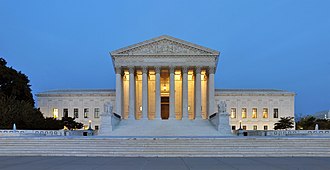
Supreme court
Highest court in a jurisdiction
In most legal jurisdictions, a supreme court, also known as a court of last resort, apex court, high (or final) court of appeal, and court of final appeal, is the highest court within the hierarchy of courts. Broadly speaking, the decisions of a supreme court are binding on all other courts in a nat...

Donald Trump
President of the United States (2017–2021; since 2025)
Donald John Trump (born June 14, 1946) is an American politician, media personality, and businessman who is the 47th president of the United States. A member of the Republican Party, he served as the 45th president from 2017 to 2021. Born into a wealthy New York City family, Trump graduated from the...
Entity Intersection Graph
Connections for Supreme court:
Mentioned Entities
Deep Analysis
Why It Matters
The Supreme Court decision invalidating Trump’s tariffs removes a major trade barrier but introduces new uncertainty as the U.S. may impose other tariffs. European exporters, especially in wine and chemicals, face a volatile market that could affect supply chains and investment decisions.
Context & Background
- Trump’s tariffs were imposed under a national emergency law and targeted many European goods
- The U.S. remains the largest market for Italian wine and a key partner for German chemicals
- The ruling leaves open the possibility of new tariffs based on different legal grounds
What Happens Next
European firms will monitor U.S. policy for potential new tariffs and adjust supply chains accordingly. The uncertainty may slow new orders and prompt companies to diversify markets or seek tariff refunds, though refunds are unlikely.
Frequently Asked Questions
Refunds are unlikely because the new tariffs are based on a different legal basis and the U.S. has not indicated a clear refund policy
They can diversify suppliers, use trade agreements, and monitor U.S. policy for changes in tariff rules
Political risk remains high, and shippers may face disruptions that are difficult to reverse, making supply chain resilience a priority