
Full arguments: Supreme Court weighs Trump's birthright citizenship executive order
📖 Full Retelling
📚 Related People & Topics
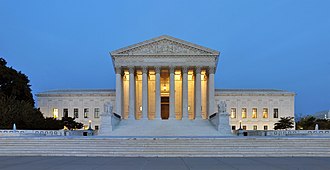
Supreme court
Highest court in a jurisdiction
In most legal jurisdictions, a supreme court, also known as a court of last resort, apex court, high (or final) court of appeal, and court of final appeal, is the highest court within the hierarchy of courts. Broadly speaking, the decisions of a supreme court are binding on all other courts in a nat...

Donald Trump
President of the United States (2017–2021; since 2025)
Donald John Trump (born June 14, 1946) is an American politician, media personality, and businessman who is the 47th president of the United States. A member of the Republican Party, he served as the 45th president from 2017 to 2021. Born into a wealthy New York City family, Trump graduated from the...
Entity Intersection Graph
Connections for Supreme court:
Mentioned Entities
Deep Analysis
Why It Matters
This case directly challenges the 14th Amendment's guarantee that 'all persons born or naturalized in the United States... are citizens of the United States,' which has been settled constitutional law for over 150 years. The outcome could redefine American citizenship for millions of children born to undocumented immigrants, potentially creating a permanent underclass without citizenship rights. This affects immigration policy, family unity, and constitutional interpretation, with implications for future presidential powers regarding citizenship. The decision will have profound social, political, and legal consequences regardless of which way the Court rules.
Context & Background
- The 14th Amendment was ratified in 1868 following the Civil War to guarantee citizenship to formerly enslaved people and their descendants
- Birthright citizenship has been upheld repeatedly by the Supreme Court, most notably in United States v. Wong Kim Ark (1898) which affirmed citizenship for children born to non-citizen parents
- Previous attempts to challenge birthright citizenship through legislation have failed in Congress, making executive action an unprecedented approach
- The current case represents the first serious constitutional challenge to birthright citizenship to reach the Supreme Court in over a century
- Approximately 300,000-400,000 children are born to undocumented immigrants in the U.S. annually who would be affected by this ruling
What Happens Next
The Supreme Court will deliberate following oral arguments, with a decision expected by late June or early July 2024 when the current term concludes. If the Court upholds the executive order, implementation would likely face immediate legal challenges regarding enforcement mechanisms. If struck down, Congress may attempt to pass legislation addressing birthright citizenship, though such efforts would face significant political hurdles. The ruling will immediately affect pending immigration cases and could trigger state-level legislation in either direction.
Frequently Asked Questions
The executive order seeks to reinterpret the 14th Amendment to exclude children of undocumented immigrants from automatic citizenship at birth. It argues that 'subject to the jurisdiction thereof' excludes those whose parents are in the country illegally, despite longstanding interpretation to the contrary.
Historically, citizenship has been governed by constitutional amendment and congressional legislation. Legal experts are divided on whether executive action can override the 14th Amendment's clear language, making this a fundamental separation of powers question.
The order would not apply retroactively to those already granted citizenship, but could create uncertainty about their status. Future children born to undocumented parents would not receive automatic citizenship, potentially creating a generation without legal status.
The U.S. is one of approximately 30 countries with unconditional birthright citizenship. Changing this policy could influence immigration debates worldwide and affect diplomatic relations, particularly with countries whose citizens are most affected.
While separate from DACA, this case similarly addresses the status of children in immigration systems. A ruling against birthright citizenship could signal the Court's willingness to reconsider other established immigration precedents.
If the Court is evenly divided (which could occur with recusals or vacancies), the lower court's decision would stand. This would likely mean the executive order remains blocked, but without establishing a nationwide precedent.