
SP
BravenNow
Full transcript of "Face the Nation with Margaret Brennan," Feb. 22, 2026
| USA | general | ✓ Verified - cbsnews.com

Full transcript of "Face the Nation with Margaret Brennan," Feb. 22, 2026

#Supreme Court #Tariffs #Trade Representative #International Emergency Economic Powers Act #Section 301 #Global Economy #Middle East Tensions #Trade Deals

📌 Key Takeaways

  • Supreme Court struck down Trump's use of emergency law for tariffs, prompting a new 15% global tariff
  • U.S. Trade Representative Greer explained alternative legal authorities for maintaining trade policies
  • Administration claims Republican support for tariffs despite some opposition
  • Tariff measures face expiration in five months, with investigations planned for continuity

📖 Full Retelling

U.S. Trade Representative Jamieson Greer and Iranian Foreign Minister Abbas Araghchi joined Margaret Brennan on 'Face the Nation' in Washington on February 22, 2026, following the Supreme Court's decision to strike down President Trump's use of an emergency law to impose tariffs on foreign goods, with the president responding by announcing a new 15 percent global tariff amid rising tensions in the Middle East where fresh protests in Iran coincide with U.S. military buildup in the region. During the broadcast, Ambassador Greer explained that while the Court ruled against using the International Emergency Economic Powers Act (IEEPA) for tariffs, other authorities like Section 301 related to unfair trading practices remain in place, allowing for continuity in the president's trade policy despite the legal setback. When questioned about congressional approval for the tariffs, given the president's low approval ratings on the economy (39% according to CBS polling), Greer claimed that many Republicans who were traditionally against tariffs have now come around, citing effectiveness in negotiating deals, reshoring production, and generating revenue, while dismissing the six House Republicans who voted against the tariffs as outliers not representing the party's position.

🏷️ Themes

Trade Policy, International Relations, Legal Authority

📚 Related People & Topics
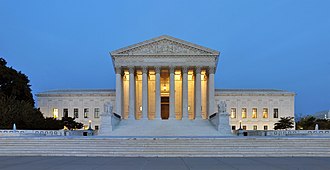
Supreme court

Supreme court

Highest court in a jurisdiction

In most legal jurisdictions, a supreme court, also known as a court of last resort, apex court, high (or final) court of appeal, and court of final appeal, is the highest court within the hierarchy of courts. Broadly speaking, the decisions of a supreme court are binding on all other courts in a nat...

View Profile → Wikipedia ↗
International Emergency Economic Powers Act

International Emergency Economic Powers Act

United States federal law

The International Emergency Economic Powers Act (IEEPA), Title II of Pub. L. 95–223, 91 Stat. 1626, enacted December 28, 1977, is a United States federal law authorizing the president to regulate international commerce after declaring a national emergency in response to any unusual and extraordinary...

View Profile → Wikipedia ↗
Tariff

Tariff

Goods import or export tax

A tariff or import tax is a duty imposed by a national government, customs territory, or supranational union on imports of goods and is paid by the importer. Exceptionally, an export tax may be levied on exports of goods or raw materials and is paid by the exporter. Besides being a source of revenue...

View Profile → Wikipedia ↗

Trade office

Government office in a foreign locale

A trade office, sometimes known as a trade representation, commercial office, or trade mission, is an official establishment that promotes the commercial interests of a government (such as a city, state, or country) in a foreign capital. The head of such an establishment is typically called a trade ...

View Profile → Wikipedia ↗

Entity Intersection Graph

Connections for Supreme court:

👤 Donald Trump 20 shared
🌐 Tariff 14 shared
🌐 Tariffs in the Trump administration 12 shared
🌐 International Emergency Economic Powers Act 6 shared
🌐 Commercial policy 5 shared
View full profile

Deep Analysis

Why It Matters

The Supreme Court decision limits the president's ability to impose emergency tariffs, affecting U.S. trade policy and global economic relations. The president announced a new 15 percent global tariff to replace struck measures, signaling a shift in trade strategy and potential retaliation against trading partners.

Context & Background

  • Supreme Court struck down emergency tariffs under IEEPA
  • President announced a 15 percent global tariff to replace struck measures
  • Trade Representative discussed use of Section 301 and Section 122 for tariff authority

What Happens Next

The administration will likely seek congressional approval for tariff authority and continue investigations under Section 301. Trade partners may adjust their trade agreements in response to the new tariff regime and further legal challenges could arise.

Frequently Asked Questions

What was the Supreme Court ruling about emergency tariffs?

The court ruled that using the International Emergency Economic Powers Act to impose tariffs is illegal because taxation authority lies with Congress.

How does the president plan to enforce tariffs after the ruling?

The president will use Section 301 and Section 122 authorities, conducting investigations and potentially imposing tariffs within the limits of those statutes.

What impact could this have on U.S. trade agreements?

Trade partners may reassess agreements and negotiate adjustments, and the U.S. may face retaliatory tariffs or legal disputes from affected countries.

Original Source
Face The Nation Transcripts Full transcript of "Face the Nation with Margaret Brennan," Feb. 22, 2026 Updated on: February 22, 2026 / 1:35 PM EST / CBS News Add CBS News on Google On this "Face the Nation with Margaret Brennan" broadcast, moderated by Margaret Brennan: Iranian foreign minister Abbas Araghchi U.S. Trade Representative Jamieson Greer Christine Lagarde , European Central Bank president Govs. Laura Kelly of Kansas, Andy Beshear of Kentucky, Mike Braun of Indiana and Mike DeWine of Ohio Click here to browse full transcripts from 2026 of "Face the Nation with Margaret Brennan." MARGARET BRENNAN: I'm Margaret Brennan in Washington. And this week on Face the Nation: In a major blow to the president's economic agenda, the Supreme Court strikes down his use of an emergency law to impose tariffs on foreign goods. Despite the defeat, the president digs in, announcing a new 15 percent global tariff to replace the measures struck down by the court, and lashed out at the justices who struck it down. (Begin VT) DONALD TRUMP (President of the United States): I'm ashamed of certain members of the court, absolutely ashamed, for not having the courage to do what's right for our country. They're very unpatriotic and disloyal to our Constitution. I think it's an embarrassment to their families. (End VT) MARGARET BRENNAN: We will get the latest from U.S. Trade Representative Ambassador Jamieson Greer. And what's the impact on the global economy? We will ask the president of the European Central Bank, Christine Lagarde. Meanwhile, tensions remain high in the Middle East, with a fresh tide of protests in Iran, as the U.S. continues its military buildup in the region, putting pressure on Tehran to agree on a nuclear deal. We will get the latest from Iranian Foreign Minister Abbas Araghchi. And, finally, a conversation with a bipartisan group of governors on how the president's trade and immigration policies are affecting their state's economies and more. It's all just ahead ...
Read full article at source

Source

cbsnews.com

More from USA

News from Other Countries

🇬🇧 United Kingdom

🇺🇦 Ukraine