
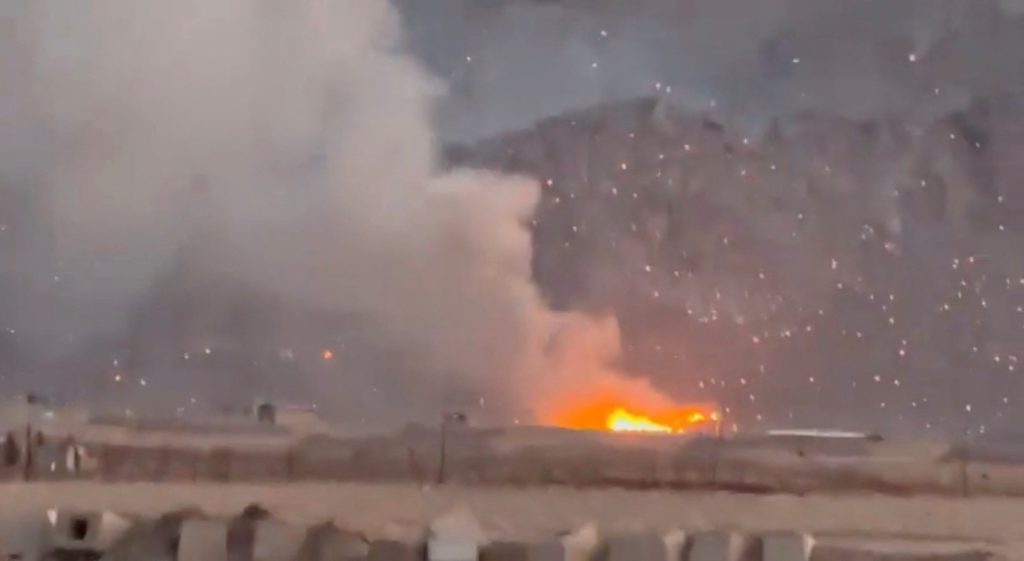
Global leaders work to ease oil price surge as Trump signals more weeks of Iran war
#oil prices #Iran conflict #global leaders #Trump #energy markets #geopolitical tensions
📌 Key Takeaways
- Global leaders are taking steps to mitigate rising oil prices.
- President Trump indicates the Iran conflict may continue for several more weeks.
- The situation reflects international efforts to stabilize energy markets.
- Geopolitical tensions are directly impacting global oil supply and prices.
📖 Full Retelling
🏷️ Themes
Geopolitics, Energy Markets
📚 Related People & Topics
List of wars involving Iran
This is a list of wars involving the Islamic Republic of Iran and its predecessor states. It is an unfinished historical overview.

Donald Trump
President of the United States (2017–2021; since 2025)
Donald John Trump (born June 14, 1946) is an American politician, media personality, and businessman who is the 47th president of the United States. A member of the Republican Party, he served as the 45th president from 2017 to 2021. Born into a wealthy New York City family, Trump graduated from the...
Entity Intersection Graph
Connections for List of wars involving Iran:
Mentioned Entities
Deep Analysis
Why It Matters
This news matters because rising oil prices directly impact global economies, increasing costs for transportation, manufacturing, and consumer goods worldwide. It affects everyday citizens through higher fuel prices and potential inflation, while creating geopolitical instability in the Middle East. The situation also influences global energy markets and could trigger broader economic consequences if the conflict escalates further.
Context & Background
- The U.S. and Iran have had tense relations since the 1979 Iranian Revolution and subsequent hostage crisis
- Iran's nuclear program has been a major point of contention, leading to the 2015 nuclear deal (JCPOA) which the U.S. withdrew from in 2018
- The Strait of Hormuz, controlled partly by Iran, is a critical chokepoint through which about 20% of the world's oil passes daily
- Previous conflicts in the Middle East have historically caused significant oil price spikes and global economic disruptions
What Happens Next
Oil markets will likely remain volatile in coming weeks as the conflict continues. Global leaders may coordinate strategic petroleum reserve releases to stabilize prices. Diplomatic efforts will intensify to prevent broader regional escalation, while OPEC+ members may reconsider production quotas. The situation could influence upcoming elections in oil-importing nations where voters are sensitive to fuel prices.
Frequently Asked Questions
Higher oil prices lead to increased costs for gasoline, heating oil, and electricity, reducing household disposable income. They also raise prices for goods transported by road, air, or sea, contributing to broader inflation across the economy.
The Strait of Hormuz is the world's most important oil transit chokepoint, with about 20-21 million barrels of oil passing through daily. Any disruption there would immediately impact global oil supplies and prices, affecting economies worldwide.
Governments can release strategic petroleum reserves, negotiate with OPEC+ for increased production, implement fuel subsidies or tax reductions, and pursue diplomatic solutions to geopolitical conflicts. They may also encourage alternative energy sources during crises.
The situation could strain relations between U.S. allies who depend on Middle Eastern oil and those concerned about regional stability. It may also create divisions between countries prioritizing energy security versus those emphasizing diplomatic solutions to the Iran conflict.