
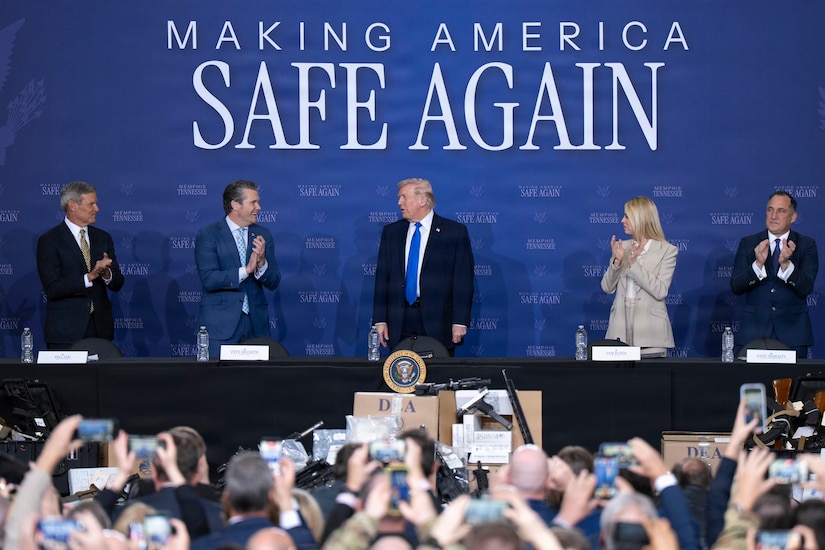
Hegseth Lauds Parity in Pay, Benefits for Guardsmen, Praises Memphis Crime Reduction
📖 Full Retelling
📚 Related People & Topics

National Guard
Index of articles associated with the same name
National guard is the name used by a wide variety of current and historical uniformed organizations in different countries. The original National Guard was formed during the French Revolution around a cadre of defectors from the French Guards.

Pete Hegseth
American government official and television personality (born 1980)
Peter Brian Hegseth (born June 6, 1980) is an American government official and former television personality who has served as the 29th United States secretary of defense since 2025. Hegseth studied politics at Princeton University, where he was the publisher of The Princeton Tory, a conservative st...
Entity Intersection Graph
Connections for National Guard:
Mentioned Entities
Deep Analysis
Why It Matters
This news matters because it addresses two critical issues affecting American communities: military compensation equity and public safety. The push for pay and benefits parity for National Guardsmen ensures fair treatment for citizen-soldiers who serve both domestic and overseas missions, impacting military readiness and retention. Simultaneously, highlighting crime reduction in Memphis demonstrates successful public safety strategies that could serve as models for other cities struggling with violent crime. These developments affect military families, law enforcement agencies, urban residents, and policymakers at state and federal levels.
Context & Background
- National Guard members have historically received different pay and benefits than active-duty counterparts despite similar deployments and risks
- Memphis has consistently ranked among cities with highest violent crime rates in the U.S. for several years
- The National Guard has been increasingly deployed for domestic emergencies including natural disasters and civil unrest
- Military compensation reform has been ongoing congressional issue with previous attempts to address guard/reserve disparities
- Many cities implemented new crime reduction strategies following nationwide increases in violent crime during COVID-19 pandemic
What Happens Next
Congress will likely consider legislation to formalize pay and benefits parity for National Guard members, potentially as part of the next National Defense Authorization Act. Memphis law enforcement will continue implementing and refining crime reduction strategies, with other cities potentially adopting similar approaches. The Department of Defense may issue new guidelines for Guard compensation while monitoring retention and recruitment metrics. Additional data on crime trends will be released quarterly, allowing for assessment of whether reductions are sustained.
Frequently Asked Questions
Guard members traditionally served part-time with limited federal activation, but increased overseas deployments and domestic emergencies have blurred this distinction. Current compensation structures haven't fully adapted to their expanded roles, creating disparities in healthcare, housing allowances, and retirement benefits despite similar duties and risks.
While not detailed in this brief article, successful urban crime reduction typically involves data-driven policing, community partnerships, focused deterrence on violent offenders, and addressing root causes through social programs. Memphis likely implemented a combination of these evidence-based approaches that target specific crime patterns and neighborhoods.
Improved compensation would likely boost recruitment by making Guard service more competitive with private sector jobs and increase retention by recognizing the expanded commitments Guard members now undertake. This is particularly important as all military branches face recruitment challenges in the current labor market.
While successful strategies often require adaptation to local contexts, evidence-based policing and community engagement principles are transferable. The key factors would be sustained political support, adequate resources, and tailoring interventions to specific community needs and crime patterns observed in each city.
Legislative changes typically require congressional approval through defense authorization bills, which follow annual budget cycles. If prioritized, changes could begin within 12-18 months, though full implementation might take longer as agencies adjust pay systems and develop new administrative procedures.