
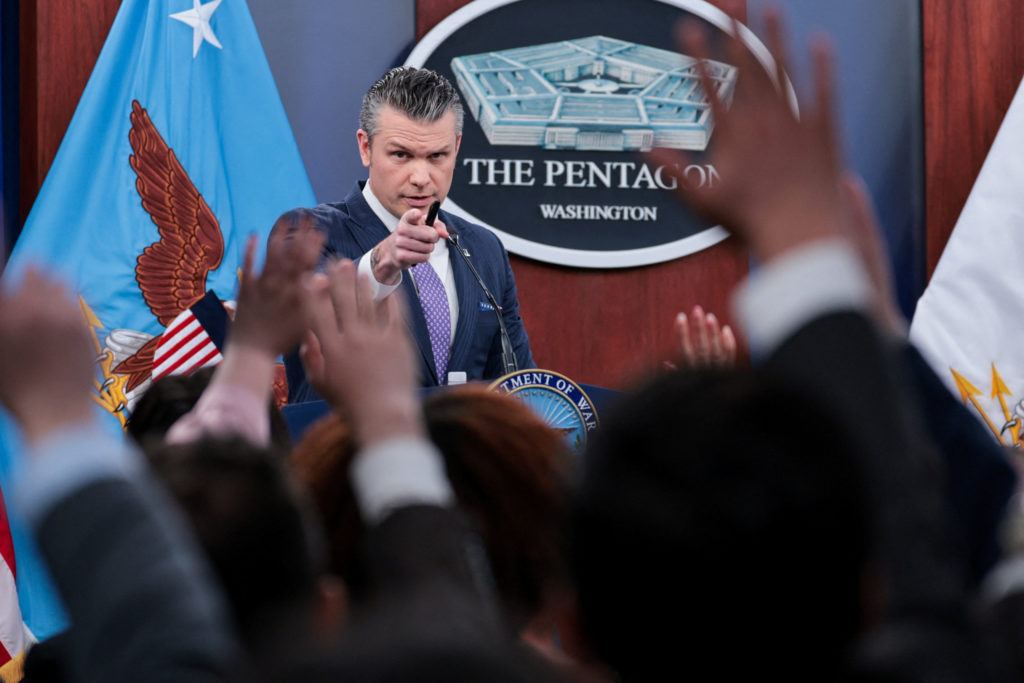
Hegseth says he will allow troops to take personal weapons onto military bases
📖 Full Retelling
📚 Related People & Topics

Pete Hegseth
American government official and television personality (born 1980)
Peter Brian Hegseth (born June 6, 1980) is an American government official and former television personality who has served as the 29th United States secretary of defense since 2025. Hegseth studied politics at Princeton University, where he was the publisher of The Princeton Tory, a conservative st...
Entity Intersection Graph
Connections for Pete Hegseth:
Mentioned Entities
Deep Analysis
Why It Matters
This policy change would significantly alter military base security protocols and affect service members' daily lives. It matters because it could impact base safety, force protection measures, and the relationship between military leadership and personnel. The decision affects all military personnel stationed on bases, base security forces, and potentially surrounding civilian communities near military installations.
Context & Background
- Current Department of Defense policy generally prohibits personal firearms on military bases except in specific circumstances
- Military bases have experienced several high-profile shooting incidents in recent years, including the 2009 Fort Hood attack and 2013 Washington Navy Yard shooting
- The debate over firearms on military bases intensified after the 2015 Chattanooga shooting where a gunman killed five service members at a military recruiting center
- Military commanders currently have authority to regulate firearms on their installations through general orders
- Some states have laws allowing concealed carry that conflict with federal military base policies
What Happens Next
If implemented, this would require changes to Uniform Code of Military Justice regulations and base security protocols. Military commanders would need to develop new training requirements and storage procedures. Legal challenges may arise regarding state versus federal jurisdiction over military installations. The policy would likely face scrutiny from Congress and military leadership before full implementation.
Frequently Asked Questions
Proponents argue service members should have the right to self-defense on base, particularly after several high-profile shootings at military installations. They believe trained military personnel should be trusted with firearms for personal protection.
Opponents worry about increased risks of accidental discharges, domestic violence incidents, and weapons falling into unauthorized hands. Security forces also face challenges distinguishing between authorized personal weapons and potential threats during security incidents.
Military family housing would likely see the most significant impact, requiring new storage regulations and safety protocols. Commanders would need to balance personal security rights with community safety in residential areas.
The policy would primarily affect U.S. bases, but implementation overseas would be complicated by host nation laws and Status of Forces Agreements. Different rules might apply depending on the country where the base is located.
Service members would likely need to complete additional firearms safety training and qualification courses. Commanders might require psychological screening or regular proficiency testing for those choosing to carry personal weapons on base.