

Here's a look at birthright citizenship, and how the world sees it, as Supreme Court case looms
📖 Full Retelling
📚 Related People & Topics
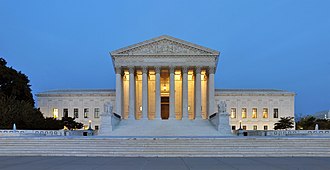
Supreme court
Highest court in a jurisdiction
In most legal jurisdictions, a supreme court, also known as a court of last resort, apex court, high (or final) court of appeal, and court of final appeal, is the highest court within the hierarchy of courts. Broadly speaking, the decisions of a supreme court are binding on all other courts in a nat...
Entity Intersection Graph
Connections for Supreme court:
Mentioned Entities
Deep Analysis
Why It Matters
This news matters because birthright citizenship is a foundational principle of American identity that affects millions of people born in the U.S. to immigrant parents. A Supreme Court case challenging this principle could redefine who qualifies as a citizen, potentially affecting immigration patterns, family unity, and constitutional interpretation. The outcome would have significant implications for undocumented immigrants, their U.S.-born children, and future immigration policy debates.
Context & Background
- Birthright citizenship is established by the 14th Amendment's Citizenship Clause, ratified in 1868 to guarantee citizenship to formerly enslaved people.
- The U.S. is one of approximately 30 countries that grant unconditional birthright citizenship, alongside Canada and Mexico, while most European and Asian nations have more restrictive policies.
- Previous legal challenges to birthright citizenship have been rejected by courts, but the issue remains politically contentious, particularly in debates about illegal immigration.
What Happens Next
The Supreme Court will likely hear arguments in the coming months, with a decision expected by June 2025. If the Court rules against birthright citizenship, Congress may need to pass new legislation to define citizenship criteria. The ruling could also trigger state-level legal battles over documentation and benefits for affected individuals.
Frequently Asked Questions
Birthright citizenship is the legal principle that any person born within a country's territory automatically gains citizenship, regardless of their parents' immigration status. In the U.S., this is rooted in the 14th Amendment to the Constitution.
The U.S., Canada, Mexico, Brazil, and Argentina are among the countries with unconditional birthright citizenship. Most European and Asian nations require at least one parent to be a citizen or legal resident for a child to gain citizenship at birth.
A ruling against birthright citizenship would likely not strip citizenship from those already born under the current system, as retroactive application would raise constitutional issues. However, it could create uncertainty for future births and potentially affect documentation processes.
Supporters argue it promotes equality, prevents statelessness, and aligns with American ideals of inclusion. Opponents claim it encourages illegal immigration and creates 'anchor babies' who facilitate chain migration.