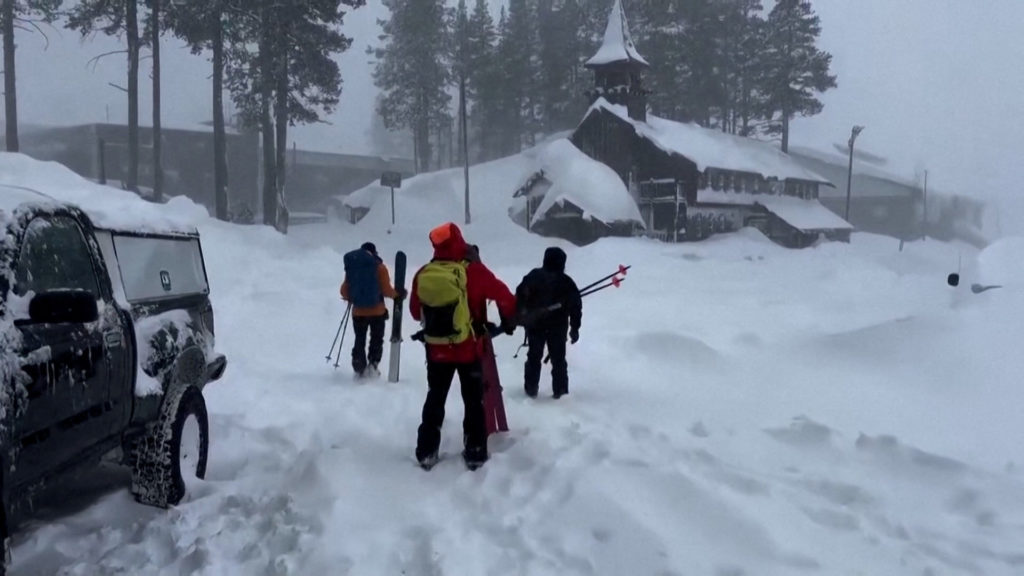
A weekslong snow drought followed by heavy new snow created unstable avalanche conditions
Eight backcountry skiers died with one still missing after the avalanche near Lake Tahoe
Experts explain that new snow failed to bond with hardened underlying layer
Authorities had issued avalanche warnings before the incident occurred
📖 Full Retelling
A deadly avalanche near Lake Tahoe in California's Sierra Nevada on Tuesday, February 19, 2026, killed at least eight backcountry skiers and left one missing after a weekslong 'snow drought' was followed by several feet of new snow that failed to bond properly with the hardened underlying layer, creating unstable conditions, according to Craig Clements, a meteorology professor at San Jose State University who has conducted avalanche research. Six skiers survived the avalanche, which occurred during a winter storm that was pummeling the West Coast, while rescue teams continued searching for the missing skier on Wednesday. The group of backcountry skiers was on a three-day trek in the Sierra Nevada when they were trapped by the avalanche that authorities say was the nation's deadliest in nearly half a century. Clements explained that when weather is dry and clear, as it had been in the Sierra Nevada since January, snow crystals change and can become angular or round over time. When heavy new snow falls on these crystals, the layers often can't bond properly, creating what is called a 'storm slab' over a weaker layer that can slide when triggered by any change in tension. About 3 to 6 feet of snow had fallen since Sunday when the group began their trip, with the area also experiencing subfreezing temperatures and gale force winds, and the Sierra Avalanche Center reported that the threat of additional avalanches remained on Wednesday, leaving the snowpack unstable and unpredictable.
Lake Tahoe () is a freshwater lake in the Sierra Nevada of the Western United States, straddling the border between California and Nevada. Lying at 6,225 ft (1,897 m) above sea level, Lake Tahoe is the largest alpine lake in North America, and at 122,160,280 acre⋅ft (150.7 km3) it trails only the fi...
The Sierra Nevada ( see-ERR-ə nih-VA(H)D-ə) is a mountain range in the Western United States, between the Central Valley of California and the Great Basin. The vast majority of the range lies in the state of California, although the Carson Range spur lies primarily in Nevada. The Sierra Nevada is pa...
By — Tammy Webber, Associated Press Tammy Webber, Associated Press Leave your feedback Share Copy URL Email Facebook Twitter LinkedIn Pinterest Tumblr Share on Facebook Share on Twitter How a snow drought helped set the stage for deadly California avalanche Science Feb 19, 2026 1:49 PM EST A weekslong "snow drought" in Northern California's Sierra Nevada helped set the stage for Tuesday's deadly avalanche, after several feet of new snow fell on an earlier layer that had hardened, making it unstable and easily triggered, experts said. READ MORE: 8 backcountry skiers found dead and 1 still missing after California avalanche The new snow did not have time to bond to the earlier layer before the avalanche near Lake Tahoe killed at least eight backcountry skiers, said Craig Clements, a meteorology professor at San Jose State University, who has conducted avalanche research. Six skiers survived and rescuers were still searching for another one who was still missing on Wednesday. The group was on a three-day backcountry trek in the Sierra Nevada on Tuesday morning when they were trapped by the avalanche as a winter storm pummeled the West Coast. Grow your mind Subscribe to our Science Newsletter to explore the wide worlds of science, health and technology. Enter your email address Subscribe Form error message goes here. Thank you. Please check your inbox to confirm. The dangers generally are highest in the first 24 to 48 hours after a very large snowfall, Clements said, and authorities had issued avalanche warnings. Here's what to know. What made conditions so dangerous? When weather is dry and clear, as it had been in the Sierra Nevada since January, snow crystals change and can become angular or round over time, Clements said. If heavy new snow falls on the crystals, the layers often can't bond and the new snow forms what is called a storm slab over a weaker layer. "Because it's on a mountain, it will slide," when it's triggered by any change in the tension above or belo...