
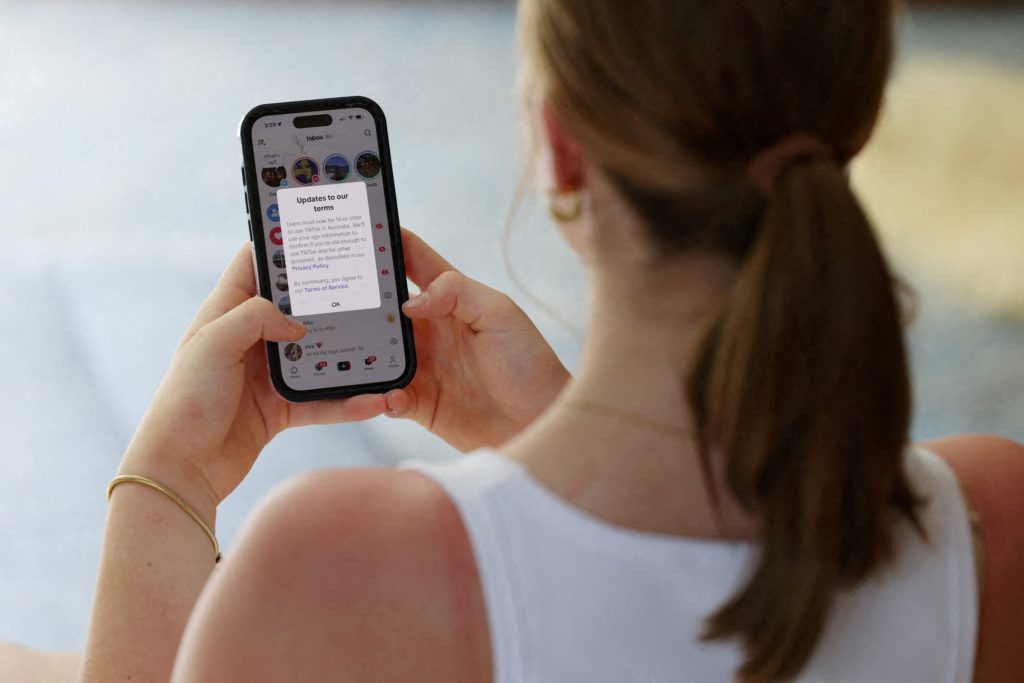
How Australia's pioneering social media ban is impacting teens
📖 Full Retelling
📚 Related People & Topics

Australia
Country in Oceania
Australia, officially the Commonwealth of Australia, is a country comprising the mainland of the Australian continent, the island of Tasmania and numerous smaller islands. It has a total area of 7,688,287 km2 (2,968,464 sq mi), making it the sixth-largest country in the world and the largest in Ocea...
Entity Intersection Graph
Connections for Australia:
Mentioned Entities
Deep Analysis
Why It Matters
Australia's social media ban represents one of the world's first large-scale government interventions in youth social media access, setting a potential global precedent for digital regulation. This directly affects millions of Australian teenagers, their parents, and educators who must navigate new restrictions on daily communication and information access. The policy also impacts social media companies' business models and raises fundamental questions about government authority over digital spaces versus parental responsibility. The outcomes could influence similar legislation in other countries concerned about youth mental health and online safety.
Context & Background
- Australia has been at the forefront of digital regulation, previously passing the News Media Bargaining Code in 2021 requiring platforms to pay for news content
- Global concern about social media's impact on youth mental health has grown since 2017, with multiple studies linking heavy use to increased depression and anxiety
- Previous attempts to regulate youth social media access have mostly involved age verification systems rather than outright bans
- The Australian eSafety Commissioner was established in 2015 with powers to regulate online content, providing existing infrastructure for enforcement
- Similar discussions about youth social media restrictions are occurring in the UK, US, and European Union, though no comparable bans have been implemented
What Happens Next
Researchers will likely conduct formal studies on the ban's effects on teen mental health, academic performance, and social development within 6-12 months. Legal challenges from civil liberties groups or technology companies may emerge questioning the ban's constitutionality. Other countries will monitor Australia's experience closely, with potential for similar legislation in Canada and European nations by late 2025. The policy may undergo revisions based on initial implementation challenges and public feedback.
Frequently Asked Questions
The ban restricts social media access for users under specific ages, though exact parameters vary by platform. It represents a combination of age verification requirements and platform-level restrictions rather than a complete internet ban for teenagers.
Some teenagers are using virtual private networks (VPNs) to bypass geographic restrictions or creating accounts with false birthdates. Others are migrating to less-regulated platforms or using parents' accounts to maintain access.
Penalties primarily target social media companies for non-compliance rather than individual users. Companies face significant fines if they fail to implement adequate age verification systems or knowingly provide access to underage users.
This is a government-mandated restriction applied uniformly across platforms, whereas parental controls are optional and implemented at the household level. The ban creates a systemic barrier rather than individual family decisions.
Proponents cite research linking social media use to increased anxiety, depression, and sleep disturbances in adolescents. However, critics argue the evidence is correlational rather than causal and that benefits of social connection are being overlooked.