
How the Supreme Court Could Change Voting by Mail
#Supreme Court #voting by mail #mail-in ballots #Election Day #voter access #legal case #states
📌 Key Takeaways
- The Supreme Court is considering a case that could restrict voting by mail.
- The case focuses on whether states can require mail-in ballots to be received by Election Day.
- A ruling could impact future elections and voter access in many states.
- Legal experts are divided on the potential outcomes and constitutional implications.
📖 Full Retelling
🏷️ Themes
Election Law, Voting Rights
📚 Related People & Topics
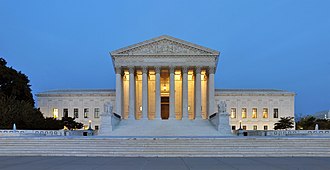
Supreme court
Highest court in a jurisdiction
In most legal jurisdictions, a supreme court, also known as a court of last resort, apex court, high (or final) court of appeal, and court of final appeal, is the highest court within the hierarchy of courts. Broadly speaking, the decisions of a supreme court are binding on all other courts in a nat...

Election day
Day when elections are held
Election Day or Polling Day is the day on which general elections are held. In many countries, general elections are always held on a Saturday or Sunday, to enable as many voters as possible to participate; while in other countries elections are always held on a weekday. However, some countries, or ...
Entity Intersection Graph
Connections for Supreme court:
Mentioned Entities
Deep Analysis
Why It Matters
This news matters because the Supreme Court's potential rulings on voting by mail could fundamentally reshape how Americans participate in elections, particularly affecting elderly, disabled, and rural voters who rely on mail-in ballots. It could create significant disparities in voting access between states with different policies, potentially influencing election outcomes in closely contested races. The decisions could also trigger legal challenges and legislative battles across the country as states adjust their election systems to comply with new constitutional interpretations.
Context & Background
- Mail-in voting expanded dramatically during the COVID-19 pandemic, with over 40% of voters casting ballots by mail in the 2020 presidential election
- The Supreme Court has previously ruled on voting rights cases including Shelby County v. Holder (2013) which weakened the Voting Rights Act's preclearance requirements
- State laws regarding mail-in voting vary widely, with some states like Colorado and Oregon conducting primarily mail elections while others restrict the practice
- Legal challenges to mail-in voting procedures have increased since 2020, often focusing on signature matching, ballot receipt deadlines, and witness requirements
- The current Supreme Court has shown increased willingness to reconsider established voting rights precedents and election administration practices
What Happens Next
The Supreme Court will likely hear cases challenging state mail-in voting laws during its next term, with decisions expected by June 2025. State legislatures will begin drafting contingency legislation based on potential rulings, while election officials will prepare for possible changes to ballot processing procedures. Advocacy groups on both sides will file additional lawsuits in lower courts to test the boundaries of any new Supreme Court rulings, creating legal uncertainty heading into the 2026 midterm elections.
Frequently Asked Questions
The Court could rule on whether states can impose strict signature matching requirements, whether ballots must be received by Election Day versus postmarked by that date, and whether third parties can collect and deliver ballots (often called 'ballot harvesting'). These technical procedures significantly affect how many mail ballots get counted.
States with expansive mail voting systems like Washington and California would need to make major adjustments if restrictions are upheld, while states with limited mail voting like Texas and Mississippi might see their existing restrictions validated. The ruling could create a patchwork system where voting access depends heavily on where citizens live.
Cases typically involve the Equal Protection Clause of the 14th Amendment, with plaintiffs arguing that varying rules within states create unequal treatment of voters. Some cases also involve the Elections Clause, which gives state legislatures authority over election procedures but with congressional oversight.
Yes, Congress could pass new legislation establishing national standards for mail voting under its authority in the Elections Clause, though such legislation would require overcoming the Senate filibuster and likely face presidential veto challenges. Previous voting rights bills have failed to pass in recent years.
If the Court upholds stricter mail voting rules, proponents argue it would enhance election security through better verification processes. Opponents counter that excessive restrictions could disenfranchise legitimate voters without meaningfully improving security, as multiple studies have found mail voting fraud to be extremely rare.
Voters should check their state's specific requirements regularly, ensure their voter registration includes current contact information, and consider requesting mail ballots well before deadlines. Voting rights organizations recommend having backup plans for in-person voting if mail ballot procedures change unexpectedly.