
SP
BravenNow
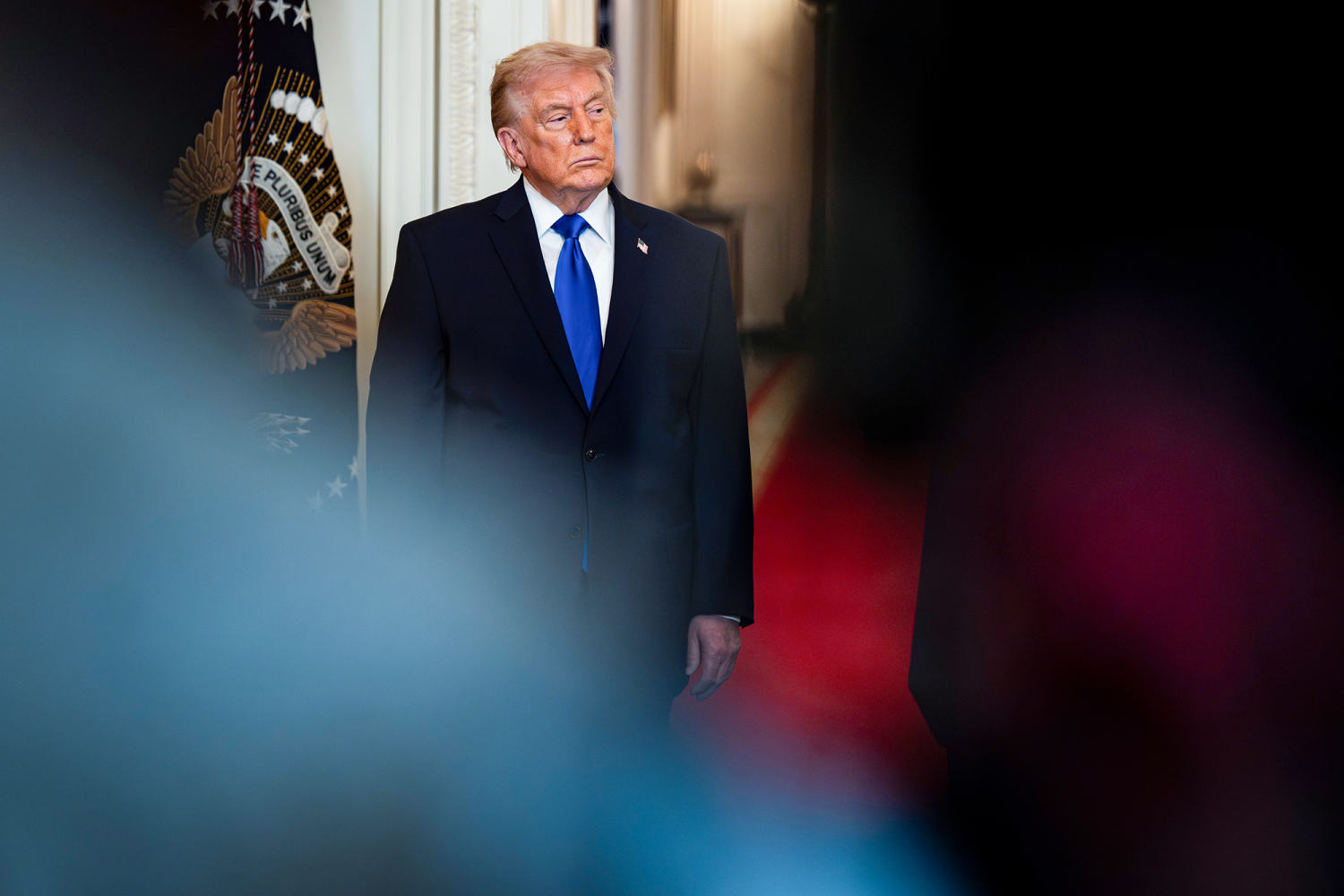
How Trump decided to strike Iran
| USA | general | ✓ Verified - nbcnews.com

How Trump decided to strike Iran

#Trump Iran strikes #Nuclear negotiations #Operation Epic Fury #Geneva talks #Middle East conflict #Military escalation #Khamenei #Nuclear weapons program

📌 Key Takeaways

  • Trump ordered strikes after Iran refused to abandon nuclear weapons program
  • Failed Geneva negotiations featured heated exchanges between US and Iranian officials
  • Operation Epic Fury killed Iranian Supreme Leader Khamenei and targeted military infrastructure
  • Trump balanced campaign promises against Iran's nuclear ambitions
  • Strikes followed weeks of military and economic pressure on Tehran

📖 Full Retelling

President Donald Trump ordered military strikes against Iran in the early hours of March 2, 2026, following failed negotiations in Geneva where Iranian officials refused to abandon their nuclear weapons program, escalating tensions that had been building for months between Washington and Tehran. The strikes, dubbed 'Operation Epic Fury,' targeted Iran's navy, missile sites, command centers, and air defense systems, resulting in the death of Supreme Leader Ayatollah Ali Khamenei, whom US intelligence had tracked to a meeting with senior deputies at the precise moment of the attack. Trump's decision came after a particularly contentious Geneva meeting where Iranian Foreign Minister Abbas Araghchi refused to acknowledge Iran's 'inalienable right' to enrich uranium, prompting heated exchanges with US negotiators including Trump's son-in-law Jared Kushner and businessman Steve Witkoff. The president, who had campaigned on ending 'endless wars' but had consistently vowed to prevent Iran from acquiring nuclear weapons, ultimately concluded that diplomatic efforts had reached an impasse, with officials reporting he was 'nonplussed' by Iran's intransigence during the final negotiations. The military action followed weeks of escalating pressure, including a US aircraft carrier deployment to the region, economic measures that had sparked internal protests in Iran, and public warnings from Trump that 'really bad things' would happen if Iran defied his demands, creating what administration officials described as a last-ditch effort to prevent a more catastrophic conflict.

🏷️ Themes

Diplomatic Failure, Military Escalation, Nuclear Proliferation, Middle East Conflict

📚 Related People & Topics

Nuclear program of Iran

Nuclear program of Iran

Iran's nuclear program, one of the most scrutinized in the world, has sparked intense international concern. While Iran asserts that its nuclear ambitions are purely for civilian purposes, including energy production, the country historically pursued the secretive AMAD nuclear weapons project (stopp...

View Profile → Wikipedia ↗

2026 Israeli–United States strikes on Iran

Ongoing military operation

On 28 February 2026, Israel and the United States launched a joint attack on various targets in Iran. The operation, codenamed Roaring Lion (Hebrew: מִבְצַע שְׁאָגַת הָאֲרִי, romanized: mivtsá she'agát ha'arí) in Israel, Operation Epic Fury by the United States Department of Defense, began with a se...

View Profile → Wikipedia ↗
List of modern conflicts in the Middle East

List of modern conflicts in the Middle East

List of Middle Eastern conflicts since 1914

This is a list of modern conflicts ensuing in the geographic and political region known as the Middle East. The "Middle East" is traditionally defined as the Fertile Crescent (Mesopotamia), Levant, and Egypt and neighboring areas of Arabia, Anatolia and Iran. It currently encompasses the area from E...

View Profile → Wikipedia ↗

Entity Intersection Graph

Connections for Nuclear program of Iran:

👤 Donald Trump 7 shared
🌐 Enriched uranium 6 shared
🌐 Joint Comprehensive Plan of Action 6 shared
🏢 Diplomacy 4 shared
🌐 Geneva 3 shared
View full profile

Mentioned Entities

Nuclear program of Iran

Nuclear program of Iran

Iran's nuclear program, one of the most scrutinized in the world, has sparked intense international

2026 Israeli–United States strikes on Iran

Ongoing military operation

List of modern conflicts in the Middle East

List of modern conflicts in the Middle East

List of Middle Eastern conflicts since 1914

Deep Analysis

Why It Matters

The article details President Trump's decision to strike Iran after failed diplomatic negotiations over its nuclear program. This escalation highlights tensions between major global powers and could significantly impact regional stability and international relations.

Context & Background

  • Iran refused a U.S.-proposed deal that would limit its nuclear activities
  • President Trump expressed frustration with prolonged talks before ordering strikes
  • The strike targeted Iranian military assets including command centers and missile sites

What Happens Next

Following the initial attack, further diplomatic efforts or additional military actions may be considered by both sides. The outcome of these operations could influence Iran's nuclear ambitions and broader Middle East geopolitics for years to come.

Frequently Asked Questions

Why did Trump order strikes on Iran?

Trump ordered the strikes after Iranian officials refused a U.S.-proposed deal limiting their nuclear activities, leading him to believe negotiations were unsuccessful.

What was targeted in the attack?

The strike included attacks on Iran's navy, missile sites, command and control headquarters, and air defense systems.

}
Original Source
How Trump decided to strike Iran Iran balked at a proposed deal Thursday, a senior U.S. official said. “They weren’t willing to say they will not have a nuclear weapon. Very simple,” Trump told NBC News. President Donald Trump ordered strikes on Iran after growing frustrated with prolonged negotiations. Al Drago / Bloomberg via Getty Images Share Add NBC News to Google March 1, 2026, 9:17 PM EST / Updated March 1, 2026, 9:25 PM EST By Peter Nicholas , Dan De Luce , Katherine Doyle and Julie Tsirkin Listen to this article with a free account 00:00 00:00 WASHINGTON — A last chance to avert war with Iran played out Thursday in Geneva, where Trump administration officials told Iranian counterparts they must not take certain steps needed to build a nuclear bomb. It didn’t go well. As the U.S. delegation laid out its position that Iran couldn’t enrich uranium for the next 10 years, the Iranian side balked, said a senior Trump administration official who described the meeting on condition of anonymity. Iran has an “inalienable right” to enrich uranium, Abbas Araghchi, the Iranian foreign minister, told the Americans. And the U.S. has an “inalienable right” to stop you, Steve Witkoff, a member of the U.S. delegation, replied. Add NBC News to Google Trump warns Iran it ‘better not’ retaliate further following U.S. and Israeli strikes 02:08 After having heard the U.S. demands, Araghchi started yelling at Witkoff, who was accompanied at the meeting by President Donald Trump’s son-in-law Jared Kushner, among others, said the senior official. “If you prefer, I can leave,” Witkoff said. Araghchi’s representatives didn’t immediately respond to a request for comment. Afterward, the American delegation reported back to Trump what had happened. Trump was “nonplussed,” the senior official said. By Saturday morning, the U.S. was at war. “Major combat operations” against Iran had begun, Trump said in a video released at 2:30 a.m. ET on his social media site. The phrase was a distant ech...
Read full article at source

Source

nbcnews.com

More from USA

News from Other Countries

🇬🇧 United Kingdom

🇺🇦 Ukraine