
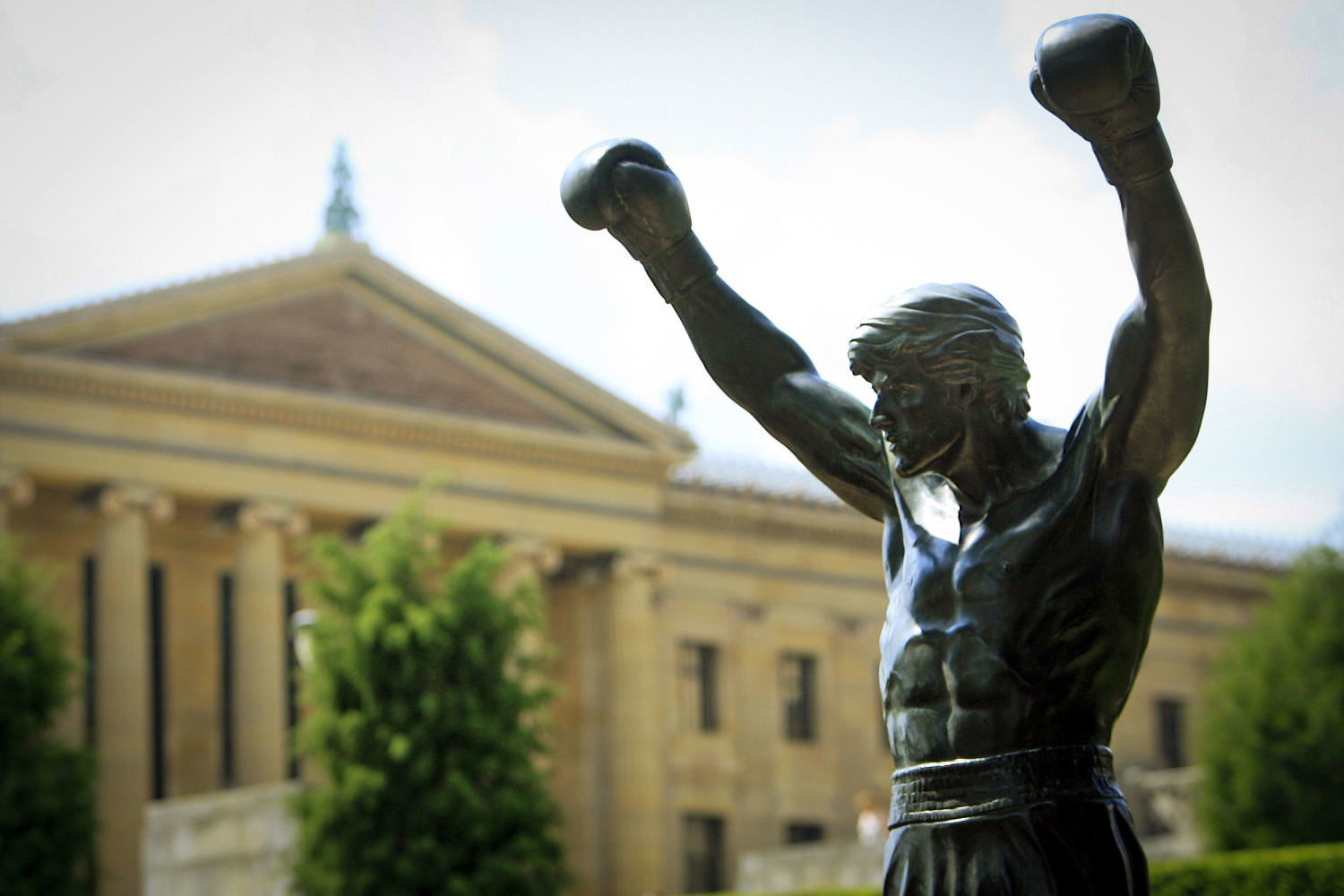
Iconic Rocky statue moves inside the Philadelphia Museum of Art
📖 Full Retelling
📚 Related People & Topics

Rocky Steps
Iconic construction in Philadelphia, Pennsylvania, U.S.
The Rocky Steps are 72 stone steps leading up to the East entrance of the Philadelphia Museum of Art in Philadelphia that gained global fame after being featured in a notable scene from the 1976 film Rocky. In the scene, Rocky Balboa, an unpolished but ambitious boxer from Kensington played by Sylve...

Philadelphia Museum of Art
Art museum in Pennsylvania, United States
The Philadelphia Museum of Art is an art museum originally chartered in 1876 for the Centennial Exposition in Philadelphia. The main museum building was completed in 1928 on Fairmount, a hill located at the northwest end of the Benjamin Franklin Parkway at Eakins Oval. The museum administers collect...

Philadelphia
Most populous city in Pennsylvania, US
Philadelphia ( FIL-ə-DEL-fee-ə), colloquially referred to as Philly, is the most populous city in the U.S. state of Pennsylvania. It is the sixth-most populous city in the United States with a population of 1.6 million at the 2020 census, while the Philadelphia metropolitan area (sometimes called t...
Entity Intersection Graph
No entity connections available yet for this article.
Mentioned Entities
Deep Analysis
Why It Matters
This relocation matters because the Rocky statue is an internationally recognized symbol of Philadelphia and American perseverance, attracting millions of tourists annually. The move affects Philadelphia's tourism industry, film enthusiasts, and local residents who view the statue as part of the city's cultural identity. It represents a shift in how Philadelphia preserves and presents its pop culture heritage, balancing artistic integrity with public accessibility. The decision also impacts the museum's visitor experience and the city's iconic 'Rocky Steps' tradition.
Context & Background
- The Rocky statue was created in 1980 by artist A. Thomas Schomberg for the film 'Rocky III' and depicts Sylvester Stallone's fictional boxer character
- For decades, the statue was displayed at the Philadelphia Museum of Art's entrance where visitors recreated Rocky's famous training run up the museum steps
- The statue has been temporarily relocated twice before - once to the Spectrum sports arena and once for museum renovations
- Philadelphia has long debated whether the statue represents 'high art' worthy of museum display or popular culture that belongs in public spaces
- The 'Rocky Steps' have become one of Philadelphia's top tourist attractions, with the statue serving as a photo opportunity for visitors from around the world
What Happens Next
The museum will likely develop new interpretive materials explaining the statue's artistic and cultural significance in its indoor location. Tourism officials may create new visitor pathways or experiences connecting the indoor statue with the outdoor steps. Expect increased museum attendance initially as fans visit the new location, followed by potential adjustments to the display based on visitor feedback. The move may inspire similar reevaluations of how other cities display their pop culture monuments.
Frequently Asked Questions
The museum cited preservation concerns and the desire to provide better context for the artwork as reasons for moving it indoors. Outdoor exposure to weather and pollution was damaging the bronze statue, and the indoor location allows for controlled environmental conditions and educational displays.
Yes, the famous 72-step run featured in the Rocky films remains completely accessible to the public. The steps and the view of the Philadelphia skyline from the top are unchanged, though the traditional photo spot with the statue has moved indoors.
Reactions are mixed, with some praising the preservation effort and others lamenting the loss of the outdoor photo tradition. Longtime fans may miss the iconic outdoor placement, while art enthusiasts appreciate the statue being treated as a serious sculpture within the museum context.
Yes, visitors must pay museum admission to see the statue in its new indoor location. The museum offers various ticket options, including pay-what-you-wish admission on certain days, making it accessible to different budgets.
The plaza where the statue previously stood remains open to the public and may feature temporary installations or remain empty. Museum officials haven't announced permanent plans for the space, but it will continue to serve as the gathering point for the famous steps run.