

Immigrant Families Are Cautiously Hopeful Over Supreme Court Birthright Citizenship Case
📖 Full Retelling
📚 Related People & Topics
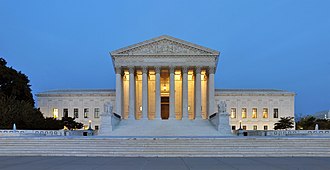
Supreme court
Highest court in a jurisdiction
In most legal jurisdictions, a supreme court, also known as a court of last resort, apex court, high (or final) court of appeal, and court of final appeal, is the highest court within the hierarchy of courts. Broadly speaking, the decisions of a supreme court are binding on all other courts in a nat...
Entity Intersection Graph
Connections for Supreme court:
Mentioned Entities
Deep Analysis
Why It Matters
This case directly challenges the long-standing principle of birthright citizenship under the 14th Amendment, which could redefine who is considered a U.S. citizen from birth. It affects millions of immigrant families, particularly those with undocumented members, by potentially stripping citizenship rights from children born in the U.S. to non-citizen parents. The outcome could reshape immigration policy, alter demographic trends, and impact social services, education, and workforce participation. Legal experts warn that overturning birthright citizenship would create a permanent underclass and trigger complex constitutional and administrative crises.
Context & Background
- The 14th Amendment, ratified in 1868, states that 'all persons born or naturalized in the United States, and subject to the jurisdiction thereof, are citizens of the United States,' establishing birthright citizenship.
- Birthright citizenship has been upheld in Supreme Court cases like United States v. Wong Kim Ark (1898), which affirmed citizenship for children of non-citizen immigrants legally residing in the U.S.
- Debates over birthright citizenship have resurged periodically, often tied to immigration reform discussions, with some politicians advocating for restrictions through legislation or constitutional amendment.
- The current case likely involves specific plaintiffs, such as children born to undocumented immigrants, testing the scope of 'subject to the jurisdiction thereof' in the 14th Amendment.
- Immigration policies, such as the DREAM Act and DACA, have addressed status for undocumented youth but not directly challenged birthright citizenship until now.
What Happens Next
The Supreme Court will hear oral arguments, with a decision expected by June 2025, potentially during the court's next term. If birthright citizenship is restricted, states may enact conflicting laws regarding documentation and benefits for affected children, leading to further litigation. Immigration agencies could face challenges in implementing new citizenship criteria, and Congress might propose constitutional amendments or legislative fixes, though political gridlock may delay action.
Frequently Asked Questions
Birthright citizenship grants automatic U.S. citizenship to anyone born on American soil, regardless of parents' immigration status. It's controversial because critics argue it encourages unauthorized immigration and strains resources, while supporters view it as a fundamental right ensuring equality and preventing statelessness.
The case could narrow the interpretation of the 14th Amendment, possibly excluding children of undocumented immigrants from birthright citizenship. This would overturn centuries of precedent and require new federal guidelines for determining citizenship at birth, affecting millions of families.
Children born to undocumented immigrants would face immediate loss of citizenship rights, affecting access to passports, voting, and government benefits. Families might face deportation risks, and future generations could inherit uncertain legal status, deepening social and economic divides.
Most legal scholars argue that Congress cannot override the 14th Amendment's citizenship clause without a constitutional amendment, which requires two-thirds approval in both houses and ratification by three-fourths of states. However, some propose legislation to test this boundary, likely prompting further court challenges.
The U.S. is one of few developed nations with unconditional birthright citizenship, so a change could influence immigration debates worldwide. It might reduce the U.S.'s appeal for migrants and align its policies with countries like the UK and Australia, which have stricter citizenship laws.