
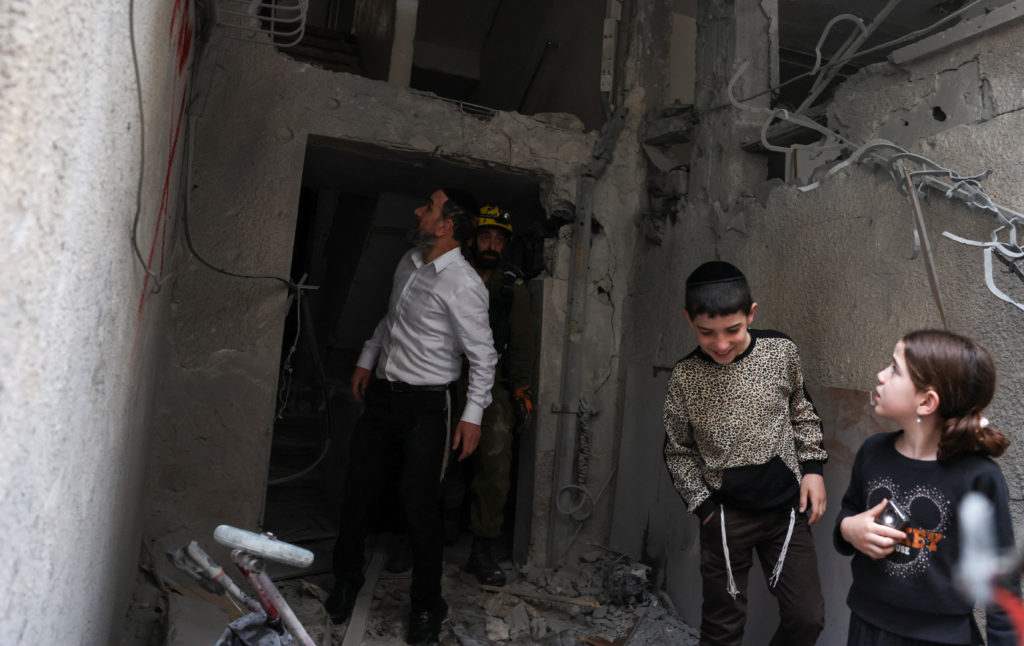
Iran fires on Israel and Gulf neighbors as Trump claims threat from Tehran nearly eliminated
📖 Full Retelling
📚 Related People & Topics

Iran
Country in West Asia
# Iran **Iran**, officially the **Islamic Republic of Iran** and historically known as **Persia**, is a sovereign country situated in West Asia. It is a major regional power, ranking as the 17th-largest country in the world by both land area and population. Combining a rich historical legacy with a...

Tehran
Capital and largest city of Iran
Tehran is the capital and largest city of Iran. It is also the capital of Tehran province and the administrative center for Tehran County and its Central District. With a population of around 9 million in the city, and 16.8 million in the metropolitan area, Tehran is the most populous city in Iran a...

Israel
Country in West Asia
Israel, officially the State of Israel, is a country in the Southern Levant region of West Asia. It is bordered by Lebanon to the north, Syria to the northeast, Jordan to the east, and Egypt to the southwest. Israel occupies the West Bank and the Gaza Strip of the Palestinian territories, as well as...

Donald Trump
President of the United States (2017–2021; since 2025)
Donald John Trump (born June 14, 1946) is an American politician, media personality, and businessman who is the 47th president of the United States. A member of the Republican Party, he served as the 45th president from 2017 to 2021. Born into a wealthy New York City family, Trump graduated from the...
Entity Intersection Graph
Connections for Iran:
Mentioned Entities
Deep Analysis
Why It Matters
This development matters because it represents a significant escalation in Middle Eastern tensions, directly threatening regional stability and global energy security. It affects Israel's national security, Gulf Cooperation Council countries' sovereignty, and international shipping lanes critical to global oil supplies. The situation also impacts U.S. foreign policy credibility as contradictory statements emerge about Iran's threat level, creating confusion among allies and adversaries alike.
Context & Background
- Iran has maintained hostile relations with Israel since the 1979 Islamic Revolution, with both nations engaged in proxy conflicts across the Middle East
- The Persian Gulf region contains approximately 48% of the world's proven oil reserves, making stability there crucial to global energy markets
- The Trump administration withdrew from the Iran nuclear deal (JCPOA) in 2018 and implemented maximum pressure sanctions against Tehran
- Iran has previously attacked shipping in the Strait of Hormuz, through which about 20% of global oil consumption passes
- Israel has conducted numerous airstrikes against Iranian targets in Syria over recent years as part of their 'war between wars' strategy
What Happens Next
Expect emergency UN Security Council meetings within 48 hours, with Russia and China likely blocking strong condemnation of Iran. The U.S. will probably deploy additional naval assets to the Persian Gulf within the week. Israel may conduct retaliatory strikes against Iranian positions in Syria or Lebanon within days. Oil prices are likely to spike 5-10% in immediate trading following the attacks.
Frequently Asked Questions
Iran likely aims to demonstrate its regional power projection capabilities while testing the resolve of U.S. allies. Simultaneous attacks create maximum psychological impact and complicate coordinated defensive responses from targeted nations.
The administration may be referring to economic pressure from sanctions reducing Iran's long-term capabilities, while ignoring immediate military actions. This represents a disconnect between diplomatic messaging and on-ground realities in conflict zones.
Commercial vessels in the Persian Gulf and Strait of Hormuz face immediate danger, potentially disrupting 20% of global oil shipments. Insurance premiums will skyrocket, and some shipping companies may suspend regional operations entirely.
Saudi Arabia and UAE will likely request enhanced U.S. military protection while coordinating defensive measures through the GCC. Some may pursue backchannel diplomacy with Iran to prevent further escalation affecting their oil infrastructure.
These attacks make diplomatic revival of the JCPOA nearly impossible in the short term. European signatories who sought to preserve the deal will face pressure to condemn Iran's military actions, further isolating Tehran internationally.