
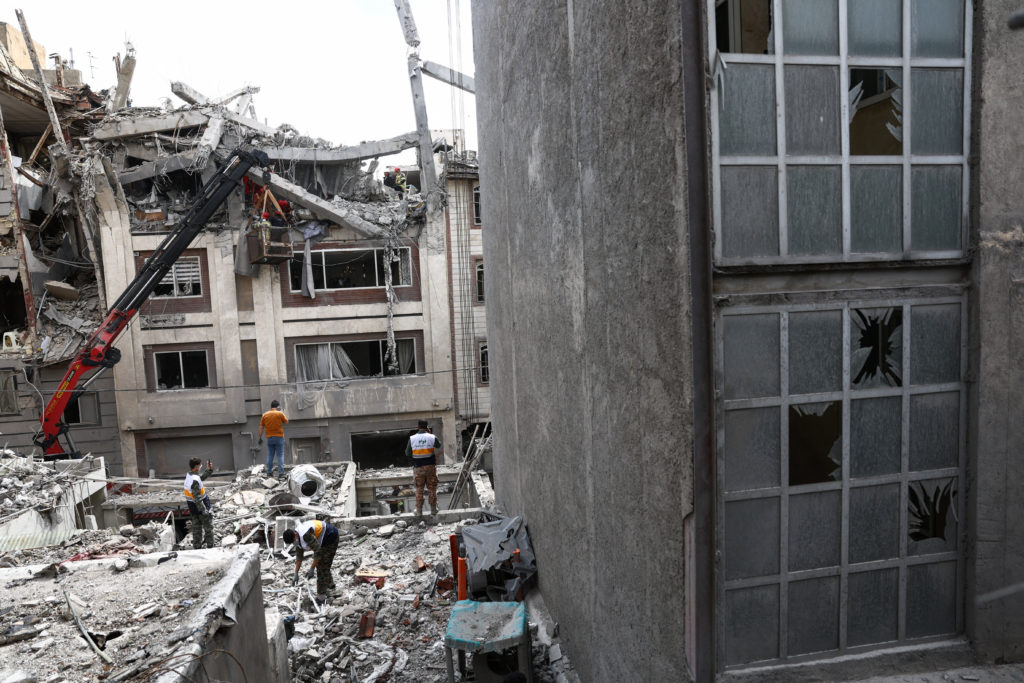
Iran says nuclear facilities have been attacked after Israel says attacks 'will escalate and expand'
#Iran #Israel #nuclear facilities #attacks #escalation #regional conflict #security
📌 Key Takeaways
- Iran reports attacks on its nuclear facilities following Israeli warnings of escalation.
- Israel indicates military actions will intensify and broaden in scope.
- The incident raises concerns about regional stability and nuclear security.
- Tensions between Iran and Israel appear to be escalating further.
📖 Full Retelling
🏷️ Themes
Military Conflict, Nuclear Security
📚 Related People & Topics

Iran
Country in West Asia
# Iran **Iran**, officially the **Islamic Republic of Iran** and historically known as **Persia**, is a sovereign country situated in West Asia. It is a major regional power, ranking as the 17th-largest country in the world by both land area and population. Combining a rich historical legacy with a...

Israel
Country in West Asia
Israel, officially the State of Israel, is a country in the Southern Levant region of West Asia. It is bordered by Lebanon to the north, Syria to the northeast, Jordan to the east, and Egypt to the southwest. Israel occupies the West Bank and the Gaza Strip of the Palestinian territories, as well as...
Entity Intersection Graph
Connections for Iran:
Mentioned Entities
Deep Analysis
Why It Matters
This news is critically important because it represents a dangerous escalation in the long-standing conflict between Iran and Israel, directly threatening regional stability in the Middle East. The targeting of nuclear facilities raises the stakes significantly, potentially violating international non-proliferation agreements and increasing the risk of radioactive contamination. This development affects not only the two nations involved but also global powers invested in Middle East stability, neighboring countries vulnerable to fallout, and international organizations monitoring nuclear safety. The situation could trigger broader regional conflict and impact global energy markets due to the strategic importance of the Persian Gulf.
Context & Background
- Iran and Israel have been engaged in a shadow war for decades, with Israel viewing Iran's nuclear program as an existential threat
- The 2015 Iran nuclear deal (JCPOA) imposed restrictions on Iran's nuclear activities in exchange for sanctions relief, but the agreement has been in crisis since the U.S. withdrawal in 2018
- Israel has previously conducted covert operations against Iran's nuclear program, including cyberattacks and assassinations of nuclear scientists
- Iran has consistently denied seeking nuclear weapons, maintaining its program is for peaceful purposes only
- The International Atomic Energy Agency (IAEA) has repeatedly expressed concerns about Iran's nuclear activities and lack of transparency
What Happens Next
Immediate responses will likely include emergency IAEA inspections of the damaged facilities to assess safety risks and potential radiation leaks. Iran will probably retaliate through proxies in Syria, Lebanon, or against Israeli interests abroad, while seeking condemnation at the UN Security Council. The U.S. and European powers will attempt diplomatic de-escalation while Israel prepares for possible direct Iranian retaliation. Within weeks, we may see increased naval deployments in the Persian Gulf and renewed international negotiations about Iran's nuclear program.
Frequently Asked Questions
Israel views Iran's nuclear program as an existential threat and has repeatedly stated it will prevent Iran from obtaining nuclear weapons capability. Previous diplomatic efforts and sanctions have failed to halt Iran's nuclear advancement, leading Israel to consider military options as a last resort.
The attack violates international law and could trigger a broader regional conflict involving U.S. forces and Iran's proxies. It may undermine future nuclear non-proliferation agreements and prompt other nations to reconsider their security calculations regarding preventive strikes.
Iran will likely retaliate through its regional proxies like Hezbollah in Lebanon or Houthi rebels in Yemen, while also potentially accelerating its nuclear program. Tehran may also target Israeli diplomatic missions or commercial interests worldwide, and could attempt asymmetric responses like cyberattacks.
The U.S. will likely attempt to prevent further escalation while maintaining its security commitments to Israel. American diplomats will work to contain the conflict through emergency UN sessions and direct communication with regional partners, while military forces in the region will be placed on heightened alert.
Any conflict involving Iran threatens the Strait of Hormuz, through which about 20% of global oil passes. Markets will likely see immediate price spikes and increased volatility, potentially triggering emergency releases from strategic petroleum reserves by consuming nations.