
Iran’s IRGC backs Mojtaba Khamenei as new supreme leader
#Iran #IRGC #Mojtaba Khamenei #supreme leader #succession #Ayatollah Ali Khamenei #political endorsement
📌 Key Takeaways
- Iran's Islamic Revolutionary Guard Corps (IRGC) supports Mojtaba Khamenei as the next supreme leader.
- The backing signals internal political maneuvering ahead of a potential leadership transition.
- Mojtaba Khamenei is the son of the current Supreme Leader Ayatollah Ali Khamenei.
- The IRGC's endorsement could influence succession dynamics within Iran's power structure.
📖 Full Retelling
🏷️ Themes
Iranian politics, Leadership succession
📚 Related People & Topics

Ali Khamenei
Supreme Leader of Iran since 1989
Ali Hosseini Khamenei (born 19 April 1939) is an Iranian cleric and politician who has served as the second supreme leader of Iran since 1989. He previously served as the third president of Iran from 1981 to 1989. His tenure as supreme leader, spanning 36 years, makes him the longest-serving head of...
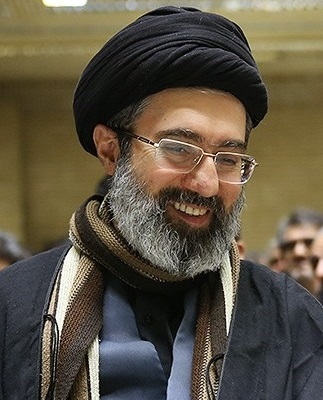
Mojtaba Khamenei
Iranian politician and cleric (born 1969)
Mojtaba Hosseini Khamenei (born 8 September 1969) is an Iranian politician and Muslim cleric. The second eldest child of Ali Khamenei, the former supreme leader of Iran, Mojtaba Khamenei served in the Iran–Iraq War from 1987 to 1988, and also reportedly took control of the Basij that was used to sup...

Islamic Revolutionary Guard Corps
Military organization in Iran
The Islamic Revolutionary Guard Corps (IRGC), also known as the Iranian Revolutionary Guards, is a multi-service primary branch of the Iranian Armed Forces. It was officially established by Ruhollah Khomeini as a military branch in May 1979 in the aftermath of the Iranian Revolution. Whereas the Ira...

Iran
Country in West Asia
# Iran **Iran**, officially the **Islamic Republic of Iran** and historically known as **Persia**, is a sovereign country situated in West Asia. It is a major regional power, ranking as the 17th-largest country in the world by both land area and population. Combining a rich historical legacy with a...
Entity Intersection Graph
Connections for Ali Khamenei:
View full profileMentioned Entities
Deep Analysis
Why It Matters
This news is critically important because it signals potential succession planning for Iran's highest leadership position, which could shape the country's domestic and foreign policies for decades. The Supreme Leader holds ultimate authority over Iran's military, judiciary, and media, making this transition relevant to Iran's 85 million citizens and international relations. The IRGC's endorsement carries significant weight as the country's most powerful military and economic institution, potentially influencing the succession process and Iran's future direction.
Context & Background
- Ayatollah Ali Khamenei has served as Iran's Supreme Leader since 1989, following the death of the Islamic Republic's founder, Ayatollah Ruhollah Khomeini
- The Supreme Leader is selected by the Assembly of Experts, an 88-member body of Islamic scholars, but military and political factions often influence the process
- Mojtaba Khamenei is the second son of the current Supreme Leader and has remained largely out of public view, though he's believed to have significant influence behind the scenes
- The Islamic Revolutionary Guard Corps (IRGC) was established after the 1979 revolution and has grown into a powerful military, political, and economic force with deep ties to the Supreme Leader's office
- Previous succession discussions have involved other potential candidates including Ayatollah Ahmad Jannati, current head of the Assembly of Experts, and other senior clerics
What Happens Next
The Assembly of Experts will formally deliberate succession when the current Supreme Leader dies or becomes incapacitated, though informal lobbying and positioning will continue. If Mojtaba Khamenei emerges as the leading candidate, he would need to demonstrate sufficient religious credentials and political support to be confirmed. International observers will monitor how this potential succession affects Iran's nuclear negotiations, regional policies, and domestic stability in coming months.
Frequently Asked Questions
The Assembly of Experts, an elected body of Islamic scholars, officially selects the Supreme Leader. However, influential institutions like the IRGC and political factions often play significant roles in shaping the succession process through informal channels and political pressure.
The IRGC likely views Mojtaba Khamenei as a continuity candidate who would maintain their privileged position and conservative policies. As the son of the current leader, he represents stability and has existing relationships with the military establishment, making him a predictable choice for preserving IRGC interests.
A Mojtaba Khamenei leadership would likely continue Iran's current confrontational stance toward the West and support for regional proxies, though his relative lack of public experience might create initial uncertainty. The transition could temporarily weaken Iran's negotiating position in international talks while the new leader consolidates power.
Primary challenges include questions about his religious qualifications compared to senior clerics, potential public perception of dynastic rule contradicting revolutionary ideals, and possible opposition from other political factions. He must also navigate Iran's complex power structures beyond the IRGC's support.
This would mark only the second Supreme Leader transition since the 1979 revolution, making it unprecedented in many ways. Unlike the 1989 transition where Ali Khamenei was a prominent public figure, Mojtaba is relatively unknown, potentially making this succession more contentious and unpredictable.