
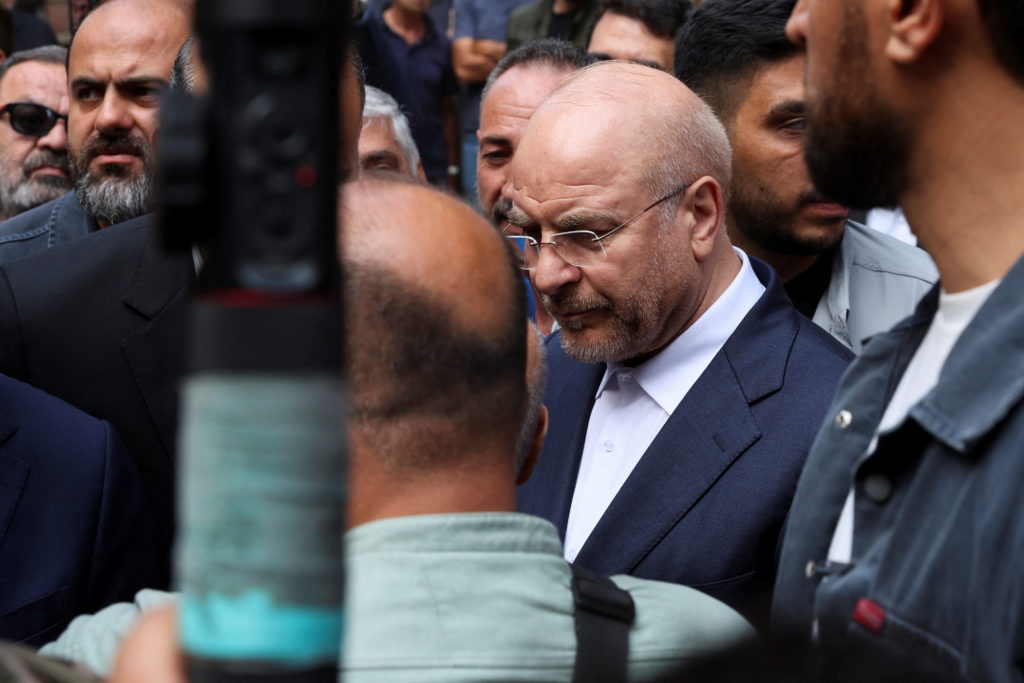
Iran's parliamentary speaker Qalibaf floated as possible U.S. contact in talks as war rages on
#Iran #Qalibaf #U.S. talks #parliamentary speaker #Gaza war #diplomatic contact #regional conflict
📌 Key Takeaways
- Iran's parliamentary speaker Mohammad Bagher Qalibaf is being considered as a potential contact for U.S. talks.
- This development occurs amid ongoing regional conflicts, including the war in Gaza.
- The suggestion indicates possible diplomatic efforts to engage Iran through parliamentary channels.
- It highlights the complex geopolitical dynamics involving Iran and the U.S. during heightened tensions.
📖 Full Retelling
🏷️ Themes
Diplomacy, Geopolitics
📚 Related People & Topics

Gaza war
Ongoing armed conflict in the Middle East
The Gaza war is an armed conflict in the Gaza Strip and Israel, fought as part of the unresolved Israeli–Palestinian and Gaza–Israel conflicts. The war began on 7 October 2023, when the Palestinian militant group Hamas led a surprise attack on Israel, in which 1,195 Israelis and foreign nationals we...
Qalibaf
Topics referred to by the same term
Qalibaf or Qali Baf (Persian: قاليباف or قالي باف) may refer to:

Iran
Country in West Asia
# Iran **Iran**, officially the **Islamic Republic of Iran** and historically known as **Persia**, is a sovereign country situated in West Asia. It is a major regional power, ranking as the 17th-largest country in the world by both land area and population. Combining a rich historical legacy with a...
Entity Intersection Graph
Connections for Gaza war:
View full profileMentioned Entities
Deep Analysis
Why It Matters
This development matters because it signals potential diplomatic openings between Iran and the U.S. during a period of heightened regional conflict, which could influence the trajectory of multiple ongoing Middle Eastern crises. It affects U.S. and Iranian policymakers seeking to manage escalation risks, regional allies like Israel and Gulf states monitoring negotiation channels, and global energy markets sensitive to Persian Gulf stability. The suggestion of using parliamentary channels rather than traditional diplomatic routes represents an unconventional approach that could either bypass existing deadlocks or face significant institutional hurdles.
Context & Background
- Iran and the U.S. have had no formal diplomatic relations since 1979 following the Iranian Revolution and hostage crisis at the U.S. embassy in Tehran.
- Recent tensions have centered on Iran's nuclear program, with the 2015 JCPOA nuclear deal collapsing after the U.S. withdrawal in 2018 under President Trump.
- Iran has been involved through proxy forces in multiple regional conflicts including the Israel-Hamas war in Gaza and Houthi attacks on shipping in the Red Sea.
- Mohammad Bagher Qalibaf is a former Revolutionary Guards commander and Tehran mayor who has been parliamentary speaker since 2020 and is considered a potential future presidential candidate.
- The U.S. and Iran have previously used indirect talks mediated by Oman and other intermediaries, with most recent nuclear negotiations occurring in Vienna through European facilitators.
What Happens Next
U.S. officials will likely assess Qalibaf's credibility as a channel while consulting with regional allies about potential talks. Iranian leadership will determine whether to formally propose this parliamentary route through backchannels. If pursued, initial contacts would probably occur through third-country intermediaries like Oman or Qatar in the coming weeks. The success of any dialogue will depend on whether both sides can agree on agenda items beyond immediate crisis management to address underlying nuclear and regional issues.
Frequently Asked Questions
Parliamentary diplomacy can provide more political cover and deniability than formal foreign ministry channels, allowing both sides to explore positions without committing to official negotiations. Qalibaf's military background as former Revolutionary Guards commander might give him credibility with Iran's security establishment that career diplomats lack.
Primary obstacles include Iran's continued uranium enrichment at near-weapons-grade levels, its support for regional proxy groups attacking U.S. allies, and domestic political opposition in both countries to appearing weak. The upcoming U.S. elections create additional timing pressures and uncertainty about long-term commitments.
Any U.S.-Iran dialogue would inevitably address Iran's influence over Hamas and other groups in the conflict, with Washington seeking to reduce regional escalation while Tehran aims to leverage its proxy network for political gains. Success or failure of talks could either calm or further inflame the Gaza conflict.
While primarily focused on domestic politics, Qalibaf has engaged in regional diplomacy including visits to neighboring countries and meetings with foreign parliamentary delegations. His security background gives him understanding of military dimensions that often underlie Iran's foreign policy decisions.
Initial discussions would likely focus on immediate de-escalation measures regarding Red Sea shipping security, Iranian proxy attacks on U.S. forces, and nuclear program safeguards. Only after establishing basic crisis management mechanisms would talks address longer-term issues like sanctions relief or regional security arrangements.