
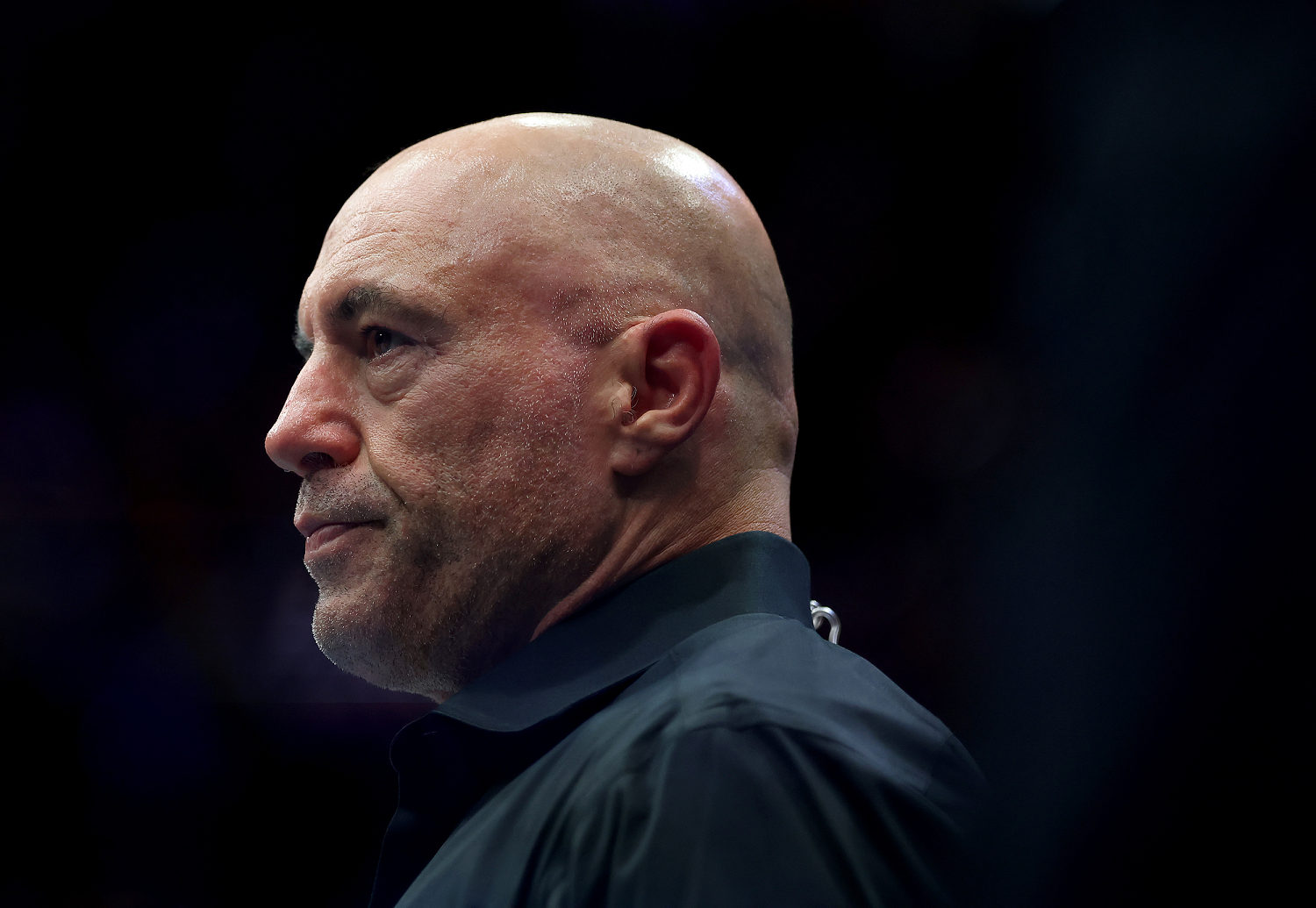
Joe Rogan says many Trump supporters feel 'betrayed' by Iran war
#Joe Rogan #Trump supporters #Iran war #betrayal #political tension
📌 Key Takeaways
- Joe Rogan claims many Trump supporters feel betrayed by the Iran war.
- The statement highlights a perceived disconnect between Trump's base and his foreign policy actions.
- Rogan's comments reflect broader political tensions within the Republican Party.
- The sentiment suggests potential erosion of support among Trump's core followers.
📖 Full Retelling
🏷️ Themes
Political Betrayal, Foreign Policy
📚 Related People & Topics

Joe Rogan
American podcaster and comedian (born 1967)
Joseph James Rogan Jr. (born August 11, 1967) is an American podcaster, UFC color commentator, comedian, actor, and former television host. He hosts The Joe Rogan Experience, which is one of the most popular podcasts in the world and has been the most streamed podcast on Spotify since 2020.

Trumpism
American right-wing populist political movement
Trumpism is the political ideology behind Donald Trump, the 45th and 47th president of the United States, and his political base. It is often used in close conjunction with the Make America Great Again (MAGA) political movement. It comprises ideologies such as right-wing populism, right-wing antiglo...
List of wars involving Iran
This is a list of wars involving the Islamic Republic of Iran and its predecessor states. It is an unfinished historical overview.
Entity Intersection Graph
Connections for Joe Rogan:
Mentioned Entities
Deep Analysis
Why It Matters
This statement matters because Joe Rogan's podcast reaches millions of listeners weekly, making him one of the most influential media figures in America. His commentary on political sentiment provides insight into grassroots conservative perspectives that may not be reflected in traditional polling or mainstream media coverage. The perception of betrayal among Trump's base could impact voter enthusiasm and turnout in upcoming elections, potentially affecting Republican electoral strategies. This also highlights how foreign policy decisions can create fractures within political coalitions that are typically viewed as monolithic.
Context & Background
- Donald Trump campaigned in 2016 on a platform of non-interventionism and criticized previous administrations for Middle East military engagements.
- Tensions between the U.S. and Iran escalated significantly in early 2020 following the killing of Iranian General Qasem Soleimani by U.S. forces.
- Joe Rogan's podcast regularly features political commentary and has become an influential platform for discussions outside mainstream media narratives.
- Trump's foreign policy approach often blended aggressive rhetoric with reluctance to commit to prolonged military engagements abroad.
- The Republican base has historically contained both interventionist and isolationist factions, creating tension on foreign policy matters.
What Happens Next
Political analysts will monitor whether this sentiment affects Trump's polling numbers among his core supporters. The topic will likely be discussed on conservative media outlets and may influence how Republican candidates address foreign policy in upcoming campaigns. If the perception of betrayal persists, it could lead to increased pressure on Republican leaders to articulate a clearer non-interventionist stance, particularly regarding Middle East conflicts.
Frequently Asked Questions
Many Trump supporters embraced his campaign promises to avoid 'endless wars' and nation-building in the Middle East. Military escalation with Iran contradicts this non-interventionist message that resonated with his base during both the 2016 and 2020 campaigns.
Rogan's podcast averages 11 million listeners per episode, making it one of the most consumed media platforms globally. While not exclusively political, his discussions often shape opinions among independent and disaffected voters who distrust traditional media institutions.
The killing of Iranian General Qasem Soleimani in January 2020 and subsequent military tensions created fears of broader conflict. While Trump ultimately avoided full-scale war, these aggressive actions contrasted with his criticism of previous administrations' Middle East interventions.
This tension may push Republican candidates to more explicitly reject military interventionism, particularly in the Middle East. It could create division between traditional hawkish elements of the party and the populist base that favors restraint in foreign engagements.
While difficult to quantify precisely, polling has shown Trump's base contains significant non-interventionist sentiment. However, many supporters prioritize other issues like immigration or economic policy over foreign affairs, creating varied perspectives within the coalition.