
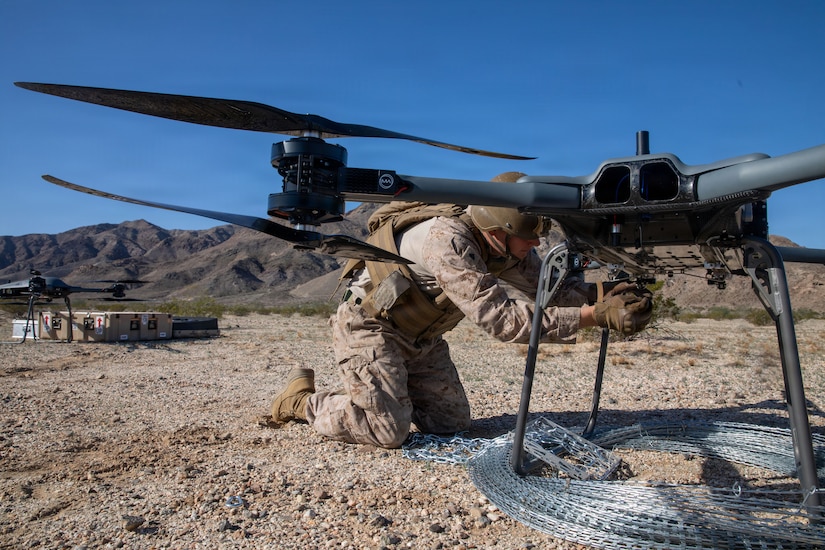
Joint Task Force Southern Border Marks One Year of Success, Bolstering Southern Border Security Through Integrated Operations
#Joint Task Force #Southern Border #border security #integrated operations #military collaboration #illegal activities #border management
📌 Key Takeaways
- Joint Task Force Southern Border celebrates one year of successful operations.
- Integrated operations have enhanced security along the southern border.
- The task force involves collaboration among multiple agencies and units.
- Efforts focus on deterring illegal activities and improving border management.
📖 Full Retelling
🏷️ Themes
Border Security, Military Operations
📚 Related People & Topics

Southern Border Region
Geopolitical designation in the U.S. State of California
The Southern Border Region is one of nine geopolitical designations in California used for economic analysis. The region includes San Diego County and Imperial County, each of which borders Mexico. Its largest city is San Diego.

Joint task force
Ad hoc military formation
A joint task force is a "joint" (multi-service) ad hoc military formation. The task force concept originated with the United States Navy in the 1920s and 1930s. "Combined" is the British-American military term for multi-national formations.
Entity Intersection Graph
Connections for Southern Border Region:
Mentioned Entities
Deep Analysis
Why It Matters
This news matters because it highlights a significant shift in U.S. border security strategy through military-civilian integration, directly affecting border communities, migrants, and national security policy. The success claims could influence upcoming budget allocations and political debates about border management approaches. It also demonstrates how interagency cooperation can address complex challenges that single departments struggle to manage effectively.
Context & Background
- The U.S.-Mexico border spans approximately 1,954 miles and has been a focal point of immigration policy debates for decades
- Previous border security efforts have included Operation Gatekeeper (1994), Operation Hold the Line (1993), and various wall construction projects under multiple administrations
- The Department of Homeland Security was created in 2002 following 9/11, consolidating 22 agencies including Border Patrol and Customs
- Joint Task Forces typically combine military and civilian resources for specific missions, with JTF-North established in 1989 for counter-drug operations
What Happens Next
Congress will likely review the task force's performance data during upcoming DHS budget hearings in spring 2025. The administration may expand the joint task force model to other border regions if deemed successful. Expect increased scrutiny from oversight agencies like GAO to verify the claimed success metrics. Border state governors may request similar collaborative frameworks for their National Guard deployments.
Frequently Asked Questions
The task force integrates military and civilian agencies to coordinate border security operations, including surveillance, intelligence sharing, and resource allocation. It serves as a unified command structure to streamline efforts that previously operated separately across multiple departments.
Unlike standard Border Patrol operations, this joint task force incorporates military capabilities and personnel under a unified command structure. It allows for better coordination between DHS, Department of Defense, and other federal agencies in real-time operations.
Success metrics likely include reduced illegal crossings in targeted sectors, improved interdiction rates, faster response times to border incidents, and enhanced intelligence gathering. The specific data supporting these claims would come from DHS and DoD reporting systems.
While military personnel support border operations, their role typically involves surveillance, engineering, and logistical support rather than direct law enforcement. The Posse Comitatus Act generally prohibits military personnel from performing civilian law enforcement duties within the U.S.
The task force focuses primarily on security and interdiction rather than immigration processing. However, by reducing unauthorized crossings, it may affect the volume of asylum claims and allow processing systems to handle cases more efficiently.