

Justice Alito Was Taken to the Hospital Last Month in Undisclosed Incident
📖 Full Retelling
📚 Related People & Topics
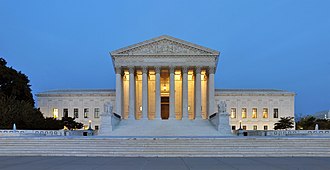
Supreme court
Highest court in a jurisdiction
In most legal jurisdictions, a supreme court, also known as a court of last resort, apex court, high (or final) court of appeal, and court of final appeal, is the highest court within the hierarchy of courts. Broadly speaking, the decisions of a supreme court are binding on all other courts in a nat...

Samuel Alito
US Supreme Court justice since 2006
Samuel Anthony Alito Jr. ( ə-LEE-toh; born April 1, 1950) is an American jurist who serves as an associate justice of the Supreme Court of the United States. He was nominated to the high court by President George W. Bush on October 31, 2005, and has served on it since January 31, 2006.
Entity Intersection Graph
Connections for Supreme court:
Mentioned Entities
Deep Analysis
Why It Matters
This news matters because Justice Samuel Alito is one of nine Supreme Court justices whose health directly impacts the functioning of the nation's highest court. With the Court currently hearing major cases on abortion, gun rights, and regulatory power, any justice's health issue could affect case outcomes and Court operations. The lack of immediate disclosure raises transparency concerns about one of the government's most powerful institutions. This affects all Americans who rely on the Supreme Court for final legal rulings on critical constitutional issues.
Context & Background
- Supreme Court justices have lifetime appointments and their health has historically influenced Court dynamics, such as Justice Ruth Bader Ginsburg's multiple health issues affecting retirement timing
- The Court currently has a 6-3 conservative majority, with Justice Alito being a key conservative voice since his 2006 appointment
- Previous justice health incidents have sparked debates about judicial transparency, including Justice Clarence Thomas's 2022 hospitalization
- The Supreme Court is currently in its October 2023 term hearing major cases on administrative law, First Amendment, and social media regulation
What Happens Next
The Court will likely face increased scrutiny about justice health disclosures and may revise its transparency policies. Justice Alito's condition will be monitored as the Court approaches major opinion releases in June 2024. Congressional oversight committees may hold hearings on judicial branch transparency standards. The incident could influence discussions about judicial ethics reforms and age considerations for lifetime appointments.
Frequently Asked Questions
The Supreme Court has no formal requirement for immediate health disclosures, and justices have traditionally controlled their medical privacy. The Court's transparency practices have been criticized as inconsistent compared to other government branches.
If Justice Alito's health prevents him from participating in deliberations or voting, it could potentially affect case outcomes, particularly if he misses oral arguments or conference discussions on pending decisions.
Justices can retire or take senior status, but there's no mechanism to remove them for disability. Historically, justices have remained on the Court through health challenges, with colleagues sometimes covering their workload temporarily.
Disclosure practices have varied—some justices have been transparent about major procedures while others have revealed health issues only after treatment. Justice Ginsburg was notably open about her cancer treatments, while some earlier justices kept health issues private.
The Court is hearing cases about Chevron deference, social media content moderation, abortion medication access, and gun rights—all areas where Justice Alito's conservative vote could be decisive in 5-4 rulings.