

Justices Seem Open to Allowing Trump to Block Some Asylum Seekers
📖 Full Retelling
📚 Related People & Topics
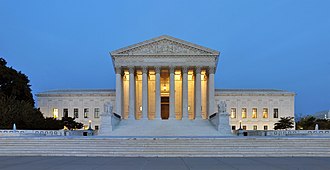
Supreme court
Highest court in a jurisdiction
In most legal jurisdictions, a supreme court, also known as a court of last resort, apex court, high (or final) court of appeal, and court of final appeal, is the highest court within the hierarchy of courts. Broadly speaking, the decisions of a supreme court are binding on all other courts in a nat...
Presidency of Donald Trump
Index of articles associated with the same name
Presidency of Donald Trump may refer to:
Entity Intersection Graph
Connections for Supreme court:
Mentioned Entities
Deep Analysis
Why It Matters
This Supreme Court case could significantly reshape U.S. asylum policy by potentially allowing the executive branch to impose stricter entry restrictions on asylum seekers. It directly affects thousands of migrants fleeing violence and persecution who seek protection at U.S. borders, particularly those from Central America. The decision could strengthen presidential authority over immigration enforcement while limiting access to asylum protections established under international and domestic law. This case also has political implications for the 2024 election as immigration remains a central campaign issue.
Context & Background
- The case involves a Trump-era policy that would deny asylum to migrants who passed through another country without first seeking protection there, often called the 'transit ban'
- The policy was blocked by lower courts but could be revived if the Supreme Court rules in favor of the administration
- U.S. asylum law generally allows anyone physically present in the U.S. to apply for asylum regardless of how they entered the country
- The case comes amid record numbers of asylum applications at the southern border, with over 2.4 million encounters in fiscal year 2023
- This is part of broader legal battles over presidential authority in immigration policy that have spanned multiple administrations
What Happens Next
The Supreme Court will issue its final decision by late June or early July 2024. If the Court rules in favor of the administration, the policy could be implemented immediately, affecting asylum processing at the southern border. The decision could also influence ongoing congressional negotiations over border security legislation and will likely become a talking point in the 2024 presidential campaign. Legal challenges to specific applications of the policy may continue in lower courts.
Frequently Asked Questions
The policy would deny asylum to most migrants who traveled through another country to reach the U.S. border without first seeking protection in that transit country. This would primarily affect Central American migrants who pass through Mexico without applying for asylum there first.
If implemented, the policy would make it much harder for many migrants to qualify for asylum, potentially leading to faster deportations. It could particularly impact families and individuals fleeing gang violence or political persecution in Central America who transit through Mexico.
The administration argues that immigration law gives the executive branch broad discretion to set conditions for asylum eligibility. They cite provisions allowing the Attorney General to impose additional limitations on asylum when 'the entry of aliens would be detrimental to U.S. interests.'
This continues a pattern of Supreme Court cases testing the limits of presidential authority over immigration. Recent decisions have generally expanded executive power in this area, including upholding the 'Remain in Mexico' policy and the COVID-era Title 42 border restrictions.
Yes, like most executive immigration policies, a future administration could modify or rescind this rule through new regulations. However, a Supreme Court ruling establishing broad presidential authority could make such policies harder to challenge in court.
Critics argue the policy violates U.S. obligations under international refugee law and could return vulnerable people to dangerous conditions. They note that many transit countries like Mexico lack adequate asylum systems and may not provide meaningful protection from persecution.