

Key Justices Appear Skeptical of Limiting Birthright Citizenship
#Birthright Citizenship #Supreme Court #NASA Artemis II #Moon Mission #Trump Administration #Immigration Policy #Constitutional Challenge #Iran War
📌 Key Takeaways
- Supreme Court justices skeptical of Trump's birthright citizenship plan
- A Trump victory could strip citizenship from approximately 200,000 babies annually
- NASA preparing to launch first crewed moon mission in 50 years
- Trump scheduled to address Iran war at 9 p.m. Eastern
- Trump attended Supreme Court arguments, a first for a sitting president
📖 Full Retelling
🏷️ Themes
Constitutional Law, Space Exploration, National Security
📚 Related People & Topics
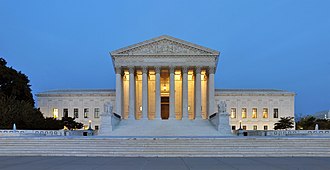
Supreme court
Highest court in a jurisdiction
In most legal jurisdictions, a supreme court, also known as a court of last resort, apex court, high (or final) court of appeal, and court of final appeal, is the highest court within the hierarchy of courts. Broadly speaking, the decisions of a supreme court are binding on all other courts in a nat...
Presidency of Donald Trump
Index of articles associated with the same name
Presidency of Donald Trump may refer to:
Entity Intersection Graph
Connections for Supreme court:
Mentioned Entities
Deep Analysis
Why It Matters
This news is important because it involves a potential major shift in American constitutional interpretation regarding citizenship. The Supreme Court's decision could affect approximately 200,000 babies born annually in the U.S. to undocumented immigrants and temporary foreign visitors. This would fundamentally change how citizenship is understood in America and could have significant implications for immigrant families, the legal system, and the broader concept of American identity.
Context & Background
- The 14th Amendment to the U.S. Constitution, ratified in 1868, states that 'all persons born or naturalized in the United States, and subject to the jurisdiction thereof, are citizens of the United States and of the State wherein they reside.' This has been interpreted to grant birthright citizenship.
- Birthright citizenship has been a settled aspect of American law for over a century, with no major Supreme Court challenges successfully overturning this interpretation.
- President Trump has previously attempted to limit birthright citizenship through executive orders, but these were blocked by lower courts.
- The United States is one of only about 30 countries in the world that grant unconditional birthright citizenship.
- This case represents a significant constitutional challenge that could redefine one of the fundamental principles of American identity and immigration policy.
What Happens Next
The Supreme Court is expected to issue a ruling on this case before the end of its term in June 2026. Given the justices' skepticism during oral arguments, it's likely they will uphold the current interpretation of birthright citizenship. However, the complexity noted by legal experts suggests the ruling might not be as straightforward as initially anticipated. President Trump, who attended the arguments in person, may continue to push for policy changes through alternative avenues if the Court rules against him.
Frequently Asked Questions
Birthright citizenship is the legal principle that grants automatic citizenship to individuals born within the territorial boundaries of a state. In the U.S., this has been established by the 14th Amendment since 1868 and applies to nearly all children born on American soil, regardless of their parents' immigration status.
If the Supreme Court were to rule in favor of limiting birthright citizenship, an estimated 200,000 babies born annually in the U.S. to undocumented immigrants and temporary foreign visitors would potentially lose their citizenship status. This would affect approximately 1 in 15 births in the country.
President Trump's attendance at the Supreme Court arguments marked the first time a sitting president has personally attended oral arguments at the Court. This high-profile appearance demonstrated the significance he places on this issue and his personal investment in the outcome of the case.
On the same day as the Supreme Court arguments, NASA was preparing to launch Artemis II, the first crewed moon mission in over 50 years, scheduled for 6:24 p.m. Eastern. Later that evening at 9 p.m. Eastern, Trump was scheduled to address the nation about the Iran war, where he hinted at winding down U.S. military presence under certain conditions.
A ruling against birthright citizenship would fundamentally change American identity and could create a large population of U.S.-born residents who are not citizens. This could lead to complex legal questions about rights, benefits, and status, potentially creating a permanent underclass and contradicting centuries of American tradition and values.