
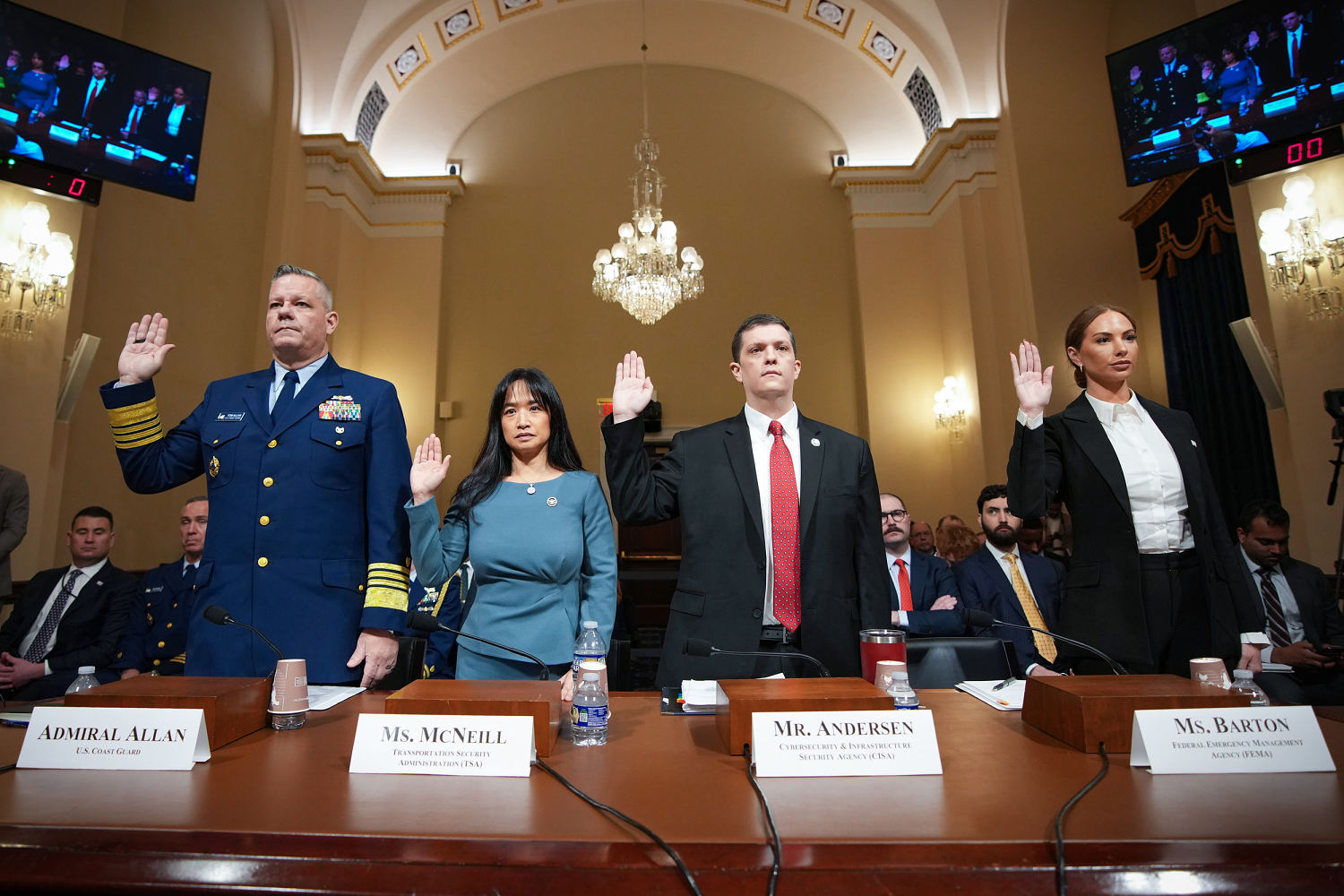
Long airport lines are the tip of the iceberg of DHS shutdown, officials tell Congress
📖 Full Retelling
📚 Related People & Topics

United States Department of Homeland Security
United States federal executive department
The United States Department of Homeland Security (DHS) is the U.S. federal executive department responsible for public security, roughly comparable to the interior, home, or public security ministries in other countries. Its missions involve anti-terrorism, civil defense, immigration and customs, b...

Congress
Formal meeting of representatives
A congress is a formal meeting of the representatives of different countries, constituent states, organizations, trade unions, political parties, or other groups. The term originated in Late Middle English to denote an encounter (meeting of adversaries) during battle, from the Latin congressus.
Entity Intersection Graph
Connections for United States Department of Homeland Security:
Mentioned Entities
Deep Analysis
Why It Matters
This news is important because it highlights the cascading effects of a Department of Homeland Security (DHS) shutdown on national security and public safety. It directly affects travelers facing delays, DHS employees working without pay, and the broader public relying on functions like border security and disaster response. The warning underscores how operational disruptions in critical agencies can have far-reaching consequences beyond immediate inconveniences.
Context & Background
- The Department of Homeland Security (DHS) was created in 2002 in response to the 9/11 attacks, consolidating 22 federal agencies to protect the U.S. from threats.
- DHS oversees agencies like TSA (airport security), CBP (border protection), FEMA (emergency management), and ICE (immigration enforcement), employing over 240,000 people.
- Government shutdowns occur when Congress fails to pass appropriations bills, forcing non-essential federal operations to halt and essential employees to work without pay.
- Past shutdowns, such as the 35-day partial shutdown in 2018-2019, disrupted DHS functions, including TSA absenteeism spikes and slowed immigration court cases.
- DHS funding is often contentious due to political debates over border security and immigration policies, making it vulnerable to budgetary standoffs.
What Happens Next
If a shutdown occurs, expect immediate travel disruptions with longer TSA wait times and potential flight delays, along with furloughs for non-essential DHS staff. Congress may face pressure to pass a stopgap funding bill or a full appropriations package, with negotiations likely intensifying as deadlines approach. Long-term impacts could include reduced morale among DHS employees and vulnerabilities in cybersecurity or disaster preparedness if the shutdown persists.
Frequently Asked Questions
A DHS shutdown happens when Congress fails to approve funding for the department, often due to political disagreements over issues like border security or immigration. This can result from missed budgetary deadlines or partisan gridlock, forcing non-essential operations to stop.
During a shutdown, TSA officers may work without pay, leading to increased absenteeism and staffing shortages. This can cause longer security lines and delays at airports, compromising efficiency and potentially security if morale drops.
No, essential functions like border patrol and disaster response continue, but employees may work unpaid. Non-essential services, such as some administrative or training activities, are suspended, reducing overall operational capacity.
In the 2018-2019 shutdown, TSA saw high absenteeism, causing travel delays, while immigration court backlogs grew. Employees faced financial hardship, and some security checks were delayed, highlighting vulnerabilities.
Travelers experience inconveniences like longer airport lines, while DHS employees may work without pay or be furloughed. The public also faces risks if cybersecurity, disaster response, or border security are weakened.
Yes, Congress can pass a funding bill or a temporary continuing resolution before the deadline. This requires bipartisan agreement, which is often challenging due to political disputes over DHS priorities.