
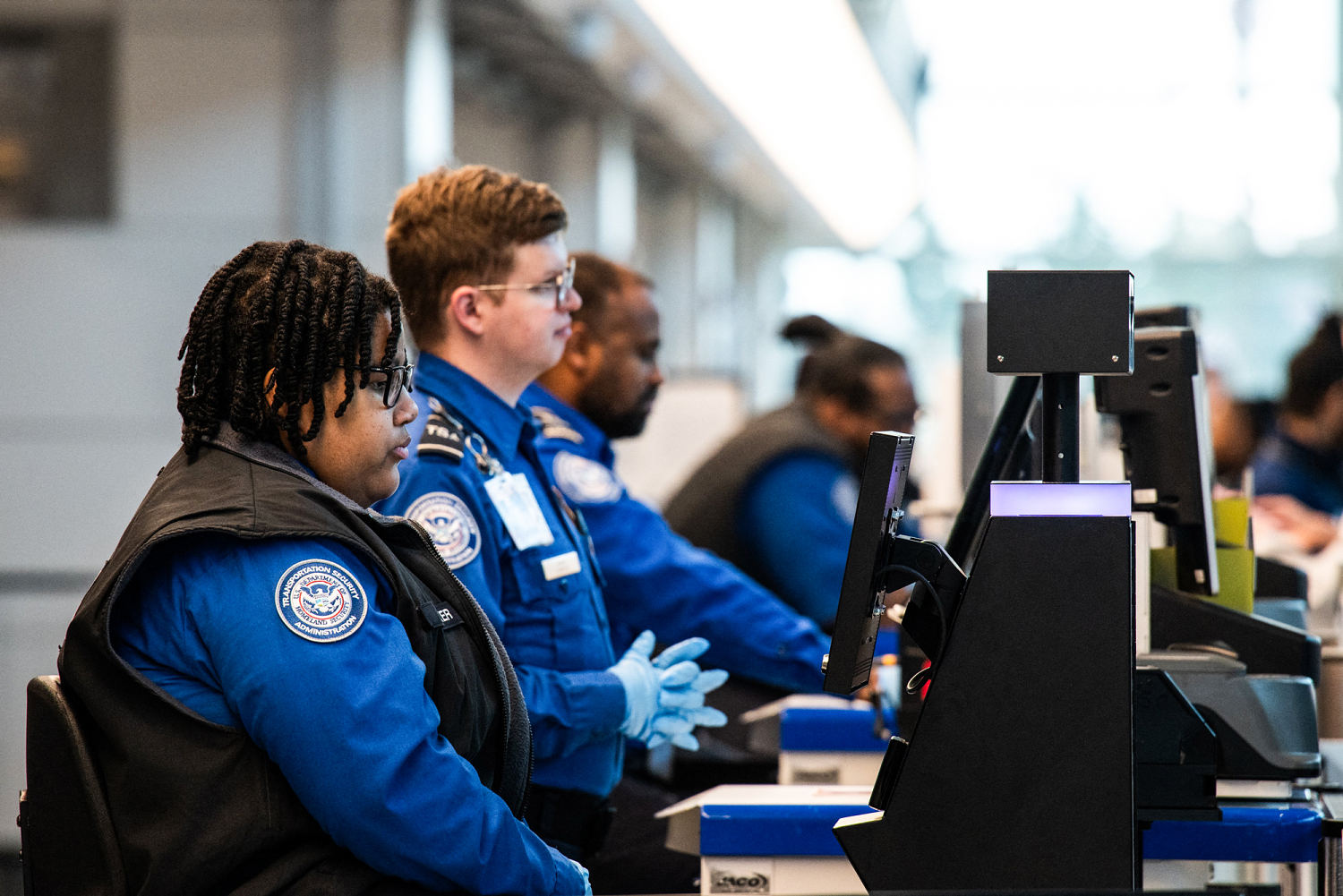
Long security lines form at airports as TSA agents miss first full paycheck amid DHS standoff
#TSA #airport security #paycheck #DHS #funding standoff #security lines #government shutdown
📌 Key Takeaways
- TSA agents missed their first full paycheck due to a DHS funding standoff.
- Long security lines formed at airports as a result of the paycheck issue.
- The situation highlights the impact of government funding disputes on essential services.
- Airport operations are being affected by the ongoing DHS standoff.
📖 Full Retelling
🏷️ Themes
Government Shutdown, Airport Security
📚 Related People & Topics

United States Department of Homeland Security
United States federal executive department
The United States Department of Homeland Security (DHS) is the U.S. federal executive department responsible for public security, roughly comparable to the interior, home, or public security ministries in other countries. Its missions involve anti-terrorism, civil defense, immigration and customs, b...

Transportation Security Administration
United States federal government agency
The Transportation Security Administration (TSA) is an agency of the United States Department of Homeland Security (DHS) that has authority over the security of transportation systems within and connecting to the United States. It was created as a response to the September 11 attacks to improve airp...
Entity Intersection Graph
Connections for United States Department of Homeland Security:
Mentioned Entities
Deep Analysis
Why It Matters
This situation directly impacts national security and air travel efficiency, as TSA agents are frontline personnel responsible for screening millions of passengers daily. The missed paychecks create financial hardship for approximately 51,000 TSA employees and their families, potentially affecting morale and job performance. Travelers face extended wait times and possible flight disruptions, which could ripple through the entire transportation and tourism sectors. The standoff highlights vulnerabilities in how essential government services are funded during political impasses.
Context & Background
- The Department of Homeland Security (DHS) was created in 2002 following the 9/11 attacks, consolidating 22 federal agencies including the TSA.
- TSA agents are considered essential employees who must work during government shutdowns but don't receive pay until funding is restored.
- Previous government shutdowns in 2013 and 2018-2019 saw similar issues with TSA staffing and airport security delays.
- The current standoff stems from disagreements over DHS funding between Congress and the administration, with TSA funding caught in the broader budget dispute.
What Happens Next
If the funding impasse continues, TSA agents will miss additional paychecks, potentially leading to increased absenteeism and resignations. Airports may implement contingency plans like reducing security lanes or prioritizing certain flights. Congress faces pressure to pass either a full DHS funding bill or a stopgap measure, with key deadlines approaching in the coming weeks. The situation could escalate to flight cancellations if security staffing becomes critically low.
Frequently Asked Questions
TSA agents are designated as essential federal employees who must continue working during government shutdowns to maintain national security, even when funding lapses prevent their paychecks from being processed.
There's no legal limit, but historically during past shutdowns, financial pressures have led to increased absenteeism and resignations after 2-3 missed pay periods, potentially compromising security operations.
If significant numbers of TSA agents don't report for duty, airports would need to reduce security lanes dramatically, leading to massive flight delays and possible cancellations as passenger screening capacity drops.
Travelers should arrive at airports at least 3 hours before domestic flights, enroll in TSA PreCheck if eligible, pack according to guidelines, and check airport websites for real-time wait information.
Other DHS components like Customs and Border Protection, Coast Guard, and FEMA also face similar pay disruptions, though TSA's public-facing role makes its impacts most immediately visible to citizens.